Harald Leemann and Martina Hingis: A Fact-Based Look at the Quiet Figure Beside a Tennis Icon

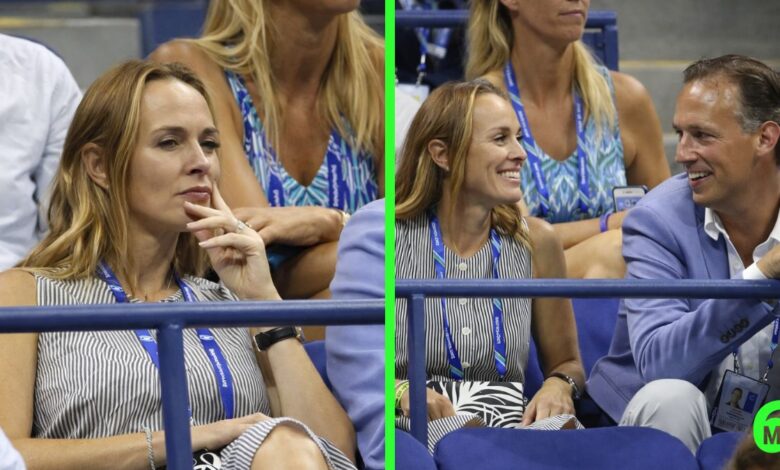
Martina Hingis has spent most of her life in full public view. A former world No. 1, a five-time Grand Slam singles champion, and one of the defining tennis talents of her generation, she built a career that made headlines from her teens onward. Harald “Harry” Leemann entered that public story from a very different world: sports medicine, team support, and life away from celebrity branding. Publicly available information about him is limited, which is not unusual for a physician whose name became widely searched mainly because of his marriage to Hingis. What can be said with confidence is narrow but meaningful. Leemann was known as a Swiss sports doctor connected to the Swiss Fed Cup team; he married Hingis in July 2018; the couple welcomed a daughter, Lia, in 2019; and Hingis confirmed their separation in 2022. Beyond those facts, the public record says less about spectacle than about boundaries, family, and a life mostly kept offstage.
Harald Leemann Quick Bio
| Detail | Information |
|---|---|
| Full Name | Harald “Harry” Leemann |
| Relationship | Former husband of Martina Hingis |
| Public Profile | Swiss sports doctor / former sports physician associated with Swiss team tennis contexts |
| Age | Reported as 42 in August 2022 by SRF; no fuller public biographical profile was readily available in major public sources reviewed. |
| Residence | Public reporting linked the family to the canton of Zug during the marriage. |
| Children | One daughter, Lia, born in 2019 |
| Known Philanthropic Interests | No clearly documented personal philanthropic platform was identified in the public sources reviewed. |
| Social Media Presence | No major public-facing social media profile was established in the sources reviewed. |
Who is Harald Leemann?
Harald Leemann is best known in public records as a Swiss sports doctor who became part of Martina Hingis’s personal story after the two met through Swiss team tennis circles. Coverage of their relationship repeatedly describes him as a team doctor connected to the Swiss Fed Cup setup, and later as a former sports physician when their marriage and growing family became public. That distinction matters. Leemann did not emerge from sport as a commentator, brand figure, or celebrity spouse with a cultivated media persona. He appeared in news reports because of his proximity to one of Switzerland’s most famous athletes, not because he sought a public role of his own. This makes him a good example of how some figures around elite sport remain consequential while still resisting the modern pressure to become public personalities. In the case of Leemann, the known facts outline a role in Hingis’s life, but the scarcity of broader personal detail is itself part of the story.
The Private Life of Harald Leemann
The most striking thing about Harald Leemann’s public profile is how little of it appears designed for publicity. The available reporting focuses almost entirely on milestone events: how he met Martina Hingis, their 2018 wedding, the birth of their daughter in 2019, and the separation confirmed in 2022. There is very little in the public record about leisure habits, interviews, personal branding, or self-promotion. That absence should not be filled with invented detail. It is more accurate to say that Leemann’s privacy has shaped the way he is perceived: as someone adjacent to fame but not performing for it. In celebrity culture, that often creates curiosity, because audiences expect the partner of a major sports star to become visible too. Leemann’s case runs against that pattern. The public encounters him mostly through Hingis’s announcements and Swiss media coverage of major family developments, not through a continuous personal media presence.
Early Life and Background of Harald Leemann
Publicly verifiable information about Harald Leemann’s early life is scarce. The sources reviewed consistently identify him as a Swiss sports doctor and, in Swiss reporting, as a physician from Zug. Beyond that, mainstream public records available in standard web reporting do not offer a detailed biography of his childhood, education timeline, or family background. That gap matters because it shows the difference between public figures and private professionals who cross briefly into public conversation. In Leemann’s case, his professional identity is the most documented part of his background. He appears in the story not as a tabloid personality but as a medical professional whose work brought him into elite sporting environments. That alone provides useful context. Sports physicians often occupy positions of trust, discretion, and long-term support around athletes, and that professional context helps explain why Leemann’s public image has remained restrained even when interest in his personal life increased.
Marriage and Partnership with Martina Hingis
Harald Leemann’s relationship with Martina Hingis entered the public domain in a recognisable sequence. Reports tied the couple’s first connection to the Swiss Fed Cup team, where Leemann served as team doctor. By July 2018, Hingis publicly announced their wedding in Switzerland. WTA reported that the ceremony took place in Bad Ragaz in front of 140 guests, with Hingis posting greetings from the wedding. Later coverage, including tennis reporting and Swiss media, reinforced that the pair had met through tennis and that Leemann’s professional path intersected with Hingis’s late-career team commitments. What stands out is the way the relationship was presented: not as a manufactured celebrity romance, but as a partnership emerging from shared professional surroundings. Even the wedding, though eventually announced, was initially treated as a private ceremony. The public glimpsed the relationship at defined moments rather than through constant exposure. That framing shaped how the partnership was understood: grounded, discreet, and connected to work rather than glamour.
Harald Leemann’s Role Behind the Scenes
Because Leemann was a sports doctor and Hingis was one of tennis’s most recognisable names, the public naturally reads him through the idea of support. That role should not be exaggerated beyond the evidence, but it is reasonable to say that his professional background placed him in a behind-the-scenes position rather than a front-facing one. Sports medicine is built on preparation, health management, and practical care, and Leemann’s public identity aligns with that kind of work. Reports about the couple do not portray him as someone trying to convert proximity to fame into a separate public career. Instead, the available facts suggest a family structure in which Hingis remained the famous figure while Leemann stayed largely outside the spotlight. In analytical terms, that made him a stabilising presence in the public narrative around her post-playing years, especially as the story shifted from titles and tours to marriage and parenthood. His significance was less about visibility than about location: close to the centre of Hingis’s private life, yet seldom publicly performing that closeness.
Family Life: Raising the Next Generation
The birth of Lia in 2019 marked the clearest public moment in which Harald Leemann appeared as part of a family unit rather than only as Hingis’s husband. WTA reported Hingis’s announcement of Lia’s arrival, noting that the social media post included Leemann and described the family as three. That public introduction was brief, affectionate, and controlled. It offered a window into family life without turning the child into a media object. Later separation coverage in 2022 also made clear that Lia remained central to the story, with Swiss outlets reporting that Hingis and the couple’s daughter had moved out of the shared home. Those reports underline a familiar dynamic in stories involving public figures and private spouses: once children enter the picture, the reporting becomes at once more interested and more ethically delicate. In this case, the public record remains relatively restrained. That restraint is important. It leaves the family visible only at confirmed milestones and avoids turning private parenting into public theatre.
Philanthropy and Community Engagement
There is no well-documented public philanthropic platform attached specifically to Harald Leemann in the sources reviewed. A trustworthy profile should say that clearly. Still, it is useful to analyse what his professional identity implies in the broader landscape of sports and public service. Physicians working in elite sport operate in a field built around performance, rehabilitation, and athlete welfare, and that is a form of service even when it is not packaged as philanthropy. Public reporting around Leemann does not present him as the face of a charitable foundation or media-driven cause campaign. Instead, what is visible is a career in applied support. In biographical terms, that matters because it keeps the emphasis on function rather than image. For readers looking for a “public good” dimension, the strongest fact-based conclusion is modest: Leemann’s publicly documented contribution lies more in professional care within sport than in a branded public philanthropic identity. Anything stronger would go beyond the public evidence.
The Power of Privacy: Influence Without Publicity
Harald Leemann’s public story is a reminder that influence does not always arrive with visibility. In the age of celebrity spouses, public-facing Instagram narratives, and constant secondary branding, Leemann’s profile appears almost deliberately minimal. It may be more accurate to call it professionally consistent than dramatic: a doctor remained publicly a doctor, even after marrying one of Switzerland’s most famous athletes. From an analytical perspective, privacy has shaped both his image and the public’s curiosity. Because there is so little extraneous material, the confirmed facts carry more weight. The wedding announcement matters. The birth announcement matters. The separation statement matters. Everything else becomes conjecture, and responsible reporting should resist that temptation. In this way, privacy becomes part of the biography. It is not empty space to be padded with rumour; it is a boundary that tells readers something real about the limits of public entitlement to a private person’s life.
Public Curiosity and Misconceptions About Harald Leemann
Much of the interest in HMuch of the interest in Harald Leemann stems from search behaviour linking his name to Martina Hingis’s. That often produces a predictable misconception: that there must be a large hidden biography waiting to be uncovered. The public record suggests otherwise. Leemann is not obscure because information has been lost; he is comparatively obscure because he was never a public celebrity to begin with. Another recurring misconception is that every relationship adjacent to elite sport can be fully reconstructed through entertainment reporting. In this case, the timeline is quite contained: meeting through Swiss team tennis, marriage in 2018, daughter in 2019, separation in 2022. That does not make the story any less significant. It simply means the most responsible account is also the most disciplined one. The temptation to overread private choices as dramatic narrative is strong, especially where a global sports star is involved, but the evidence supports a quieter understanding. Leemann matters in this story because of his place in Hingis’s life, not because he cultivated public mystique.ould be premature and unfounded to assign Harald Leemann a sweeping public legacy in the celebrity sense. What can be said is narrower and more durable. He occupies a defined place in the documented later-life story of Martina Hingis: a sports doctor who became her husband, the father of her daughter, and part of the family chapter that followed her retirement from professional tennis. After the separation, SwiAfter the separation, Swiss reporting made clear that the marriage had ended because the couple had grown apart and had different life goals.f, is part of the public record and should remain in the frame rather than be embellished. As for the future, the evidence does not support detailed prediction. It supports only this: Leemann’s public legacy is likely to remain quiet, tied to professional life in sports medicine and to a specific, carefully bounded chapter in Hingis’s personal history. Sometimes biography is measured not by volume of coverage but by the precision of what can be honestly said.
Conclusion
Harald Leemann is a rare kind of sought-after figure: someone who became widely interesting not by building a public persona, but by standing near one of sport’s most recognisable names while remaining mostly private himself. The verifiable record is compact. He was a Swiss sports doctor associated with team tennis, married Martina Hingis in July 2018, became the father of their daughter Lia in 2019, and was part of a marriage that ended publicly in 2022. Yet that compact record still reveals something substantial. It shows how the lives of those around elite It shows how the lives of those around elite athletes are often built on work, discretion, and family rather than on publicity.iting matters when information is scarce. A trustworthy portrait of Leemann does not invent intimacy or pretend access where none exists. Instead, it respects the facts, the silences around them, and the larger truth those silences convey: some people leave a mark on public stories precisely by refusing to live as public characters.
Read this too:Jake Zingerman: A Fact-Based Look at Alexia Umansky’s Husband and His Quiet Place in a Very Public Family
(FAQs)
1. Who is Harald Leemann?
Harald “Harry” Leemann is a Swiss sports doctor known publicly for his former marriage to tennis star Martina Hingis.
2. How did Harald Leemann and Martina Hingis meet?
Public reports say they met through the Swiss Fed Cup team, where Leemann served as team doctor.
3. When did Harald Leemann marry Martina Hingis?
Their wedding was announced on July 21, 2018, in Switzerland.
4. Where did the wedding take place?WTA reported that the ceremony took place in Bad Ragaz, Switzerland, and cited Hingis’s post on the Grand Resort Bad Ragaz’s website..
5. Do Harald Leemann and Martina Hingis have children?
Yes.They have one daughter, Lia, who was born in March 2019..
6. Are Harald Leemann and Martina Hingis still together?
No. Hingis confirmed in 2022 that they had separated after four years of marriage.
7. Why did Harald Leemann and Martina Hingis separate?
Swiss reporting quoted Hingis as saying they had grown apart and had different goals in life.
8. Why is there so little public information about Harald Leemann?Because he appears to have remained a private professional rather than a public celebrity, most public reporting about him centres only on major family milestones..