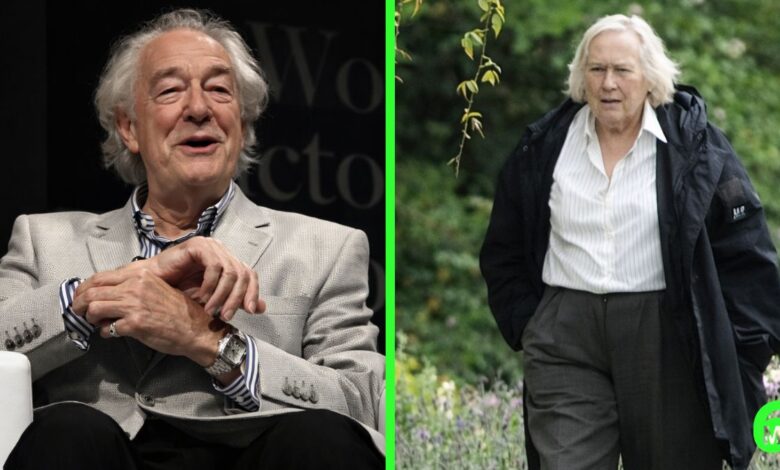
Michael Gambon spent more than half a century in public view. He was one of the great actors of the British and Irish stage and screen, celebrated for The Singing Detective, The King’s Speech, and, for a global audience, his turn as Albus Dumbledore in the Harry Potter films. He was knighted in 1998 for services to drama, and by the time of his death in September 2023, his name had become part of modern screen history.
Lady Gambon, by contrast, remained almost entirely outside that glare. Publicly, she is known chiefly as Anne Gambon, the wife of Michael Gambon, married in 1962, the mother of their son Fergus, and the family figure named in the statement announcing his death. Later reporting on his will again placed her in headlines, after it emerged that his estate passed essentially to her. What makes Lady Gambon compelling is not a public career or a media persona, but the opposite: her significance is visible precisely through the consistency of her absence from celebrity culture. This article looks at what can be said, factually and carefully, about her life, her marriage, and the unusual kind of influence that comes from staying private.
Quick Bio
| Key Detail | Information |
|---|---|
| Full Name | Anne Gambon, also publicly referred to as Lady Gambon |
| Relationship | Wife of the late actor Sir Michael Gambon |
| Public Profile | Extremely private; known mainly through family statements and estate reporting |
| Age | Not clearly established in reliable public reporting reviewed for this article |
| Residence | Not publicly detailed with precision in reliable recent reporting reviewed here |
| Children | One son with Michael Gambon: Fergus Gambon |
| Known Philanthropic Interests | No substantial public philanthropic profile identified in major reporting reviewed here |
| Social Media Presence | No widely reported verified public social-media presence identified in major reporting reviewed here |
Who is Lady Gambon?
Lady Gambon is best understood as the long-standing family anchor in Michael Gambon’s life rather than as a public figure. Public records identify her as his wife of 61 years, with whom he had one son, Fergus. She entered the public conversation most visibly with the family statement announcing Michael Gambon’s death, and when it was reported that his estate passed overwhelmingly to her. While these facts do not create a full biography, they establish her central place in his final years. In a celebrity culture that equates visibility with importance, Lady Gambon suggests something different: one can remain mostly unseen and still be a defining presence in a very public life.
The Private Life of Lady Gambon
The clearest fact about Lady Gambon is that she kept her life private for decades, even while married to one of Britain’s most recognizable actors. That privacy was deliberate. Michael Gambon was known for protecting his personal life, and the public record around Anne reflects a similar instinct: very few interviews and almost no crafted public identity. What emerges is not emptiness but a pattern: she was present at key family moments, absent from celebrity self-promotion, and named during significant events instead of publicity cycles. The public learned about Lady Gambon mainly through official statements and legal reporting, not profile pieces or social appearances. This degree of distance for a star’s spouse is striking, explaining why interest in her increased after his death.
Early Life and Background of Lady Gambon
Publicly verified details about Lady Gambon’s early life are scarce. Some biographical summaries identify her as Anne Miller before marriage, and some secondary profiles describe her as having worked in mathematics, but reliable mainstream reporting on her own background is notably thin. That absence matters because it defines the limits of what can be said responsibly. A careful portrait of Lady Gambon cannot lean on rumor or embellished lifestyle writing; it has to begin by acknowledging that her early life was never offered up for public consumption in the way a celebrity spouse’s story often is. What can be said with confidence is that by 1962, she and Michael Gambon had married, beginning a partnership that lasted, in legal terms, until his death in 2023. The thinness of the public record is itself part of her story: it shows a life lived mostly outside the machinery of fame, even when fame was close at hand.
Marriage and Partnership with Michael Gambon
Michael and Anne Gambon married in 1962, the same year his professional acting career was beginning to take shape. That timing is significant. Their marriage did not follow success; it preceded the long climb through theatre, television, and film that made him famous. Public reporting later made clear that the marriage coexisted with a highly unconventional personal life, including Gambon’s long-term relationship with set designer Philippa Hart, with whom he had two younger sons. Yet the documentary public record is equally clear on another point: Anne remained his wife, she remained the person named in family statements, and she remained the principal beneficiary under his will. Those facts do not reveal the emotional reality of the marriage to outsiders, but they do show endurance, legal continuity, and a family structure that did not fit easy tabloid categories. In that sense, Lady Gambon’s public image rests less on spectacle than on steadiness.
Lady Gambon’s Role Behind the Scenes
With so little first-person material available, Lady Gambon’s role has to be read through the shape of the family record. She appears not as a public partner in publicity campaigns, but as a stabilizing figure in the background of a long and complicated family life. The most revealing public evidence is often indirect: the marriage lasted more than six decades; the official death announcement centered on Anne and Fergus; and the will confirmed that, in legal and financial terms, she remained Michael Gambon’s primary family beneficiary. That does not justify sentimental invention, but it does support a sober conclusion. Behind the myth of the great actor lay a domestic world that retained its own order and hierarchy, however unconventional it may have appeared from the outside. Lady Gambon seems to have occupied the center of that order not by giving interviews or cultivating public sympathy, but by remaining constant within the family’s formal structure.
Family Life: Raising the Next Generation
The most publicly visible evidence of Lady Gambon’s family life is her son, Fergus Gambon. Fergus built a career far removed from film stardom, becoming a respected specialist in British ceramics and glass and serving in a senior role at Bonhams. That matters because it hints at the kind of environment in which he was raised: one oriented not toward celebrity inheritance, but toward expertise, scholarship, and professional seriousness. Public coverage of Michael Gambon’s family often focuses on drama, yet Fergus’s career points in another direction entirely. It suggests a family legacy expressed through connoisseurship and discipline rather than theatrical notoriety. Lady Gambon’s role here is not documented in detail, but as the mother in that household, she belongs to the story of how that quieter legacy took shape. When the family announced Michael Gambon’s death, Fergus stood beside his mother in the public record. That shared appearance reflected continuity as much as grief.
Philanthropy and Community Engagement
There is no substantial public philanthropic profile for Lady Gambon in the major reports reviewed here, and that absence warrants careful treatment rather than filling in with guesswork. It would be easy to assume that the spouse of a knighted actor must have had a visible charitable presence, but responsible writing has to stop where evidence stops. The more useful observation is that Lady Gambon’s public footprint does not appear to have been built around institutional branding, gala culture, or celebrity activism. That distinguishes her from many high-profile spouses whose charitable work is documented partly because it is performed in public. In Lady Gambon’s case, the available record points not to a lack of social value, but to a lack of public packaging. If there was community involvement, it has not been prominently turned into a media identity. For a figure so consistently private, that too fits the broader pattern.
The Power of Privacy: Influence Without Publicity
Lady Gambon’s story illustrates a kind of influence that modern celebrity culture often struggles to recognize. Public life rewards disclosure, confession, branding, and constant visibility. Lady Gambon’s place in the record suggests a refusal of that logic. Her influence is clear through major outcomes: a six-decade marriage, a son with an independent career, and pivotal recognition at the time of Michael Gambon’s death. She shaped the family’s image through consistent privacy and steadfastness, establishing boundaries that insulated the domestic world from the distorting effects of fame. Because Michael Gambon’s private life attracted curiosity for years, Lady Gambon’s silence inevitably invited projection. Yet the firmer reading is simpler: she was not a celebrity seeking narrative control, and so the public was left with only the facts that mattered most. In an era of overexposure, that reserve has its own authority.
Public Curiosity and Misconceptions About Lady Gambon
Much of the curiosity around Lady Gambon comes from the tension between public fame and private family structure. Because Michael Gambon was a celebrated actor with a long-term extramarital relationship that became public, many later accounts reduce Anne Gambon to a supporting character in scandal coverage. That is a distortion. The verified record shows more than scandal: it shows duration, legal status, family continuity, and formal recognition at the end of Michael Gambon’s life. Another common misconception is that estate reporting means Fergus shared the inheritance equally. The clearer reading from multiple reports is that the estate passed almost entirely to Anne, with Fergus positioned as the beneficiary if she had died before Michael. Precision matters here. Lady Gambon is often spoken about as though she were merely a footnote to the actor’s biography, but the documentary record places her at the center of his recognized family life.
Legacy and Future
Lady Gambon’s legacy will likely remain a quiet one, and that may be the most truthful way to understand it. She is unlikely to become a conventional public figure now, because nothing in the record suggests that she ever wanted that role. What endures instead is her place in the long architecture of Michael Gambon’s life: wife since 1962, mother of Fergus, family representative at the moment of public mourning, and the principal beneficiary named when his estate became public. In celebrity histories, private spouses are often flattened into symbols. Lady Gambon resists that flattening. She is visible only in outline, yet the outline is unmistakable. It shows durability, discretion, and a form of importance that did not depend on performance. That may be why public interest in her persists: not because there is endless information, but because there is so little, and what little exists carries weight.
Conclusion
Lady Gambon remains, in public terms, a largely private woman connected to a very public man. The known facts are few but meaningful. She married Michael Gambon in 1962 and had a son, Fergus, with him, who was named in the family statement when he died in September 2023 and was identified in subsequent reporting as the person who essentially inherited all of his estate. Around those facts lies a great deal of public curiosity, but careful biography must resist the temptation to turn that curiosity into fiction. What Lady Gambon’s story finally offers is not celebrity glamour or dramatic self-revelation, but a portrait of private endurance. Her role was quiet, but it was not minor. In the official record of Michael Gambon’s life and death, she was not on the margins. She was at the center.
Read this too:Stephanie Hobgood and Michael Lockwood: What Public Records Actually Show About a Private Life
(FAQs)
1. Who is Lady Gambon?
Lady Gambon is Anne Gambon, the late Irish-English actor Sir Michael Gambon’s wife.
2. When did Lady Gambon marry Michael Gambon?
Public reporting states that Michael and Anne Gambon married in 1962.
3. Did Lady Gambon have children with Michael Gambon?
Yes. They had one son together, Fergus Gambon.
4. Was Lady Gambon present when Michael Gambon died?
Yes. The family statement said Michael Gambon died with his wife Anne and son Fergus at his bedside.
5. Did Lady Gambon inherit Michael Gambon’s estate?
The will report said his estate passed almost entirely to Lady Anne Gambon.
6. Did Fergus Gambon inherit alongside her?
Reports indicate Fergus was the substitute beneficiary if Anne had died before Michael, rather than a co-beneficiary in the ordinary sense.
7. Is Lady Gambon a public figure in her own right?
Not in the usual celebrity sense. She is publicly known mainly through family statements and reporting linked to Michael Gambon’s life and estate.
8. Is there much verified public information about Lady Gambon’s early life?
No. Reliable public details about her background are limited, which is why careful accounts focus on documented facts rather than speculation.