Finnian Garbutt: a grounded look at the Northern Irish actor’s life, work, and public profile

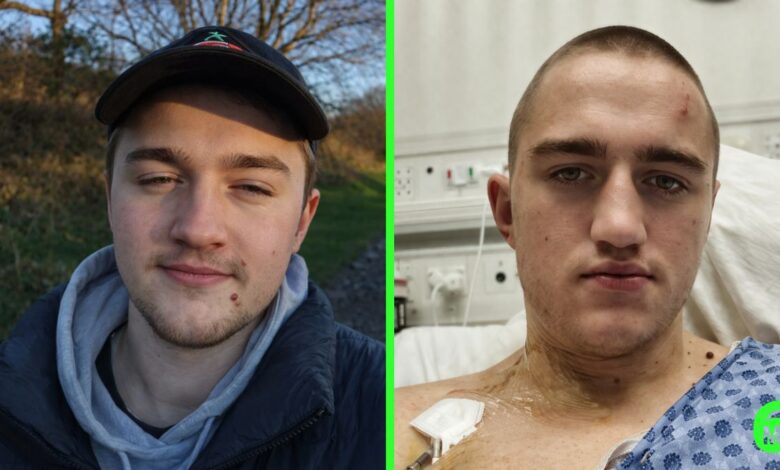
Finnian Garbutt is a young Northern Irish actor, recognized for his stage and screen work, most notably as Ryan Power in Hope Street. Public sources position him within a new generation of regional talent: trained at the Royal Welsh College of Music and Drama, awarded the FinTrU Theatre Bursary and the Emma Style Award, and credited in productions like Casualty, Youth Without God, various Belfast theatre shows, and the film Housejackers.
That matters because the online record around Finnian Garbutt is real but not sprawling. He is not a celebrity manufactured through constant oversharing; he is an actor whose public identity has largely been built through professional credits, interviews, and a few personal updates shared when circumstances demanded it. This article, then, is not an exercise in rumor. It is a fact-based portrait of Finnian Garbutt, as the public record allows: an actor from Bangor, trained in Cardiff, working across theatre and television, and, in recent months, a figure who has drawn widespread sympathy for his public statements about his cancer battle and his young family.
Quick Bio
| Field | Details |
|---|---|
| Full Name | Finnian Garbutt |
| Relationship | Public figure in his own right; actor |
| Public Profile | Northern Irish stage and screen actor |
| Age | 28 (reported in March 2026 coverage) |
| Birthplace / Origin | Bangor, Northern Ireland / County Down |
| Training | Royal Welsh College of Music and Drama |
| Known Credits | Hope Street, Casualty, Youth Without God, Romeo and Juliet, Housejackers |
| Residence | Northern Ireland is the clearest publicly supported general location |
| Spouse | Louise Garbutt |
| Children | One daughter, Saoirse |
| Known Philanthropic Interests | No personal philanthropic platform is clearly documented in major public sources reviewed |
| Social Media Presence | Public Instagram presence referenced in press coverage of his health updates |
Who is Finnian Garbutt?
This section explores his emergence from training to recognizable professional presence, bridging the personal history already discussed with his developing career.
Finnian Garbutt is a Northern Irish actor from Bangor who completed formal drama training and moved into professional work on stage and screen. The clearest public sources on his career describe him as a Royal Welsh College of Music and Drama–trained performer who won student recognition, then built credits that include Christopher Hampton’s Youth Without God at the Coronet Theatre, an appearance in Casualty, a regular role in Hope Street, Benvolio in the Lyric Theatre Belfast production of Romeo and Juliet, and the role of Raymond in Housejackers. Taken together, those credits show a performer whose career has developed through substance rather than hype.
The Private Life of Finnian Garbutt
One of the striking things about Finnian Garbutt is how limited and disciplined the public record is. There is enough information to understand his career trajectory, his training, and some major life events, but not a flood of lifestyle branding, self-mythologizing, or tabloid-ready oversharing. That is not a gap to be filled with invention. It is, in itself, part of the picture. The sources that mention him most often are theatre institutions, talent representation pages, entertainment databases, and recent news stories linked to his health. Even when coverage became more personal in 2026, it was because Garbutt himself chose to speak openly about his illness and family, not because he had built his public image around private disclosure.
Early Life and Background of Finnian Garbutt
What is publicly documented about Finnian Garbutt’s background is concise but meaningful. Multiple sources identify him as from Bangor, Northern Ireland, with County Down remaining central to his professional description. His formal training at the Royal Welsh College of Music and Drama is one of the clearest anchors in his biography, and Lyric Theatre records add another concrete detail: he graduated from RWCMD in July 2019 and had been one of the recipients of the FinTrU Theatre Bursary. Voicebank’s profile also notes that he received the Emma Style Award while studying there.
Beyond this, the public record is understandably limited. There’s no extensive account of his childhood, family, or pre-drama-school years in reliable sources. That absence shouldn’t be filled with guesswork. However, his path aligns with the typical British and Irish acting trajectory: local roots, conservatoire training, and gradually gaining theatre, television, and film credits. Available evidence supports this pattern for Garbutt.
Career Growth and Public Work
If Finnian Garbutt’s personal life is lightly documented, his professional development is much easier to trace. The early post-drama-school evidence is unusually clear thanks to Lyric Theatre’s 2020 bursary article, which recorded that after graduating, he secured a London agent, recorded Bog Child for BBC Radio 4, performed in the premiere of Youth Without God at the Coronet Theatre, and appeared in an episode of Casualty. That is the profile of a young actor making the difficult transition from training to paid work.
Later public profiles show that the momentum continued. Voicebank lists him as a cast regular in Hope Street as Ryan, and notes his stage work as Benvolio in Romeo and Juliet at the Lyric Theatre, Belfast. Other public-facing coverage and festival materials connect him to Housejackers, in which he plays Raymond, and note the film’s 2025 premiere at the Belfast Film Festival. Read together, those credits show a range across television, theatre, radio, and film, while also locating his work within a distinctly Northern Irish creative ecosystem.
Finnian Garbutt’s Role Behind the Scenes
For actors at Garbutt’s stage, the public mainly sees finished roles. What’s often missed is the surrounding infrastructure: training, bursaries, agents, showcases, and regional arts support. Garbutt’s own comment on the FinTrU Theatre Bursary explains that it enabled him to travel to London for the showcase season, when drama students perform for industry professionals. This detail adds concreteness; talent mattered, but so did practical support.
Seen in that light, Finnian Garbutt’s story is not only about personal ambition; it is also about the ecology of opportunity that surrounds emerging performers. The Lyric Theatre, Royal Welsh College of Music and Drama, and industry representation all appear in his public timeline. That does not diminish individual achievement. It clarifies it. His career was built through a combination of training, recognition, and sustained work, which is often how serious acting careers begin, even if audiences only encounter the end result on screen.
Family Life and Fatherhood
Public coverage in 2026 added a more personal dimension to Finnian Garbutt’s story. Reporting in The Independent, The Irish Post, and other outlets identified him as 28, married to Louise Garbutt, and the father of a young daughter, Saoirse. Coverage of a fundraiser for his family described Louise as his wife and Saoirse as their one-year-old daughter, while later stories described him speaking publicly about wanting to live long enough for his child to remember him.
Those facts changed the way the public read him. He was no longer only “the actor from Hope Street,” but also a husband and father speaking with unusual candor about serious illness. Even here, though, the record remains relatively restrained. The family enters public view primarily in the context of support and care, and in his own statements about time, memory, and what he hoped to leave behind. That is a very different thing from celebrity exposure for its own sake.
Community Support and Public Goodwill
There is no large public dossier of philanthropic campaigns led by Finnian Garbutt himself, so it would be misleading to manufacture one. What is publicly documented, instead, is the community response to him. In March 2026, the Irish Post and GoFundMe coverage showed a fundraising effort created to support his wife and daughter as his illness worsened. That support is significant because it reflects the public goodwill he had built among viewers, local communities, and people in the arts scene who recognized both his work and his circumstances.
That distinction matters. Public good does not always look like a branded charity initiative. Sometimes it appears in the network of solidarity that forms around a person at a difficult moment. In Garbutt’s case, the public record points less to self-promotional philanthropy than to a community rallying around a young actor and his family. That, too, says something about how he has been perceived.
The Power of Privacy: Influence Without Overexposure
Garbutt’s public image stands out because it hasn’t been overproduced—no archive of confessionals or churn of headlines based on personal details. Most available material concerns his work: training, awards, roles, and institutional mWhen personal updates, especially about his cancer, appeared, they had an impact because they were rare.ere rare.
That kind of privacy can be influential in its own way. It keeps the focus on craft and gives public statements more gravity when they are made. In Garbutt’s case, the pattern visible in public sources suggests a performer who had not made intimacy into a marketing strategy. The result is that the audience encounters him primarily through his work and, later, through a few deeply human disclosures that feel significant because they were not constant.
Public Curiosity and Common Misreadings
Because public information is limited, online interest in Finnian Garbutt may lead to assumptions, especially during news spikes. The reliable record is narrower than viral summaries suggest: his Bangor/County Down origins, RWCMD training, FinTrU bursary, credits, Hope Street role, and family situation reported in March 2026. Beyond this, caution is warranted.
That is why Finnian Garbutt is best understood not as a mystery to be solved, but as a working actor whose public record remains proportionate. The temptation online is often to treat scarcity as an invitation to speculate. In a responsible biography, it works the other way around: scarcity is a reason to slow down, stay close to what can be confirmed, and let a quieter kind of portrait emerge.
Legacy and Future
Even at this relatively early stage of his career, Finnian Garbutt’s public legacy is already clear in several respects. He represents a strand of Northern Irish acting talent shaped by local culture, serious conservatoire training, and regional theatre infrastructure. His credits show a performer moving steadily through stage and screen rather than chasing instant celebrity. And the public response to his illness has made visible something equally important: the affection and respect he appears to command beyond any single role.
As for the future, any responsible account has to resist melodrama. The facts available in March 2026 are serious and sobering, and they have been reported as such. But even within that difficult context, the public record shows what many people will remember about Finnian Garbutt: professional promise, emotional honesty, and a life that has mattered to family, colleagues, and audiences alike.
Conclusion
Finnian Garbutt is not notable because the internet knows everything about him. He is notable because the public record shows enough to recognize real substance: a Bangor-born actor who trained seriously, earned professional opportunities, built credible credits, and remained more defined by work than by noise. From Youth Without God and Casualty to Hope Street, Romeo and Juliet, and Housejackers, his career reflects discipline and gradual ascent rather than sudden hype.
That same restraint shapes how he should be written about. The truest account of Finnian Garbutt does not depend on invention. It depends on respecting the scale of what is publicly known: his training, his work, his family, and the courage of the statements he has chosen to make in difficult circumstances. In an age that rewards overexposure, that kind of quieter public life can say plenty on its own.
Read this too:Andrew Frankel: The Private Life Behind Bridget Moynahan’s Public World
(FAQs)
1) Who is Finnian Garbutt?
Finnian Garbutt is a Northern Irish actor from Bangor, known for work in Hope Street, Casualty, Youth Without God, Romeo and Juliet, and Housejackers.
2) Where is Finnian Garbutt from?
Public profiles identify him as from Bangor, Northern Ireland, and also associate him with County Down.
3) What drama school did Finnian Garbutt attend?
He trained at the Royal Welsh College of Music and Drama.
4) What role did Finnian Garbutt play in Hope Street?
Public profiles identify him as Ryan, with press coverage naming the character Ryan Power.
5) Was Finnian Garbutt in Casualty?
Yes. Lyric Theatre’s 2020 article says he had recently appeared in an episode of Casualty for BBC One.
6) Is Finnian Garbutt married?
Public reporting in March 2026 identified his wife as Louise Garbutt.
7) Does Finnian Garbutt have children?
Yes. Public coverage and fundraising information identify him as the father of a young daughter, Saoirse.
8) Is Finnian Garbutt active on social media?
Yes. Press coverage of his health updates refers to statements he shared on Instagram.