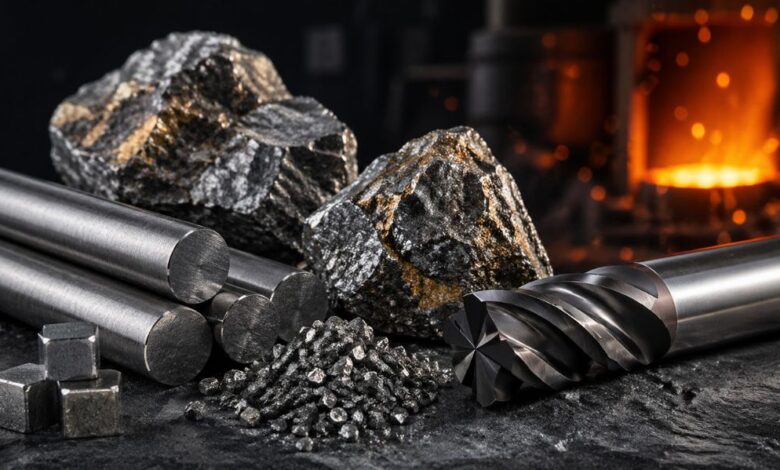
Tungsten, also known as volfram, is among the most exceptional metals in science, industry, and technology. Though the name appears unusual, it denotes the same element, commonly called tungsten in English and wolfram in several European languages. This metal, recognized by the chemical symbol W—a legacy of its earlier name, wolfram—commands a significant place on the periodic table due to its superior strength, extreme heat tolerance, high density, and industrial significance. Simply put, tungsten volfram is not an ordinary metal. It is employed where weaker metals fail, heat is overwhelming, tools must remain sharp, and machines must sustain intense pressure. From manufacturing and mining to electronics, aerospace, defense, lighting, and medical equipment, tungsten quietly underpins modern life. Its value derives from performance, not aesthetics or popularity. When engineers require a metal that can withstand high temperatures, resist abrasion, and enhance the hardness of other materials, tungsten consistently emerges as a primary solution.
What Is Tungsten Volfram?
Tungsten volfram refers to the chemical element tungsten, also called wolfram. “Volfram” and “wolfram” are related names used in several languages, and both connect to wolframite, a mineral that is a major natural source of tungsten. Tungsten is a transition metal found in the center of the periodic table, with atomic number 74 and chemical symbol W. The symbol W comes from “wolfram,” not from “tungsten.” This connection often leads people searching for “tungsten volfram” to wonder why the element has two names. Both names refer to the same metal but originate from different languages and mineral histories. In nature, tungsten is found mainly in chemical compounds rather than as a free metal. Key ores, including wolframite and scheelite, are processed to extract tungsten for industry. When purified, tungsten is a grayish-white or steel-gray metal. It is notable for its high density (heavy for its size), hardness (resistance to scratching and bending), and heat resistance (ability to withstand very high temperatures).
Why Tungsten Is Also Called Wolfram
The dual identity of tungsten is one of the most interesting parts of its story. The word tungsten comes from Swedish and is often translated as “heavy stone,” a fitting name because tungsten-bearing minerals can feel unusually heavy for their size. Although originating in Sweden, the name Wolfram is associated with the mineral Wolframite. Historically, miners and early chemists used the wolfram name before the modern chemical naming system became widely standardized. This older name survived strongly enough that tungsten’s official chemical symbol became W, not T. That single letter tells a story of scientific discovery, mining history, and language. In English-speaking countries, “tungsten” became the common name, while “wolfram” remained more familiar in parts of Europe and in technical or historical discussion. For readers, the main point is simple: tungsten, wolfram, and volfram all refer to the same element, though “wolfram” is the standard English spelling of the alternate name.
Key Properties of Tungsten Volfram
Tungsten’s strength stems from its distinctive physical properties. Tungsten is renowned for possessing one of the highest melting points among elements, making it indispensable for high-temperature applications. Its remarkable density means even a small sample feels unusually heavy. Its density rivals that of gold, yet tungsten is much harder and is essential for demanding industrial tasks. Another notable quality is its resistance to thermal expansion—while many materials expand significantly when heated, tungsten expands minimally, ensuring precision in environments where shape stability is vital. Tungsten’s hardness and wear resistance are heightened when combined with carbon to form tungsten carbide, a compound prized in cutting tools, drilling equipment, machined parts, and wear-resistant components. Pure tungsten can be brittle at ambient temperatures, so it is typically processed or incorporated into alloys and compounds to maximize its properties.
Tungsten Carbide and Industrial Strength
Tungsten carbide, a compound of tungsten and carbon, is one of tungsten’s most important industrial forms. The term ‘exceptional hardness’ describes its resistance to scratching, denting, and wear, making it a staple in drill bits, cutting tools, milling equipment, mining implements, and industrial blades. Its ‘resilience’ means it can maintain its shape and effectiveness when working with materials that would quickly erode conventional steel. Industries such as manufacturing, construction, oil drilling, mining, and metalworking rely on tungsten carbide tools for long-lasting, reliable performance in demanding conditions. Tungsten is a strategic material, important not only in research and high-tech sectors but also in the construction of roads, machinery, energy systems, vehicles, and infrastructure.
Common Uses of Tungsten Volfram
Tungsten (volfram) serves a broad industrial spectrum because its properties resolve multiple challenges simultaneously. Historically, tungsten gained prominence for use in incandescent light bulb filaments because it glows at high temperatures without melting. Although lighting technology has evolved, this remains a prime example of tungsten’s heat tolerance. Today, tungsten is found in electrical contacts, heating elements, electrodes, aerospace components, heavy alloys, and high-performance tools. In defense, tungsten alloys are essential when density and strength are critical. In electronics, tungsten is used in specialized components for its stability and conductivity under select conditions. In medical and scientific arenas, tungsten’s density enables radiation shielding and precision instrumentation. Its significance is often invisible to consumers, yet industries rely on it more than most realize.
Tungsten in Modern Technology
Modern technology depends on materials that endure stress, heat, friction, and pressure. Tungsten volfram fulfills these demands by performing reliably in extreme conditions. In aerospace and energy industries, materials must tolerate high temperatures. In manufacturing, cutting tools must remain sharp despite repeated contact with tough metals. In electronics, precision and stability are essential. Tungsten’s heat resistance, density, hardness, and durability provide vital advantages across all these sectors. It is practical, not trendy. Contemporary systems rely on physical materials for function as much as they do on software and design. Tungsten is a foundational material: rarely publicized but frequently essential in tools, parts, and machinery used in advanced production.
Natural Sources and Extraction
Tungsten rarely occurs uncombined in nature. It is primarily extracted from minerals such as wolframite and scheelite. These ores are mined, processed, and refined before tungsten becomes suitable for industrial applications. Extraction is intricate, as tungsten-bearing minerals are less common than many others. After mining, the ore is concentrated and chemically processed to produce tungsten compounds, then converted into metal powder or further processed into alloys and carbides. Due to the difficulty of mining and refining tungsten compared to more abundant metals, a consistent supply is a major concern. Countries and industries reliant on tungsten closely monitor mining output, export rules, recycling, and alternative supply chains. This is why tungsten is a topic in discussions on critical minerals and industrial security.
Why Tungsten Is Considered Strategically Important
Tungsten volfram is strategically important as it supports industries reliant on high-performance materials. Its use in cutting tools, mining, drilling, aerospace, defense, electronics, and industrial machinery makes it indispensable. Tight supply can strain toolmakers, manufacturers, energy suppliers, and technology companies. The global tungsten market is notable for its production and processing being concentrated in a few locations, especially in China. According to market reports, tungsten prices are affected by export controls, military demand, and supply concerns. Tungsten is not rare like gemstones, but the industrial supply chain remains sensitive. When a material is difficult to substitute and used in critical equipment, its importance escalates.
Tungsten vs Other Metals
Unlike familiar metals such as iron, aluminum, copper, or lead, tungsten stands out for reasons other than its distinctive properties. Aluminum is lightweight, copper is highly conductive, iron is used extensively in steel, and lead is dense but soft. Tungsten combines exceptional melting point, density, and hardness rarely matched by other metals. It is heavier than iron, more heat-resistant than aluminum, and harder than many common metals, becoming even more useful as tungsten carbide. Nonetheless, tungsten’s brittleness, processing complexity, and cost mean it is chosen only for tasks demanding its specialized attributes. This explains why tungsten is reserved for specialized roles rather than everyday items.
Environmental and Recycling Importance
Because tungsten is valuable and supply can be limited, recycling is an important part of its industrial future. Tungsten carbide tools, metal scraps, and used industrial parts can often be recovered and processed to reclaim tungsten. Recycling helps reduce pressure on mining, supports supply security, and can lower waste in industries that use large amounts of tungsten-based materials. Environmental responsibility matters because mining and refining metals can affect land, water, and energy use. A smarter tungsten supply chain depends not only on new mining but also on efficient reuse, careful sourcing, and better recovery from used products. As industries become more focused on sustainability, tungsten recycling is likely to remain an important part of the conversation.
Future Demand for Tungsten Volfram
The future of tungsten (volfram) is closely tied to advanced manufacturing, defense systems, aerospace engineering, mining technology, energy equipment, and precision tools. As industries demand stronger, longer-lasting, and more heat-resistant materials, tungsten will remain important. At the same time, supply chain questions may become more important. Countries and companies may seek new mining projects, improved recycling systems, and more secure sources of tungsten outside dominant supply regions. The metal’s importance is not based on hype; it is based on practical need. When tools must cut harder materials, equipment must withstand extreme heat, and dense materials are required for specialized engineering, tungsten remains difficult to replace.
Conclusion
Tungsten, also known as wolfram, is one of the strongest and most useful metals in modern industry. Known scientifically as tungsten and historically as wolfram, it carries the chemical symbol W and the atomic number 74. Its story combines language, mining history, chemistry, and technology. What makes tungsten special is not only one property, but the rare combination of heat resistance, density, hardness, and industrial durability. From tungsten carbide cutting tools to aerospace parts, electronics, drilling equipment, radiation shielding, and high-performance alloys, this metal supports systems that demand reliability under pressure. It may not be as famous as gold, silver, copper, or iron, but in many advanced industries, tungsten is far more important than most people realize. Its role in modern manufacturing, strategic supply chains, and future technology makes tungsten volfram a metal worth understanding.