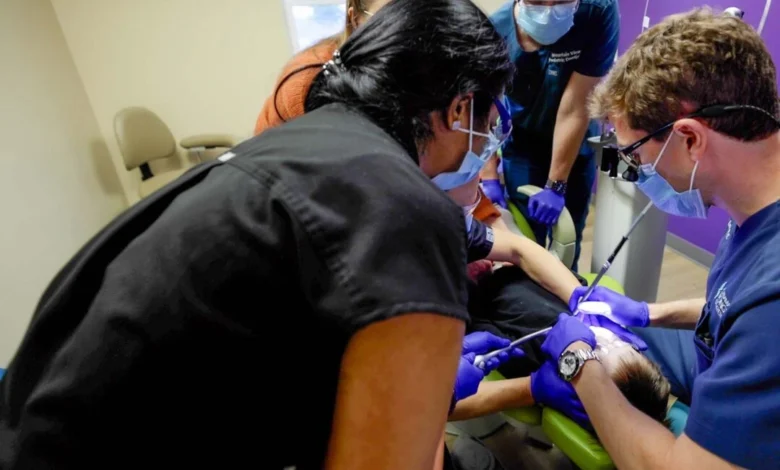
The importance of feeding infants and oral health has become more of a topic of interest to many healthcare providers, with more attending tongue-tie classes to increase their knowledge and care for patients. As a lactation consultant, pediatric dentist, speech therapist, or bodyworker, it is becoming a necessity to be able to assess and treat tethered oral tissues.
There is one question that remains, though. Do tongue ties suffice, or do we need hands-on training? This blog will explore the differences, benefits, and what those who work in the field need to offer safe and effective care.
The Tongue Tie Courses
Tongue-tie classes (online or in-person) are increasingly common and offer practitioners an opportunity to study more generally. Tongue-tie of the Richard Baxter tongue-tie course and other Professional Tongue-Tie Training options will provide a basic understanding of:
- Oral anatomy and function.
- Assessment techniques are very important.
- Breastfeeding problems and solutions.
- Indications for treatment.
- Summary of tongue tie surgery.
These are the first classes to get started, if you’re just getting started.
Advantages of Tongue-Tie Courses
1. Excellent Theoretical Underpinning
Courses will help you to understand why tongue-tie is diagnosed and treated, oral limitations and compensations, and effects on feeding and development.
2. Flexible Learning
Most of the courses are self-paced so you can take them at your own pace. This is ideal for those who are very busy.
3. Exposure to Experts
Leading experts in their field teach a number of these courses, and they can offer valuable insight and clinical information.
4. Cost-Effective Entry Point
Courses are cheaper and more easily available than clinical training.
A tongue-tie crash course or training online can give you some knowledge but not to take care of you in real life.
What Is Tongue-Tie Surgery?
Training in tongue-tie surgery is an integral part of any training program. A frenectomy (or frenotomy) is the process of releasing the tissue tied up around the tongue to improve tongue movement.
Though it may sound simple, selecting the right case, technique, and after care is critical. This is where most doctors realize that they cannot rely on their theoretical knowledge alone.
Cost of Practical Training
Knowledge becomes a skill when practicing hands-on, or in the clinic, and should be an important part of tethered oral tissue training.
The Importance of Hands-On Training
1. Practical Skill Development
You will learn how to perform oral exams, what functions are limited, and when to distinguish cases.
2. Confidence in Practice
Procedures or even referrals should be made with confidence.
3. Immediate Feedback
You’ll be able to work with more senior mentors to refine your skills and avoid common mistakes.
4. Patient Interaction
Every baby is different. Practical training will equip you to meet the real-life challenges of challenging babies, anxious parents, and tricky feeding situations.
5 . Wholesome Care
You’ll be given details on pre- and post-procedure care as well as the necessary lifestyle changes that contribute to the successful outcomes.
Professionals Reason to Get Both
To master this skill, practitioners should be supplementing their tongue-tie training with hands-on work.
Lectures are what you learn about. Practical hands-on sessions will show you the way.
For example, you may decide to go for a tongue tie crash course if you want to be able to identify a posterior tongue-tie.
But, at a clinical practice, without prior hands-on experience, it would still be quite difficult to assess and treat with good confidence.
Similarly, learning about the theory of tongue-tie surgery won’t teach you to do the surgery comfortably and safely or help a patient.
Doing Training Correctly
When it comes to choosing the Right Professional Tongue-Tie Training program, there are a lot of decisions to be made. Here are just a few pointers:
1. Search for Trustworthiness
Classes given by professionals with a good clinical background should be the first choices.
2. Mix Different Ways of Learning
Start with a trusted and recognized course and after that get practical mentoring or training.
3. Look for Continuous Assistance
The best programs offer further learning, case discussions, and mentorship besides initial training.
4. Focus on Action and Not Form
Training is indeed more than just building networks. It is mainly about learning to identify functional impairments and provision of comprehensive care.
Looking Ahead to Tongue Tie Education
The treatment of tongue-tie is expanding. More and more professionals are realizing the impact of the multidisciplinary model where surgery is combined with lactation support and bodywork to bring amazing results.
As a result, tethered oral tissues training programs are changing to blended models comprising both online education and live clinical practice.
This will let providers be not only knowledgeable but also capable and skilled in practice.
Final Thought
A great way to get introduced to the field of tongue-tie for any healthcare professional is attending tongue-tie classes and a lip tie training course. However, to be able to provide the highest level of care, it is quite important that one has direct experience with the procedures.
Ultimately, knowledge and skills gained through training promote confidence in practitioners and their level of care impacting positively families dealing with a tongue-tie condition.
If you are looking to expand your knowledge or require help with your child, a consultation is the right thing to do. You can also reach out to us through messaging if you have problems with your baby or call us at 205-419-4333 for an appointment. We provide support at every step of your journey.
FAQ
1 . Are tongue tie courses sufficient to begin treating patients?
No, courses cannot be completed in isolation; they are only a basic knowledge. Practical training is required to build clinical skills and ensure safe and effective care.
2 . What is to be expected in a tongue-tie training course?
Find anatomy, function, assessment, and treatment options courses. Ideal programs are those that have expert instructors and continuous support.