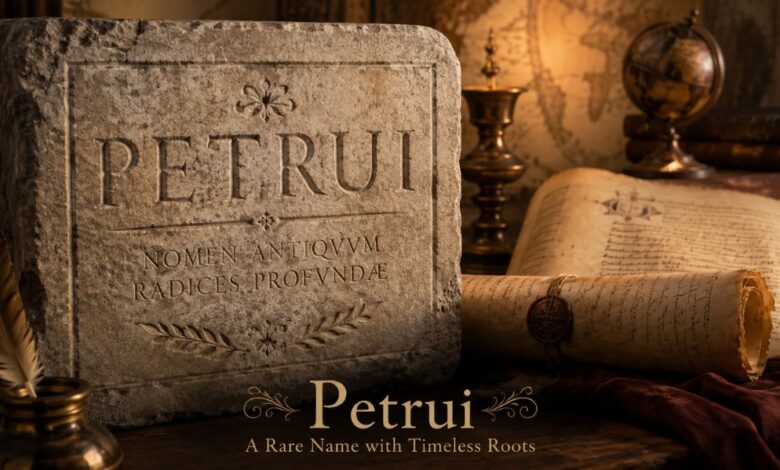
Petrui is one of those rare terms that immediately creates curiosity because it does not belong to the group of common names, popular brands, or everyday search phrases that people instantly recognize. When a keyword like petrui begins appearing in searches, readers usually want a clear explanation: what does it mean, where does it come from, is it a person, a place, a surname, a brand, or a historical reference? The answer is not simple, because Petrui appears to have a limited public footprint and may be understood differently depending on context. That makes it an interesting subject for a careful, informative article. Instead of treating it as a widely known celebrity, company, or product without proof, it is better to explore Petrui as a rare name or term with possible historical, cultural, linguistic, and modern identity value.
In the digital age, even uncommon words can attract attention when they appear in records, travel listings, family histories, academic references, or online profiles. A rare term like petrui can become meaningful when people search for it after encountering it in a name, document, article, location, or on a social platform. This article explains petrui responsibly, focusing on what makes the term interesting, why rare names matter, how readers can understand its possible background, and why accuracy is important when writing about a keyword with limited verified information.
What Is Petrui?
Petrui can be understood as a rare name or search term rather than a fully established mainstream topic. Unlike common names or famous public figures, petrui does not have one universally accepted meaning that applies in every situation. It may appear as a surname, a personal name, a place-related term, or a historical reference, depending on where the reader finds it. This flexible identity is part of what makes the keyword important from both SEO and informational perspectives. Readers searching for petrui are likely looking for clarity, and a strong article should provide it without making unsupported claims.
The safest way to describe petrui is as a distinctive and uncommon term with cultural and identity-related interest. It has the feel of a name associated with European linguistic patterns, and it may be linked to personal identity, historical naming traditions, or location-based references. However, because the public record is not broad enough to confirm one fixed meaning, responsible writing should avoid saying that petrui definitely means one specific thing unless a reliable source confirms it in a particular context.
Why Petrui Attracts Search Curiosity
Rare keywords often attract search attention because they leave unanswered questions. A person may see a person in a historical article, family document, travel listing, social profile, or online mention and then search for more information. When the search results are limited or mixed, curiosity grows. This is different from common topics where thousands of pages repeat similar facts. With Petrui, the interest comes from scarcity. The fewer clear explanations available, the more valuable a careful and balanced article becomes.
Another reason Petrui may attract attention is its unusual sound and spelling. It is short, memorable, and visually distinctive. Words like this often stand out because they do not blend into ordinary search language. In SEO terms, petrui is a low-competition keyword with potential informational value. That does not mean writers should exaggerate its importance. Instead, it means the article should answer real reader questions, explain possible interpretations, and help users understand why the term may appear in different contexts.
Possible Origin and Meaning of Petrui
The possible origin of petrui may be connected with name traditions rather than a modern dictionary definition. Some rare names develop through regional languages, family naming patterns, historical communities, or older cultural records. A name can survive in documents even when it is not widely used in modern public life. Because Petrui has a form that resembles certain European name structures, readers may naturally wonder whether it is linked to older naming systems, surnames, or regional identity.
It is important to be careful here. Without a confirmed linguistic source, no article should state that petrui has one definite meaning. A stronger approach is to explain that petrui may function as a rare name or identifier whose meaning depends on context. If it appears in a family tree, it may represent a surname. If it appears in a historical discussion, it may refer to a person from the past. If it appears in a travel or business setting, it may be used as a title, brand, or place name. This context-based explanation is more accurate and more useful for readers.
Petrui as a Name
As a name, Petrui has a distinctive identity. Rare names often carry more mystery than common names because they are less documented and less standardized. A person with an uncommon name may have a stronger digital footprint in search results simply because fewer people share that exact spelling. This can make petrui useful as an identity marker, especially online. However, it also creates privacy concerns. If Petrui belongs to a private person in a specific case, writers should avoid unnecessary personal details, speculation, or unverified claims.
Names are powerful because they connect people with heritage, memory, and recognition. Even when the meaning is unclear, a name like petrui can still carry emotional and cultural value. For families, it may connect to ancestry. For researchers, it may point toward historical records. For readers, it may simply be an unusual word they want to understand. A good article should respect all of these possibilities.
Petruchio in Historical Context
One of the most interesting ways to understand Petruchio is through historical context. Rare names sometimes appear in archaeological, cultural, or museum discussions, where they are associated with people from ancient societies. In such cases, the value of the name is not only linguistic but also human. A historical mention can remind modern readers that names are traces of real lives, relationships, social structures, and cultural traditions.
When a term like petrui appears in an ancient or historical setting, it should not be treated casually. Historical names often come from inscriptions, artifacts, burial records, or scholarly interpretation. That means the information around them may be limited but meaningful. Instead of turning Petruchio into a broad fictional story, writers should present it as a doorway into the past: a small name that may carry a larger connection to identity, memory, and culture.
Modern Uses of Petrui
In modern online spaces, petrui may appear in several possible ways. It can be used as a personal name, a surname, a brand-style term, a travel-related listing, a username, or a keyword connected to a specific place or profile. This variety is common with rare words. Search engines crawl different kinds of pages, so a single keyword can return unrelated results. A reader searching for Petrui may therefore find historical content, business references, travel pages, or individual profiles.
This mixed search identity makes Petrui an example of how digital meaning is built. A word does not need to be famous to become searchable. It only needs to appear in enough meaningful places for users to ask questions about it. For content creators, this is an opportunity to write a balanced guide that clearly explains the uncertainty while still providing useful information.
Why Accuracy Matters When Writing About Petrui
Accuracy is especially important when writing about petrui because the term is not widely defined. With well-known topics, errors are easier to spot because there are many reliable sources. With rare keywords, false information can spread quickly because there are fewer references to correct it. This is why writers should avoid unsupported statements, such as claiming that Petrui is definitely a famous person, a major brand, or a specific historical figure, unless the context supports it.
A trustworthy article about Petrui should use careful language. Words like “may,” “appears,” “can be understood,” and “depending on context” are not weak; they are responsible. They show that the writer understands the limits of available information. For SEO, this also builds trust because readers prefer content that honestly explains uncertainty rather than pretending to know more than it does.
Petrui and Digital Identity
The rise of search engines has changed how rare names are understood. A name like Petrui may once have existed only in a document, local record, or private family setting. Today, even a rare term can become searchable worldwide. This creates both opportunity and risk. The opportunity is to discover forgotten names, cultural references, and unique identities. The risk is that writers may overexpose private individuals or create false narratives for ranking purposes.
For this reason, petrui should be handled as a privacy-aware keyword. If the article discusses the term generally, it can be informative and safe. But if it focuses on a specific living person, it should only include publicly confirmed, relevant, and respectful details. This approach is especially important for biography-style websites, where readers may search for people associated with public names, but not every person is a public figure.
How Readers Should Understand Petrui
Readers should understand petrui as a rare and context-dependent term. It cannot be explained in a single sentence without the exact context. If someone finds petrui in a historical article, they should read it through a cultural or archaeological lens. If they find it in a travel listing, they should treat it as a place or property-related name. If they find it in a personal profile, it may be a surname or family name. The meaning changes with the source.
This is why context matters more than guesswork. The best way to interpret Petruchio is to ask where it appears, who or what it refers to, and whether the source is reliable. That method helps readers avoid confusion and helps writers produce better content.
SEO Value of the Keyword Petrui
From an SEO perspective, petrui is valuable because it is specific, rare, and likely to have low competition. Rare keywords can perform well when the article provides the clearest available explanation. However, ranking potential should not come from keyword stuffing. It should come from usefulness, structure, clarity, and trust. An article about Petrui should naturally include related ideas such as rare name meanings, historical names, cultural identity, surname origins, digital search identities, and privacy-safe information.
A strong SEO article should also answer the reader’s likely intent. People searching for Petrui may want to know what it means, whether it refers to a person, its historical significance, and why it appears online. Addressing those questions naturally adds value to the article, rather than repeating the keyword too many times.
Conclusion
Petrui is a rare and intriguing term that deserves careful explanation rather than exaggeration. It may appear as a name, historical reference, modern listing, surname, or identity marker depending on context. Because it lacks a widely accepted mainstream definition, the best way to understand Petrui is through responsible interpretation. Its value lies in its uniqueness, its possible cultural background, and the curiosity it creates among readers.
For writers and publishers, Petrui is a good example of how rare keywords should be handled. The content should be informative, respectful, and honest about what is known and what remains uncertain. When written carefully, an article about Petrui can help readers understand the term while maintaining accuracy, trust, and strong SEO quality.
(FAQs)
What is Petrui?
Petrui is a rare name or term that can appear in different contexts, including historical, personal, travel-related, or online identity settings. Its exact meaning depends on where it is used.
Is Petrui a person?
Petrui may refer to a person in some contexts, especially where it appears as a name or surname. However, it should not be automatically treated as a specific person without clear confirmation.
Does Petrui have a confirmed meaning?
There is no single widely accepted public meaning for petrui. It is better understood as a context-based term whose meaning depends on the source.
Is Petrui a good SEO keyword?
Yes, petrui can be a useful SEO keyword because it is rare and specific. A well-written article can rank if it provides clear, accurate, and helpful information.
How should writers use the keyword Petrui?
Writers should use Petrui naturally in the title, introduction, headings, conclusion, and FAQ. They should avoid keyword stuffing and refrain from inventing facts about the term.
Why is Petruchio interesting?
Petruchio is interesting because it is uncommon, memorable, and connected with curiosity. Rare terms often attract readers who want simple explanations and reliable context.