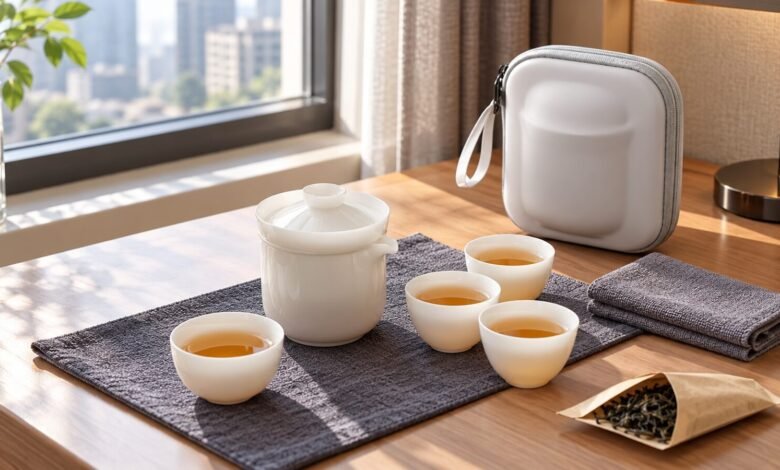
A compact tea set for short trips works best when it supports the way you already brew away from home. Start with the number of people you usually serve, the time you have, and how much washing-up you will tolerate on an ordinary day. Those answers are more useful than an idealized list of equipment.
Begin with your usual brewing moment
Make the setup fit the session you repeat most often. A quick desk tea, a quiet solo gongfu session, and a pot shared after dinner do not need the same tools. Choose one reliable way to brew first; add pieces only when they solve a problem you actually encounter.
Good tea equipment earns its place by making the next cup easier to prepare, pour, and clean.
Choose volume for the amount you plan to drink
Capacity does not decide extraction or guarantee a sweeter cup. Leaf quantity, water temperature, steep time, and pouring all still matter. What volume does change is the amount of tea you are preparing at once and how easy it is to serve before it cools.
A small brewing vessel can suit repeated personal pours. A larger pot or mug can make more sense when you consistently want a longer steep or are serving another person. Pick the size that makes your normal amount feel natural, not one that requires you to adjust every session around the vessel.
Use material as a practical preference
Material affects weight, heat at the surface, visibility, and cleaning as much as it affects the brewing experience. Glazed porcelain and glass make it easy to see the tea and inspect the interior. Clay, porcelain, glass, and metal can all be useful when the vessel is well made and comfortable for your routine.
Instead of assigning one material to every tea, try the vessel with your usual leaf and water. Notice whether it is pleasant to hold, pours cleanly, and fits the pace you want. That small trial is more dependable than a universal material rule.
Keep the first setup small
For many solo brewers, a lidded infuser mug or a small gaiwan with one or two cups is enough. If you regularly split a brew between cups, a small pitcher can help you serve evenly; if you do not, it can remain optional. A strainer is useful when your leaves or vessel call for one, not because every tea table needs a strainer.
To compare portable formats, browse East Artisan and check each set’s dimensions, total weight, included pieces, and care guidance against your trip.
For a Western-style brew, a roomy vessel, a dependable infuser, and a drinking cup can cover the essentials. For gongfu-style brewing, a brewing vessel and cup can be the starting point. Build outward only after the core routine feels settled.
Make cleaning part of the choice
Look at the places that collect leaves and moisture: the underside of a lid, the inside of an infuser, narrow spouts, and any decorative seams. A piece that is difficult to rinse or dry may still be worth keeping for a slower occasion, but it may not be the one you reach for every morning.
Follow the maker’s care guidance for the particular item. In general, allow delicate pieces to cool before washing, avoid sudden temperature changes, and dry them where water will not remain trapped.
Pack only what the trip needs
For a short trip, count the pieces you will actually lift, rinse, dry, and pack again. A brewing vessel and the cups you will use can be enough; a large tray or spare serving pieces may stay at home. Compare the total packed weight, including the case, rather than judging portability from the empty pot alone.
Check the stated dimensions against the space available in your bag. Pieces should have protection from one another and from hard objects around them. A smaller case does not make fragile vessels unbreakable. Plan where wet pieces can dry before packing, and keep tea gear separate from electronics and paperwork.
A set that can grow with you
The goal is not to own every accessory; it is to make tea often enough that the routine becomes yours. Once your first setup has proven useful, add a tray, pitcher, extra cups, or a second brewing vessel only when it makes a familiar session better.