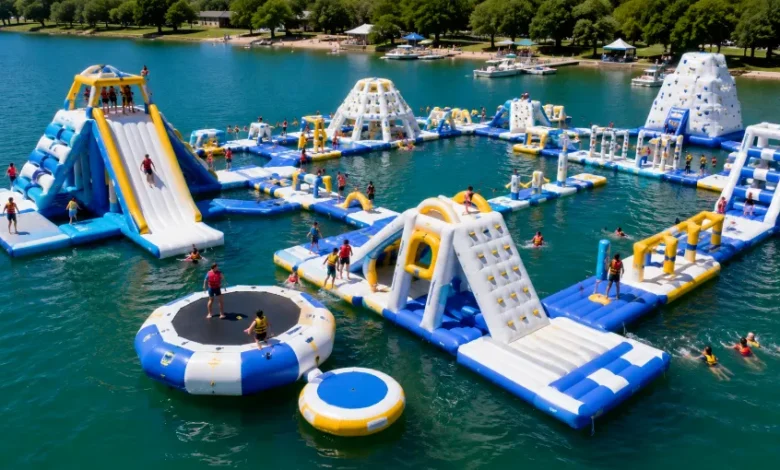
The biggest commercial inflatable water park isn’t always the busiest one.
Visit two inflatable water parks on the same sunny weekend, and you may notice something surprising. One is filled with families eagerly climbing, sliding, and splashing from one attraction to the next, while the other sees visitors leaving after only a short time. Even if both parks occupy a similar area and offer a comparable number of activities, the overall experience can feel completely different.
The reason is rarely the size of the attraction.
More often, it comes down to thoughtful design.
A successful commercial inflatable water park isn’t simply a collection of floating inflatables connected together. It’s a carefully planned experience that encourages visitors to keep exploring, discover new challenges, spend more time enjoying the attraction, and leave with memories worth sharing.
Whether you’re planning a new installation or upgrading an existing attraction, thoughtful design influences far more than appearance. It affects visitor satisfaction, operational efficiency, customer retention, and ultimately the long-term success of your business.

Design for the Way People Naturally Play
Many operators begin by selecting inflatable modules they like before considering how visitors will actually experience the attraction.
Experienced operators usually take the opposite approach.
Instead of asking, “Which inflatable should we buy?”, they first ask, “How do we want visitors to enjoy our water park?”
People rarely move randomly through an attraction. They naturally look for the next exciting challenge, follow the movement of other visitors, and choose activities that appear both enjoyable and achievable.
Designing around these natural behaviors creates a smoother experience from beginning to end.
For younger children, confidence develops gradually. Easier climbing sections, splash features, and shorter slides help them become comfortable before attempting more challenging activities.
Older children and teenagers are typically drawn to taller slides, balance obstacles, climbing walls, and activities that require greater coordination and physical effort.
A well-designed water park creates opportunities for both groups without making either feel overlooked.
Rather than separating visitors by age, successful layouts encourage families to enjoy the attraction together while still offering challenges that suit different confidence levels and abilities.
Every Obstacle Should Lead to the Next Adventure
One of the biggest differences between an average inflatable water park and an unforgettable one is how naturally visitors move through it.
Poorly planned layouts often create unnecessary waiting areas. Visitors complete one activity, pause to decide where to go next, or gather around the most popular obstacles, creating congestion that reduces both excitement and operational efficiency.
Great layouts create a sense of continuous discovery.
After completing one obstacle, visitors should immediately see another challenge that naturally encourages them to continue exploring. Instead of stopping to decide where to go next, they instinctively move toward the next activity, creating a smooth and enjoyable experience.
For example, a climbing wall may lead directly to a balance bridge, which connects to an obstacle course before finishing with a large slide into the water. Without needing signs or detailed instructions, visitors instinctively understand where the adventure continues.
This natural progression keeps people engaged for longer while distributing visitors more evenly throughout the attraction instead of concentrating everyone in one location.
Good layout design isn’t about fitting more inflatable elements into the available space.
It’s about making every element work together as part of one complete visitor experience.
One Water Park Should Offer More Than One Experience
One reason commercial inflatable water parks continue to attract families year after year is their ability to entertain different visitors in different ways.
Some children enjoy racing across obstacle bridges.
Others spend most of their time climbing.
Some visitors return repeatedly to the slides, while younger children often prefer splash areas where they can play at their own pace.
Instead of filling the attraction with similar obstacles, successful layouts combine different styles of play.
Physical challenges, moments of exploration, opportunities for friendly competition, and relaxing splash areas all contribute to a richer visitor experience.
This variety also benefits operators.
When visitors have multiple ways to enjoy the attraction, they naturally stay longer instead of feeling they have experienced everything after only one or two laps.
Longer visits often lead to happier customers, stronger word-of-mouth recommendations, and a greater likelihood of repeat business throughout the season.
Great Water Parks Are Designed to Be Shared
Today’s visitors don’t simply enjoy attractions.
They share them.
Families regularly post photos and short videos on Instagram, Facebook, TikTok, and other social media platforms while they’re still enjoying the experience.
Because of this, visual design has become an important part of commercial success.
Bright colors, distinctive slides, eye-catching climbing towers, and attractive entrance features naturally encourage visitors to stop, take photos, and share their experiences online.
Unlike traditional advertising, these images come directly from satisfied customers, making them more authentic and often more influential than paid promotions.
Designing with social sharing in mind doesn’t mean creating an attraction purely for photographs.
Instead, it means understanding that memorable experiences often become memorable images—and those images continue promoting your attraction long after visitors have gone home.
Why Good Layouts Make Daily Operations Easier
A well-designed water park doesn’t just improve the visitor experience—it also makes daily operations more efficient.
Many layout decisions that benefit guests also simplify management. Wide transition areas reduce congestion, clearly defined entry and exit points make it easier to control visitor capacity, and thoughtful spacing between attractions allows staff to supervise multiple activity zones without constantly moving around the site.
Maintenance is another factor that is often overlooked during the planning stage. Providing convenient access to different sections of the park makes routine inspections, cleaning, and minor repairs faster and more efficient throughout the operating season.
An efficient layout benefits everyone. Visitors enjoy a smoother experience, while operators spend less time solving avoidable problems and more time focusing on customer service.
Work with Manufacturers That Understand Visitor Behavior
Choosing the right manufacturer involves more than comparing specifications or selecting the lowest quotation.
An experienced manufacturer should understand not only how inflatable water parks are built, but also how visitors move through them, how operators manage them, and how different layouts influence the overall experience.
Some manufacturers simply supply standard module combinations, leaving operators to determine the final layout themselves. Others take a more collaborative approach by recommending configurations based on available water space, expected visitor capacity, operating environment, and long-term business objectives.
One manufacturer that takes this approach is 365Inflatable, which works with commercial operators to develop customized inflatable water park layouts based on the available water area, expected visitor capacity, and operational goals. Rather than relying on fixed configurations, each project is planned around the site’s unique requirements, resulting in a more practical layout, smoother visitor flow, and a better overall visitor experience.
Working with a manufacturer that understands both product design and real-world operation can help operators avoid common layout mistakes while creating a water park that is easier to manage and more enjoyable for visitors.
Leave Room for Future Growth
Many successful operators don’t build their ideal water park all at once.
Instead, they begin with a carefully planned foundation and expand it as their business grows.
Leaving space for future inflatable modules makes it easier to introduce new attractions without redesigning the entire layout. This flexibility allows operators to refresh the visitor experience over time while encouraging repeat customers to return for something new.
Planning ahead also helps control future costs. Rather than replacing an existing layout, additional elements can be integrated naturally into the original design, making expansion more efficient and less disruptive.
The most successful commercial inflatable water parks are rarely finished after their first installation. They continue to evolve alongside the business.
Design for Long-Term Success, Not Just Opening Day
It’s easy to focus on creating a strong first impression, but lasting success depends on how well the attraction performs throughout its entire operating life.
A thoughtfully designed water park should remain enjoyable after dozens—or even hundreds—of visits. Variety, smooth visitor flow, and balanced activity levels help prevent the experience from becoming repetitive, encouraging customers to return with friends and family throughout the season.
Good design also supports business growth. An attraction that is easy to supervise, maintain, and expand often delivers greater long-term value than one that simply looks impressive on opening day.
For commercial operators, successful design is not measured only by how many people visit once, but by how many choose to come back.
Final Thoughts
The most successful commercial inflatable water parks are rarely the largest or the most expensive.
They are the attractions that encourage visitors to stay longer, explore further, take photos, recommend the experience to others, and return again in the future.
Thoughtful design transforms an inflatable water park from a collection of floating equipment into a memorable destination.
By understanding how visitors naturally move, play, and interact with different attractions, operators can create experiences that deliver greater customer satisfaction while making daily operations more efficient.
Whether you’re planning your first installation or expanding an existing attraction, investing in a carefully designed commercial inflatable water park can help create a more engaging visitor experience while supporting sustainable business growth for years to come.