Every dropshipping business starts with the same goal: to sell products without managing inventory. It sounds simple: list products, receive orders, and let suppliers handle fulfillment.
But as sales grow, reality sets in.
Customers expect fast shipping, accurate tracking, quick responses, and hassle-free returns. They don’t care whether you stock the products yourself or rely on a supplier. If an order arrives late or a package goes missing, they hold your brand responsible.
That’s why successful dropshipping businesses don’t just focus on finding winning products. They built a reliable dropshipping order fulfillment process that delivers a consistent customer experience from checkout to doorstep.
Whether you’re selling through Shopify, Amazon, Walmart, or multiple marketplaces, your fulfillment workflow can determine whether customers come back or never order again.
Where Fulfillment Breaks and Buyers Churn
Most customer complaints don’t stem from the product itself. They happen because something goes wrong after the purchase.
Common fulfillment issues include:
- Orders sent to suppliers late
- Inventory mismatches
- Delayed shipping confirmations
- Missing tracking numbers
- Long delivery times
- Poor communication during shipping
- Complicated return experiences
These problems don’t just create extra work; they reduce customer trust.
Today’s shoppers expect proactive communication and transparency throughout the delivery journey. Even a small delay can lead to negative reviews, refund requests, or abandoned future purchases.
The good news is that most fulfillment problems can be prevented with a structured operational process.
The End-to-End Dropshipping Order Flow
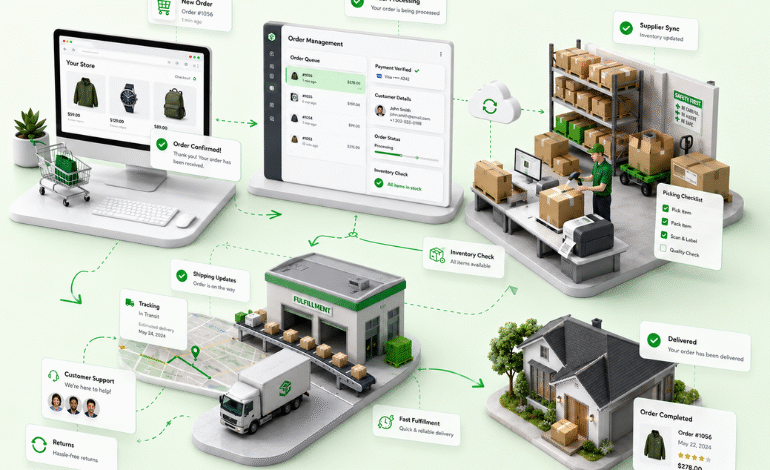
A scalable dropshipping order fulfillment process follows a clear sequence that minimizes delays and reduces manual errors.
| Step | What Happens |
| Customer places an order | The order is received through your ecommerce platform. |
| Order verification | Payment, shipping address, and product details are confirmed. |
| Supplier notification | The supplier receives the order for fulfillment. |
| Inventory confirmation | Product availability is verified before shipment. |
| Order processing | The supplier prepares and ships the order. |
| Tracking upload | Tracking information is shared with the store and the customer. |
| Delivery monitoring | Shipment progress is monitored until delivery. |
| Customer follow-up | Delivery confirmation and post-purchase communication are sent. |
Every step affects customer satisfaction.
The smoother the workflow, the fewer support requests you’ll receive and the easier it becomes to scale operations.
Why Shipping Speed Is More Than Just Delivery Time
One of the biggest concerns for online shoppers is dropshipping shipping times.
Customers are generally willing to wait a little longer if expectations are communicated clearly.
Problems arise when:
- Estimated delivery dates are inaccurate.
- Tracking information isn’t updated.
- Customers don’t know where their order is.
- Suppliers experience unexpected delays without notification.
Being transparent about shipping expectations and providing timely updates helps reduce frustration and support tickets.
A well-managed shipping process often improves customer satisfaction even when delivery takes longer than expected.
Returns and Refunds Without Losing Money
Returns are part of ecommerce, regardless of your business model.
However, a poorly managed dropshipping returns process can quickly become expensive.
Without clear procedures, businesses often face:
- Refund disputes
- Return shipping confusion
- Supplier disagreements
- Inventory reconciliation issues
- Customer dissatisfaction
A scalable return process should include:
- Clearly defined return policies
- Standardized refund timelines
- Supplier return procedures
- Regular tracking of returned orders
- Consistent customer communication
The easier it is for customers to understand the process, the more confidence they have in purchasing from your store.
Customer Service at Fulfillment Speed
Great fulfillment isn’t only about shipping products.
It’s also about communication.
Strong dropshipping customer service keeps customers informed throughout the order journey.
Instead of waiting for customers to ask questions, successful stores provide proactive updates such as:
- Order confirmation emails
- Shipping notifications
- Tracking updates
- Delivery confirmations
- Return status updates
Quick responses to customer inquiries also play a major role in maintaining positive reviews and repeat purchases.
Even when problems occur, responsive customer service can turn a negative experience into a positive one.
Why Dropshipping Order Management Matters
As order volume increases, manual processes become difficult to maintain.
Effective dropshipping order management helps businesses:
- Process orders faster
- Reduce fulfillment errors
- Track supplier performance
- Monitor shipping progress
- Improve operational visibility
Whether you’re selling on one platform or across multiple marketplaces, organized order management keeps operations running smoothly and reduces unnecessary delays.
Who Runs This Daily?
Many founders begin by managing fulfillment themselves.
At first, it’s manageable.
But as daily orders increase, operational work starts taking time away from marketing, product research, and business growth.
That’s when many growing stores bring in a dropshipping virtual assistant.
A virtual assistant can support daily fulfillment operations by handling tasks such as:
- Processing customer orders
- Coordinating with suppliers
- Uploading tracking information
- Monitoring shipping progress
- Managing customer inquiries
- Processing return requests
- Updating order statuses
This allows business owners to maintain a high level of customer service without becoming overwhelmed by repetitive operational work.
Final Thoughts
Scaling a dropshipping business isn’t just about increasing sales.
It’s about delivering a consistent customer experience after every purchase.
A structured dropshipping order fulfillment process reduces delays, improves communication, and creates smoother operations from checkout to delivery.
By strengthening dropshipping order management, improving dropshipping shipping times, streamlining the dropshipping returns process, and delivering responsive dropshipping customer service, businesses can build trust, encourage repeat purchases, and support long-term growth.
The stores that scale most successfully aren’t always the ones with the largest product catalogs.
They’re the ones with fulfillment systems customers can rely on.