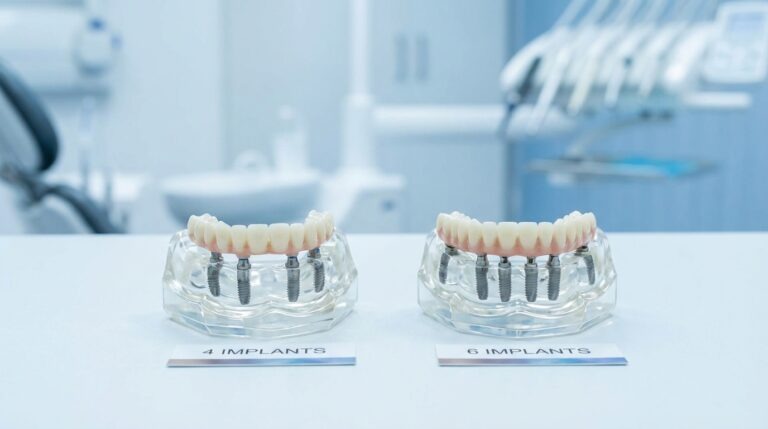
Losing most or all teeth can affect eating, speaking, confidence, and daily comfort. Removable dentures may help, but some patients want a more stable solution that does not move while they eat or talk.
All-on-4 and All-on-6 are full-arch dental implant treatments. Both options use dental implants to support a fixed bridge that replaces a complete row of teeth. However, the number of implants is not the only difference patients should consider. People traveling to Antalya should compare their bone condition, treatment plan, bridge material, dentist’s experience, total cost, and aftercare. Neither option is right for every person. A detailed examination and three-dimensional scan should guide the final choice.
What Are Full-Arch Dental Implants?
Full-arch dental implants replace all teeth in the upper jaw, lower jaw, or both jaws. Instead of using one implant for every missing tooth, the dentist places several implants to support one complete fixed bridge.
The implants sit inside the jawbone and act as support points. A temporary or permanent bridge is then attached to them. This design can offer more stability than a traditional removable denture.
The bridge usually stays fixed during normal daily use. Patients do not remove it each night. However, a dental professional may remove it during certain maintenance, repair, or cleaning appointments.
Full-arch implant treatment may suit people who have lost all their teeth. It may also help patients whose remaining teeth are badly damaged, loose, infected, or no longer suitable for restoration.
What Is the All-on-4 Dental Implant Treatment?
All-on-4 uses four dental implants to support a complete upper or lower dental bridge. The implants are placed in selected areas where the dentist can find useful and stable bone.
The original All-on-4 concept commonly uses two straighter implants in the front and two tilted implants toward the back. Tilting the rear implants may help the dentist use more available bone while avoiding certain nerves or sinus areas.
This approach may reduce the need for extensive bone grafting in selected cases. However, it cannot prevent grafting in every patient. Severe bone loss may still require another procedure or a different implant plan.
Suitable patients may receive a temporary fixed bridge shortly after surgery. Patients researching all on 4 antalya treatment should confirm whether the quoted package includes temporary teeth, permanent teeth, or both.
Immediate loading is only appropriate when the implants achieve enough initial stability. It should not be promised before the dentist examines the patient and reviews the scan.
What Is the All-on-6 Dental Implant Treatment?
All-on-6 uses six dental implants to support a full-arch bridge. The additional two implants create more support points across the upper or lower jaw.
This treatment may suit patients who have enough bone in six useful implant positions. The dentist must also consider the jaw shape, nerve location, sinus position, bite force, and available space.
Six implants may help distribute pressure across a wider area. This can be useful in some cases, especially when the patient has suitable bone and the bridge design benefits from extra support.
However, six implants are not always better than four. Poorly positioned implants do not become a good treatment simply because there are more of them. Implant position and prosthetic design remain essential.
Patients considering all on 6 antalya treatment should ask why six implants are being recommended and what benefit the extra implants provide in their specific case.
All-on-4 vs All-on-6: The Main Differences
Both treatments replace a complete dental arch with a fixed implant-supported bridge. Their main difference is the number of implants used to support that bridge.
| Treatment Factor | All-on-4 | All-on-6 |
| Number of implants | Four per arch | Six per arch |
| Support points | Four | Six |
| Bone requirement | May work with limited bone in some areas | Usually needs suitable bone at six sites |
| Surgical sites | Fewer implant sites | More implant sites |
| Treatment cost | Often lower | Often higher |
| Bone grafting | May reduce grafting in selected cases | May require grafting if extra sites lack bone |
| Bite-force distribution | Spread across four implants | Spread across six implants |
| Best choice | Depends on the patient | Depends on the patient |
All-on-4 may provide an effective option when four implants can be placed in strong and useful positions. All-on-6 may be chosen when two additional implants improve the support, implant spacing, or bridge design.
Research on full-arch restorations has shown favorable outcomes with restorations supported by four to six implants. However, implant number alone does not determine long-term success.
Is All-on-6 Stronger Than All-on-4?
All-on-6 may offer additional support because the bridge rests on six implants instead of four. The extra implants can help distribute chewing pressure across more points.
This does not mean every All-on-6 bridge will be stronger or last longer. Bone quality, implant position, bridge length, bite pattern, implant stability, and bridge material can all affect the result.
Teeth grinding may place strong pressure on a full-arch bridge. A patient with a powerful bite may require a special prosthetic design, careful implant distribution, and a protective nightguard.
Biomechanical research suggests that six-implant designs can offer favorable stress distribution in certain models. However, computer models cannot replace a complete clinical assessment of an individual patient.
When May All-on-4 Be the Better Choice?
All-on-4 may be suitable when four well-positioned implants can safely support a complete fixed bridge. It may also help selected patients who have reduced bone in the back of the jaw.
The tilted rear implant design may allow the dentist to use existing bone more effectively. This can sometimes reduce the need for sinus lifting or extensive bone grafting.
All-on-4 may also involve fewer surgical sites and a lower total treatment cost. However, these benefits depend on the condition of the patient’s mouth and the clinic’s treatment plan.
A patient should not select All-on-4 simply because it is cheaper. The dentist should explain why four implants offer enough support for the planned bridge.
When May All-on-6 Be the Better Choice?
All-on-6 may be considered when the jaw has enough healthy bone for six implants. The additional implants must be placed in useful positions rather than being added only to increase the number.
This option may help when the dentist wants more support points across a long bridge. It may also be useful when the patient’s arch shape, bite, or restoration design benefits from wider implant distribution.
If one implant later develops a problem, additional support points may sometimes help the dentist manage the bridge. However, patients should not assume that treatment can continue unchanged after an implant failure.
All-on-6 usually costs more because it requires two additional implants, related components, and extra surgical work. The final price may also increase if bone grafting is needed at the additional sites.
Why Bone Quality Matters
Bone condition is one of the most important factors in full-arch implant treatment. The jaw must provide enough support to hold each implant in a safe position.
Dentists examine bone height, width, density, and shape. They also check the location of nerves, sinus spaces, blood vessels, and other anatomical structures.
A patient may have enough bone for four implants but not six. Another patient may have strong bone across the arch and benefit from six well-distributed implants.
Bone volume alone does not determine the result. The dentist must also consider implant spacing and the planned position of the replacement teeth.
Why a CBCT Scan Is Important
A cone-beam computed tomography scan, often called a CBCT scan, creates a three-dimensional image of the patient’s jaw. It gives the dentist more information than standard photographs or a simple two-dimensional X-ray.
The scan helps show bone dimensions, nerve locations, sinus spaces, hidden infections, and possible implant positions. It can also support digital planning and guided implant surgery.
Online consultations can provide an early estimate, but they should not be treated as a final diagnosis. The treatment plan may change after the dentist completes an in-person examination and CBCT scan.
Patients should ask the dentist to show them the scan and explain where each implant will be placed. A clear explanation can help patients understand why four or six implants have been recommended.
Can Patients Receive Teeth in One Day?
Some suitable patients can receive a temporary fixed bridge on the day of implant surgery or shortly afterward. This process is often promoted as “teeth in a day.”
However, the phrase does not mean every patient receives final permanent teeth within one day. In many cases, the first bridge is a temporary restoration designed for the healing stage.
Same-day loading depends on initial implant stability, bone quality, implant placement, bite control, and the dentist’s clinical protocol. If the implants are not stable enough, the dentist may delay fixed loading.
Patients should be careful with clinics that guarantee same-day teeth before seeing their scans. Even established All-on-4 protocols require patients to meet specific immediate-loading criteria.
Temporary Bridge vs Permanent Bridge
The temporary bridge protects the implant sites while the mouth heals. It also allows the patient to leave with a set of fixed teeth when immediate loading is clinically suitable.
Temporary bridges may use acrylic or another lighter material. Patients may need to follow a soft-food diet because strong chewing pressure can disturb healing or damage the temporary restoration.
The permanent bridge is usually made after the implants have integrated with the bone. The dentist may take new impressions, digital scans, bite records, and photographs before designing it.
Permanent bridge materials may include acrylic, composite, reinforced frameworks, or zirconia. Each material has different benefits, repair needs, weight, appearance, and cost.
Patients should request written details about both bridges. The quotation should state whether the permanent bridge is included and identify the material that will be used.
Who May Be a Suitable Candidate?
A possible candidate may have lost all teeth in one arch. The treatment may also suit someone whose remaining teeth cannot be saved through fillings, crowns, gum treatment, or other dental care.
Patients need enough usable bone for stable implant placement. When bone is limited, the dentist may recommend tilted implants, bone grafting, another implant design, or a removable option.
General health also matters. The dental team should review diabetes control, heart conditions, immune problems, healing disorders, previous surgeries, and all current medications.
Smoking can increase healing and infection risks. Poor oral hygiene and active gum disease may also affect implant health.
Age alone does not always prevent implant treatment. A patient’s general health, bone condition, healing ability, and ability to maintain the bridge can be more important than age.
Who May Need Additional Treatment First?
Some patients require tooth extractions before implant placement. The dentist must decide whether the extractions and implants can be completed during the same appointment.
Active gum disease may need treatment before or during the implant process. Infection and inflammation should be controlled to create a healthier environment around the implants.
Bone grafting may be required when the jaw lacks enough width or height. Upper-jaw cases may sometimes need sinus-related treatment if the sinus space limits posterior implant placement.
People with uncontrolled medical conditions may need clearance from their physician. Patients should also provide a complete list of medicines, including blood thinners and medications used for osteoporosis.
Patients who grind their teeth may need bite adjustments and a protective nightguard after treatment. The dentist should consider this risk before designing the final bridge.
How to Choose a Dental Center in Antalya, Turkey
Choosing the right clinic requires more than comparing advertisements. Patients should investigate the treating dentist, clinical team, treatment process, materials, safety standards, and aftercare.
A reputable dental centre in antalya turkey should provide the dentist’s name and explain who will perform the surgery. Patients should also ask who will design, test, and fit the final bridge.
The clinic should complete a proper dental and medical assessment. It should request information about medications, previous treatment, gum disease, smoking, diabetes, and other health concerns.
International patients should receive a written treatment plan in clear English. The plan should explain the number of implants, implant system, extractions, scans, bridge materials, healing period, and expected visits.
The clinic should also explain what happens if the treatment changes after the in-person scan. Patients need to know whether added procedures will increase the price.
Questions to Ask Before Booking Treatment
Patients should ask who will complete the implant surgery and how much experience that dentist has with full-arch cases.
They should ask why All-on-4 or All-on-6 is being recommended. The dentist should connect the recommendation to the patient’s bone, bite, anatomy, and bridge design.
The clinic should identify the implant brand and model in writing. Patients should also request an implant passport or record containing the implant details.
Patients need to know whether the quotation includes extractions, CBCT scans, sedation, temporary teeth, permanent teeth, medications, bone grafting, and follow-up visits.
They should also ask what happens if an implant does not integrate during healing. The written policy should explain replacement costs and whether travel expenses are covered.
Aftercare is especially important for international patients. The clinic should explain how it will handle pain, swelling, bridge damage, loose screws, infection, or other concerns after the patient returns home.
Why Patients Should Compare Treatment Plans, Not Travel Packages
Airport transfers and hotel arrangements may make a dental trip easier. However, these services do not show whether the clinical treatment is suitable or well planned.
Patients should compare itemized dental plans rather than promotional package prices. A low headline price may not include every stage of treatment.
One quote may include only a temporary acrylic bridge. Another may include the final zirconia bridge, all components, scans, and review visits.
The total plan should clearly show implant numbers, implant brand, abutments, temporary bridge, final bridge, extractions, sedation, grafting, medications, and follow-up care.
Patients should also check how many trips are required. A cheaper package may become more expensive when flights, accommodation, unpaid leave, and return visits are included.
Understanding All-on-4 and All-on-6 Costs
All-on-6 usually costs more than All-on-4 because it uses two additional implants per arch. The clinic may also charge for extra implant components and surgical work.
However, implant number is only one part of the cost. The price can change based on the implant brand, bridge material, sedation, tooth extractions, grafting, laboratory work, and number of visits.
Treating both jaws will cost more than treating one jaw. Patients who need extensive extractions or bone reconstruction may also receive a higher quotation.
Prices advertised online may be starting prices. The final amount should only be confirmed after the dentist has examined the patient and reviewed a recent CBCT scan.
A written quote should also explain which services are not included. This reduces the risk of unexpected charges after the patient arrives in Antalya.
Possible Risks and Complications
Dental implants can provide effective tooth replacement, but every surgical procedure carries risks. No responsible clinic should promise a completely risk-free result.
Early problems may include pain, swelling, bruising, bleeding, infection, or delayed healing. Some patients may experience temporary changes in speech or difficulty adjusting to the bridge.
An implant may fail to integrate with the jawbone. Nerve or sinus complications can also occur, although careful scanning and planning may reduce these risks.
The temporary bridge may crack or loosen during healing. Prosthetic screws can also loosen, and bridge materials may wear or fracture over time.
Long-term problems may include gum inflammation, bone loss around implants, food trapping, cleaning difficulty, gum recession, and infection around the implant sites.
Choosing an experienced implant dentist and following the care plan may reduce some risks, but complications remain possible with any implant procedure.
Why Oral Hygiene Still Matters
Dental implants cannot develop cavities in the same way as natural teeth. However, plaque and bacteria can still collect around the implants and underneath the bridge.
Poor cleaning may cause gum inflammation and bone loss. In advanced cases, the tissues supporting an implant may become damaged.
Patients need to clean under the bridge every day. The dental team may recommend special floss, interdental brushes, an oral irrigator, or other cleaning tools.
Professional maintenance appointments are also important. The dentist or hygienist can inspect the bridge, screws, gums, implants, and surrounding bone.
Full-arch implant treatment is not a “set it and forget it” procedure. Regular examinations and long-term maintenance remain necessary after the final bridge has been fitted.
Typical Treatment Timeline for International Patients
The process often begins with a remote assessment. The patient may send photographs, dental records, medical details, and available scans to the clinic.
This early review can help create an estimated plan. However, the dentist may change it after completing an in-person examination in Antalya.
During the first clinical visit, the dentist examines the mouth and reviews a CBCT scan. The team then confirms the implant number, extraction plan, bridge design, and possible grafting.
Surgery may include extractions and implant placement during the same appointment. Suitable patients may receive a temporary fixed bridge shortly afterward.
The implants then need time to integrate with the jawbone. During this period, patients must follow cleaning instructions and avoid foods that place too much pressure on the temporary bridge.
After healing, the patient returns for final impressions, bite records, bridge try-ins, and permanent bridge placement. The exact schedule differs between patients and clinics.
Warning Signs Patients Should Avoid
Patients should be cautious when a clinic guarantees implant success before completing an examination. No dentist can fully assess bone quality or implant stability from a promotional form alone.
A sales agent should not make the final clinical decision between All-on-4 and All-on-6. A qualified dentist must review the patient’s mouth and scan.
The clinic should identify the surgeon and restorative dentist. Patients should be careful when no treating professional is named before payment.
A quote that does not list the implant brand, bridge material, or final restoration may hide important differences in treatment quality and total cost.
Strong pressure to pay immediately is another warning sign. Patients should have enough time to review the plan, ask questions, and seek another opinion.
A very short treatment schedule also needs explanation. Faster treatment is not always safer, especially when complex surgery, infection, grafting, or permanent bridge production is involved.
How Patients Can Make the Final Choice
Patients should begin with a detailed examination and CBCT scan. The choice between four and six implants should come after the dentist has reviewed bone, anatomy, bite, and bridge design.
The dentist should explain each implant position. Patients should understand why every implant is needed and how it will support the final teeth.
Patients should compare complete treatment plans rather than implant numbers alone. Four well-positioned implants may offer a better plan than six implants placed without a clear benefit.
The bridge material, hygiene access, repair process, and aftercare policy also matter. A successful treatment must remain manageable after the patient returns home.
A second opinion may be useful when two clinics give very different recommendations. The patient can ask each dentist to explain the differences using the CBCT scan.
All-on-4 or All-on-6: Which Treatment Is Better?
Neither treatment is universally better. All-on-4 may work well when four implants can provide stable and well-distributed support for a fixed bridge.
All-on-6 may be preferred when the jaw has enough bone and the two additional implants offer a clear clinical or prosthetic benefit.
The best treatment is not always the option with the most implants. It is the option that matches the patient’s bone, health, bite, expectations, and long-term maintenance needs.
Patients should avoid choosing treatment only because of a low price, fast schedule, or attractive travel package. A personalized clinical plan is more important than a standard sales offer.
Final Thoughts
All-on-4 and All-on-6 dental implants can both support a complete fixed bridge. However, they use different numbers of implants and may suit different jaw conditions.
Patients traveling to Antalya should review the dentist’s experience, implant positions, bridge material, treatment timeline, possible risks, and aftercare arrangements.
They should also request an itemized quote and confirm whether temporary and permanent bridges are included. Every important promise should appear in writing.
The final decision should follow a full examination and CBCT scan. Careful planning, suitable implant placement, good bridge design, daily cleaning, and regular maintenance matter more than implant number alone.
Frequently Asked Questions
Is All-on-6 Better Than All-on-4?
All-on-6 is not automatically better. It may offer additional support in suitable cases, while All-on-4 may work well when four implants can be safely placed in strong positions.
Can All-on-4 Work for Patients With Bone Loss?
All-on-4 may suit some patients with reduced bone because tilted rear implants can use available bone more effectively. Severe bone loss may still require grafting or another treatment.
Can I Get Permanent Teeth in One Day?
Suitable patients may receive a temporary fixed bridge on the day of surgery. The final permanent bridge is usually fitted after the implants and surrounding tissues have healed.
How Long Should I Stay in Antalya?
The required stay depends on the examination, extractions, implant surgery, bridge production, and review schedule. The clinic should provide a personalized travel plan before booking.
How Should I Compare Dental Implant Quotes?
Compare implant brands, implant numbers, scans, extractions, grafting, sedation, temporary teeth, final bridge materials, follow-up care, and revision policies. Do not compare only the advertised price.