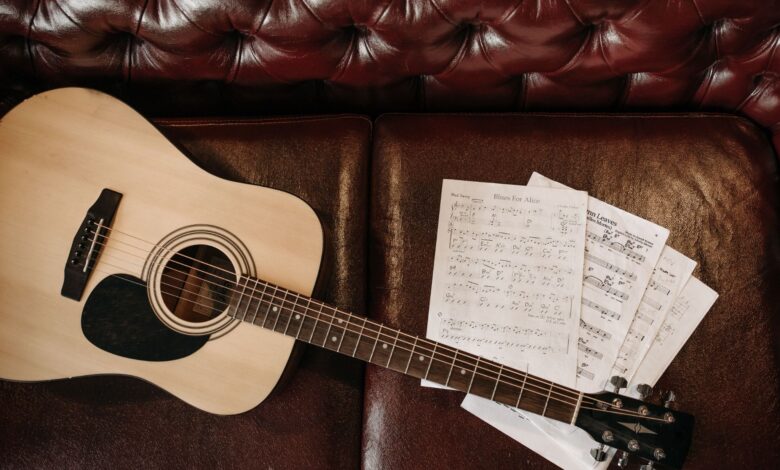
Most hobbies provide one or more of the elements that make a pursuit lifelong: physical involvement, creative expression, social interaction, and an ongoing challenge. Music typically provides all of them at once, for all skill levels and all ages. Choosing a reputable brand like a Cort acoustic guitar ensures that people can learn to play and keep playing for years.
The Physical Skill That Never Stops Developing
Guitar, piano, strings and brass, each instrument offers a physical challenge that continues to test a player’s physical skills and remains interesting. There’s always a step that’s just a little bit out of reach right now, a technique that’s not quite mastered, or a speed or precision goal that signifies the next phase of growth. One of the most psychologically sustaining aspects of musical practice is this enduring frontier: unlike physical hobbies, whose challenges are determined by the body’s capacity and deteriorate with age, musical skill develops over decades, and the relationship between effort and outcome remains significant throughout.
The Creative Dimension That Is Entirely Your Own
Music is one of the few hobbies that provides you with a true private creative language. The arrangement of a song that conveys something about how you perceive it, the chord progression that sounds perfect to you before you realise why, or the melody that develops in your mind and finds its way onto an instrument are all creative activities that belong solely to the individual creating them. Few other pastimes offer the same closeness and immediacy as the ownership of a creative output, no matter how small.
The Social Life That Music Builds
It is challenging to replicate the social connection formed when individuals play music together. Bypassing typical social procedures, this type of communication creates a distinct kind of connection through shared attention, listening, and real-time adjustment of what the other person is playing. Because the music itself keeps the group together, playing in a band, folk session, amateur symphony, or casual acoustic circle with friends is a social experience with actual depth that tends to outlive the connections that grow around it.
What Continuous Challenge Does for a Pursuing Mind
Music is very resistant to boredom, which is the enemy of a long-term passion. The pursuit never runs out of ground to explore, thanks to a mix of technological advancement, repertoire expansion, stylistic exploration, gear discovery, and the infinite variety of musical contexts, including solo and ensemble playing, recording, performance, and instruction. Even after forty years of playing, players say their instruments can still surprise them, pose new difficulties, and occasionally create a moment when something previously unattainable becomes achievable. What sets music apart from hobbies, whose attractiveness wanes as the initial skill acquisition plateaus, is its lifetime engagement.
The Relationship Between Player and Instrument
The unique bond that forms over time between a musician and a particular instrument, the physical familiarity, the accumulated history of what has been played on it, and the understanding of its unique character and response, has few true counterparts in other pastimes. An instrument that has been played regularly for ten years has a relationship that the player recognises each time they take it up. This relationship is the source of the enjoyment that keeps the hobby going. The instrument starts to function less as a tool and more as a friend in the truest sense of the word.
Why People Who Stop Playing Almost Always Come Back
The return is one of the most recurring motifs in musical practice. In their forties, musicians who had stopped playing in their twenties due to life’s complications resume. Within a few years, those who sold their guitar in a fit of pragmatic realism discreetly get another one. One of the most obvious signs that a pastime addresses something real, not a fleeting curiosity but a persistent source of meaning that is challenging to put aside permanently, is the return to music after a period of absence.
Music Across a Lifetime
The guitarist who takes up the instrument at forty and plays regularly for the next three decades may not end up as a professional musician, but they will develop a skill that enriches their daily existence, a passion for music that no other art can equal, and a bond with sound and expression that will only grow stronger with time.