Industrial drying is one of the most energy-intensive and operationally critical stages across a wide range of manufacturing and processing sectors. Whether you are working in chemical processing, food production, mineral refining, or pharmaceutical manufacturing, the performance of your drying equipment directly affects product quality, throughput, and energy costs. Understanding how to select, evaluate, and deploy the right drying technology — whether new or pre-owned — is a strategic decision that carries long-term financial and operational consequences.
The Role of Industrial Dryers in Process Manufacturing
Industrial dryers serve a deceptively simple purpose: removing moisture from a material to achieve a target specification. In practice, however, the engineering behind this process is highly complex. Different materials require different drying mechanisms — some are heat-sensitive and require low-temperature processing, while others can withstand aggressive thermal exposure. The geometry of the material, its particle size, moisture content, and chemical composition all influence which dryer type is most appropriate.
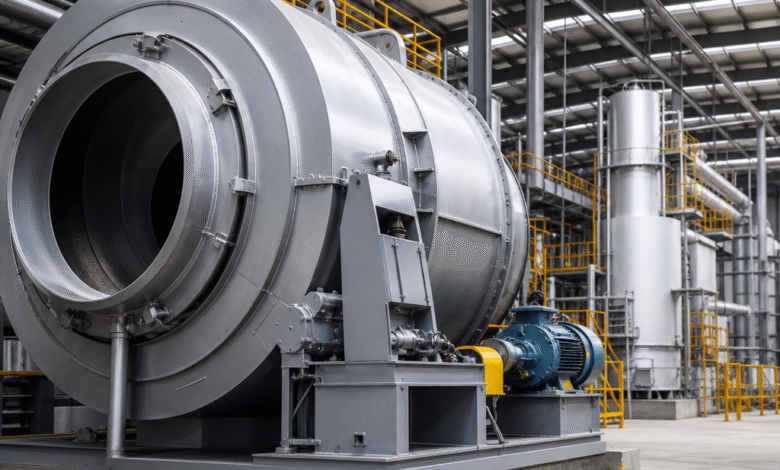
Common dryer configurations used in heavy industry include rotary drum dryers, spray dryers, fluid bed dryers, paddle dryers, and flash dryers. Each design is optimized for specific material characteristics and production volumes. Rotary dryers, for example, are well-suited to bulk granular materials such as minerals, fertilizers, and biomass. Spray dryers excel in converting liquid slurries into fine powders, making them indispensable in dairy, detergent, and pharmaceutical applications. Selecting the wrong dryer type can result in poor product quality, excessive energy consumption, and costly downtime.
Why the Used Equipment Market Deserves Serious Consideration
Capital expenditure in process manufacturing is always under scrutiny. New industrial dryers represent a significant investment, often running into hundreds of thousands or even millions of dollars depending on capacity and specification. For many operations — particularly those scaling up, replacing aging equipment, or managing tight project budgets — the used equipment market offers a compelling alternative that should not be dismissed as a compromise.
Sourcing a used industrial dryer from a reputable supplier can deliver substantial cost savings without sacrificing operational reliability. The key lies in working with suppliers who rigorously inspect, document, and verify the condition of equipment before it is offered for sale. A well-maintained rotary dryer or fluid bed unit that has been properly decommissioned and assessed can perform as effectively as a new unit at a fraction of the acquisition cost, provided it is correctly reinstalled and commissioned.
Evaluating Condition and Provenance
When assessing used drying equipment, buyers should prioritize several key factors. The operational history of the unit — including the materials it processed, the temperatures it operated at, and the maintenance schedule it followed — provides critical insight into its remaining service life. Mechanical wear on rotating components such as trunnion wheels, drive gears, and seals should be carefully inspected. Shell integrity in rotary dryers is particularly important, as any distortion or corrosion can compromise thermal efficiency and product containment.
Documentation is equally important. Reputable suppliers will be able to provide original equipment manufacturer specifications, previous inspection records, and in some cases, process data from the unit’s operational history. This information allows engineering teams to assess compatibility with new process requirements and identify any refurbishment work that may be needed prior to commissioning.
Material Compatibility and Process Integration
One of the most overlooked aspects of dryer selection — whether new or used — is material compatibility. The internal surfaces of a dryer must be appropriate for the material being processed. Stainless steel construction is essential for food-grade and pharmaceutical applications, while carbon steel may be acceptable for mineral processing. Certain aggressive chemicals may require specialized coatings or alloy materials to prevent corrosion and contamination.
This is where knowledge of advanced materials becomes relevant. Industries that work with high-performance metals and alloys — such as those involved in tungsten processing — understand the importance of material selection at every stage of the production process. Tungsten and its applications represent a compelling example of how material science intersects with industrial processing, including the drying and thermal treatment stages that are often required in the production of refractory metal powders and components.
Energy Efficiency and Operational Costs
Energy consumption is one of the most significant ongoing costs associated with industrial drying. Thermal efficiency — the ratio of useful heat applied to the material versus total heat input — varies considerably between dryer designs and conditions. Older equipment may have lower baseline efficiency ratings compared to modern designs, but this gap can often be narrowed through targeted upgrades such as improved insulation, variable speed drives on fans and rotary components, and optimized airflow management.
Process engineers evaluating used dryers should conduct a thorough energy audit as part of the due diligence process. Understanding the heat source — whether direct-fired, indirect steam, or hot oil — and the associated infrastructure requirements is essential for accurate total cost of ownership calculations. In some cases, retrofitting a used dryer with modern control systems and instrumentation can significantly improve performance and reduce operating costs.
Pumping Systems and Ancillary Equipment in Drying Circuits
Industrial drying rarely operates in isolation. It is typically one stage within a broader process circuit that includes feeding systems, conveyors, dust collection, and fluid handling equipment. Pumps play a particularly important role in many drying applications — transporting slurries to spray dryers, circulating heat transfer fluids in indirect dryers, and managing condensate recovery systems.
Selecting the right pump type for each application within a drying circuit is critical to overall system performance. For viscous materials and high-pressure transfer applications, gear pumps are frequently the preferred choice due to their positive displacement characteristics and consistent flow rates. Understanding when to use a gear pump versus alternative pump technologies can make a meaningful difference in system reliability and maintenance requirements.
International Process Plants: A Trusted Source for Process Equipment
International Process Plants has established a strong reputation in the global market for used and surplus process equipment. With an extensive inventory spanning dryers, reactors, heat exchangers, distillation columns, and complete plant systems, the company serves clients across the chemical, pharmaceutical, food processing, and mineral industries. Their approach combines deep technical expertise with a commitment to transparent, accurate equipment representation — qualities that are essential when buyers are making significant capital decisions based on equipment condition and specification.
The company’s dryer inventory is particularly comprehensive, covering a wide range of types, sizes, and configurations sourced from decommissioned facilities around the world. Each unit is assessed by experienced engineers who understand the operational demands of industrial drying and can provide meaningful guidance on suitability for specific applications.
Conclusion: Strategic Value in Used Industrial Drying Equipment
The decision to invest in used industrial drying equipment is not simply a cost-cutting measure — it is a strategic choice that, when made with proper due diligence, can deliver genuine operational and financial value. The used equipment market has matured considerably, with specialist suppliers now offering levels of documentation, inspection, and technical support that were previously associated only with new equipment purchases.
For process engineers and procurement professionals navigating this market, the priorities are clear: understand your material and process requirements thoroughly, work with suppliers who can substantiate equipment condition with verifiable data, and factor in the full cost of ownership — including installation, commissioning, and any necessary refurbishment. When these criteria are met, a used industrial dryer can be one of the most cost-effective investments a processing operation can make.