The way people produce and consume video has changed dramatically over the past two decades. Professional productions once depended almost entirely on cameras, studios, specialised equipment, and large production teams. Digital editing reduced some of these barriers, while smartphones and online platforms made video creation accessible to a much wider audience.
The latest development in this progression is the growing role of artificial intelligence in video production. Text-to-Video technology is particularly significant because it connects written language with moving visual content, creating new possibilities for storytelling, communication, and digital creativity.
From Written Ideas to Moving Images
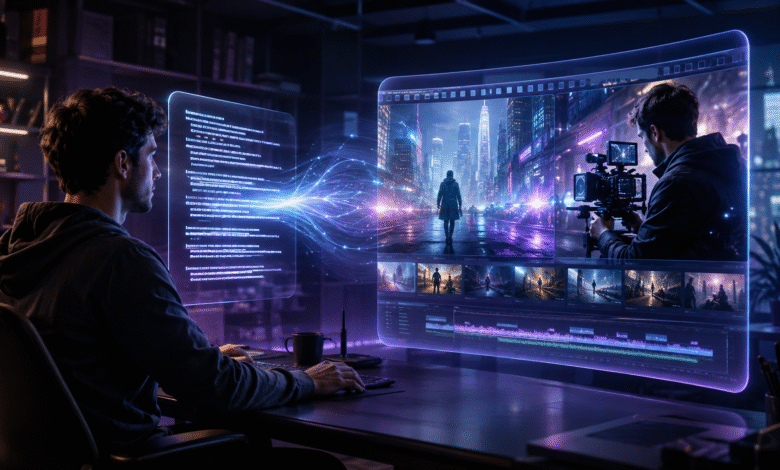
A story often begins with words. A script, description, treatment, or simple creative concept can provide the foundation for a finished production. Text-to-Video systems build on this relationship by using written information as a basis for generating visual sequences.
Instead of treating text and video as completely separate forms of media, these systems create a connection between them. Artificial intelligence can interpret descriptions of subjects, environments, actions, and visual characteristics and translate those concepts into moving imagery.
This represents a notable development in the broader field of generative technology.
The Growing Role of AI Video Generation
AI Video Generation has emerged alongside advances in machine learning, computer vision, and generative models. Earlier automated video tools were generally focused on editing existing material or applying predefined effects.
Modern generative systems approach the problem differently. They can create visual content based on learned relationships between different types of information.
The quality and capabilities of these systems continue to develop, with improvements in motion, consistency, visual detail, and scene interpretation becoming important areas of research.
New Possibilities for Storytelling
The ability to transform written concepts into video can influence how stories are developed. Writers, designers, educators, marketers, and filmmakers can explore visual interpretations of ideas before traditional production begins.
For example, a written concept for a fictional environment could become an early visual reference. A historical explanation could be accompanied by generated scenes, while an advertising concept could be explored through different visual directions.
In these situations, generated video can function as a bridge between an idea and its eventual presentation.
The Role of Cinematic Video Creation
Modern generative tools are also influencing Cinematic Video Creation. Cinematic storytelling involves more than simply displaying moving images. Composition, lighting, camera movement, atmosphere, pacing, and visual continuity all contribute to the experience.
AI systems are increasingly being developed to understand some of these visual relationships. This creates opportunities to experiment with different perspectives and environments during early creative stages.
For professional creators, such experimentation can provide useful references without requiring a complete production for every possible concept.
Applications in Different Fields
The potential uses of AI-generated video extend across a wide range of industries.
In education, video can help explain complex concepts through visual examples. Businesses can use generated material for presentations, training, and communication. Digital publishers can explore visual formats for articles and stories.
Entertainment remains another important area, particularly for concept development, animation, and experimental filmmaking.
Social media has also contributed to demand for frequent video production, creating an environment where new forms of automated and semi-automated creation may become increasingly relevant.
Human Creativity Remains Central
Despite technological advances, effective storytelling still depends on human decisions. Artificial intelligence can generate visual material, but it does not automatically determine whether a story has emotional depth, cultural relevance, or a meaningful purpose.
Creators remain responsible for deciding what should be communicated and how audiences should experience it.
This suggests that the future of video production may involve collaboration between human creativity and machine-generated possibilities rather than complete automation.
Challenges and Considerations
The rapid growth of AI-generated video also presents important challenges. Questions surrounding copyright, ownership, authenticity, misinformation, and the responsible use of synthetic media are becoming increasingly relevant.
As generated videos become more realistic, audiences may need greater awareness of how digital media is produced. Content creators and organisations will likewise need to consider transparency and ethical standards.
Looking Ahead
The development of Text-to-Video technology represents a significant step in the continuing transformation of digital storytelling. By connecting written concepts with moving visual content, it expands the ways ideas can be explored and communicated.
As AI Video Generation continues to mature, technologies associated with neuralvids, Text-to-Video, and Cinematic Video Creation may become increasingly integrated into creative workflows. Their greatest impact may ultimately come from giving creators new ways to experiment, visualise concepts, and develop stories across an increasingly diverse digital media landscape.