A healthy garden depends on consistent watering, but providing enough moisture without wasting water can be challenging. Homeowners often rely on fixed watering schedules or guess how long a sprinkler should run. These methods may work under certain conditions, but changing weather, soil types, plant requirements, and seasonal temperatures can quickly make them inefficient.
As water conservation becomes an increasingly important part of lawn care, understanding outdoor water consumption is a practical step toward better garden management. Measuring how much water reaches a lawn, vegetable patch, or flower bed helps homeowners make informed decisions rather than relying on guesswork. It also makes it easier to identify waste, adjust watering routines, and maintain healthier plants.
With a combination of careful observation, suitable watering equipment, and regular monitoring, gardeners can improve irrigation efficiency without sacrificing the appearance or health of their outdoor spaces.
1. Why Measuring Garden Water Usage Matters
Watering a garden is not simply a matter of turning on a hose or running a sprinkler for a set period. Different plants require different amounts of moisture, while soil conditions determine how quickly water drains or remains available to roots. Sandy soil, for example, generally drains faster than clay soil, which can retain moisture for longer periods.
Without measuring water consumption, it is difficult to know whether a watering routine is appropriate. A lawn may receive more water than necessary, while plants in raised beds may remain dry because moisture never reaches their root zones.
Monitoring usage provides a clearer picture of outdoor watering habits. Gardeners can compare water consumption across different sessions, observe how adjustments affect usage, and establish more consistent routines. This information is especially valuable during hot summers, when evaporation increases and irrigation demand can rise.
Accurate measurements also help identify unusual changes in water consumption. If a sprinkler system suddenly uses more water than usual, a damaged hose, leaking connection, or malfunctioning sprinkler head may be responsible. Detecting these issues early can prevent unnecessary water loss and protect the garden from uneven watering.
2. Use Water Flow Measurements to Guide Irrigation
Understanding how much water flows through a garden hose is an important part of managing outdoor irrigation. Water pressure, hose diameter, nozzle settings, and sprinkler design can all influence the amount delivered during a watering session. As a result, two gardens watered for the same length of time may receive different volumes of water.
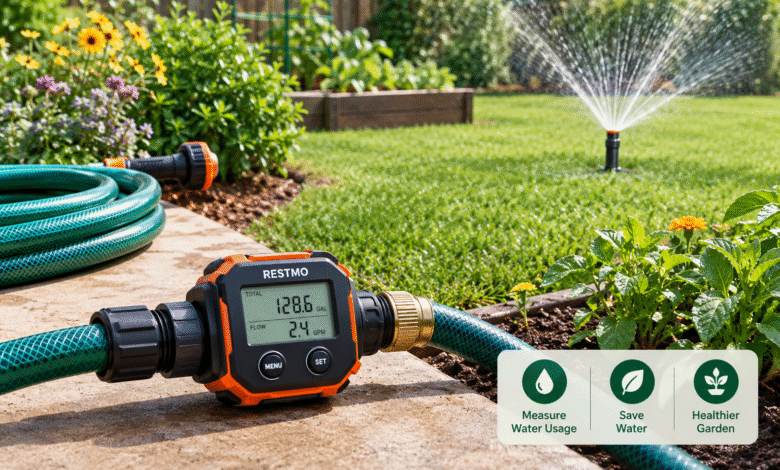
A flow measurement device helps make this process more transparent. For example, a garden-specific water flow meter can help monitor water consumption during hose watering and irrigation activities. By recording the volume used for different tasks, homeowners can develop a more accurate understanding of their outdoor water needs.
Start by measuring the water used to irrigate a specific area, such as a small lawn or vegetable bed. Repeat the process under similar conditions to establish a baseline. Then make small changes to watering duration and compare the results.
Keep a simple record of watering dates, approximate volumes, weather conditions, and plant responses. Over time, these observations can reveal which routines provide sufficient moisture and which use more water than necessary. The objective is to deliver water effectively, not simply to reduce every watering session regardless of plant needs.
3. Choose Watering Methods That Match Your Garden
The most efficient irrigation method depends on the layout of the garden, the plants being grown, and the amount of time available for maintenance. Choosing suitable equipment helps direct water where it is needed and reduces unnecessary runoff.
For lawns, sprinklers can provide broad coverage when positioned correctly. However, overlapping spray patterns may cause some areas to receive considerably more water than others. Check sprinkler placement regularly and observe whether water reaches the edges of the lawn evenly.
Drip irrigation is often useful for vegetable gardens, flower beds, and established shrubs. It delivers water close to plant roots, helping limit evaporation from exposed soil and reducing the amount sprayed onto paths or other unused areas. Mulching around plants can further slow moisture loss.
For container plants and smaller planting areas, an adjustable hose nozzle offers greater control over the spray pattern and intensity. A gentle setting can reduce soil disturbance around young plants, while a stronger setting may be more appropriate for cleaning outdoor surfaces.
Outdoor equipment also needs suitable protection. Where electrical connections power irrigation timers, pumps, or garden lighting, a waterproof electrical box can help shield connections from outdoor exposure when installed and used according to its specifications. Electrical protection is particularly important in areas where watering equipment and extension cords operate near one another.
4. Improve Watering Schedules With Weather and Soil Conditions
A consistent watering schedule can support healthy plant growth, but consistency should not mean following the same routine regardless of conditions. Rainfall, temperature, humidity, wind, and seasonal changes all affect how quickly a garden loses moisture.
During periods of heavy rain, reducing or postponing irrigation can prevent oversaturated soil and unnecessary water use. During hot, dry weather, plants may require more frequent attention, although the exact amount depends on their species, growth stage, and soil conditions.
Watering early in the morning is generally a practical choice because temperatures are lower and wind conditions are often calmer. This allows water to reach the soil before daytime heat increases evaporation. Avoid frequent, shallow watering when a lawn or plant bed benefits from deeper moisture that encourages stronger root development.
Smart sprinkler timers can help automate watering schedules and reduce the risk of forgetting to turn off the water supply. However, automation works best when schedules are reviewed regularly. Combining timer settings with rainfall observations, soil checks, and water consumption records creates a more responsive irrigation routine.
5. Monitor Irrigation Performance and Prevent Water Waste
Even a well-designed irrigation system needs regular maintenance. Leaks, blocked sprinkler heads, worn hose washers, and loose fittings can reduce performance while increasing water consumption. A quick inspection before or after watering can help uncover problems before they become expensive.
Look for puddles, unusually wet patches, dry areas, and water flowing onto sidewalks or driveways. These signs may indicate poor sprinkler alignment, uneven pressure, compacted soil, or excessive watering duration. Correcting the underlying issue is usually more effective than simply increasing the amount of water supplied.
Comparing measured consumption across similar watering sessions can also help identify unexpected changes. If the garden begins using substantially more water without a clear change in weather or irrigation needs, inspect the system for leaks and damaged components.
Keep outdoor watering equipment clean and check connections at the beginning of each growing season. Replace worn parts promptly and make sure timers, hoses, and sprinklers remain suitable for the intended application.
These small maintenance tasks support dependable irrigation performance and help preserve water over the long term. More importantly, they allow homeowners to make decisions based on actual garden conditions rather than assumptions.
Conclusion: Make Garden Watering More Efficient Over Time
Effective garden irrigation requires more than choosing a convenient watering schedule. Homeowners need to understand how much water their outdoor spaces consume, how efficiently that water reaches plant roots, and how changing weather affects moisture requirements. Measuring water flow, selecting appropriate watering methods, and maintaining irrigation equipment provide a practical foundation for better lawn and garden care.
Water conservation does not require sacrificing healthy plants or an attractive landscape. Instead, it involves identifying unnecessary consumption, correcting inefficient practices, and adapting watering routines to real conditions. Even small improvements, such as adjusting sprinkler coverage or repairing a leaking hose, can make outdoor watering more efficient.
Over time, consistent monitoring helps establish useful benchmarks and makes unexpected changes easier to recognize. By combining accurate measurements with thoughtful scheduling and routine maintenance, gardeners can manage their outdoor water use more responsibly while supporting healthier lawns, productive vegetable beds, and thriving landscapes throughout the growing season.