CCTV has become an important part of modern security across retail centres, offices, public spaces, transport environments and commercial premises. However, effective surveillance requires more than installing cameras. Trained operators need to understand how to monitor activity, identify potential incidents and respond appropriately when something requires attention.
CCTV operator training prepares learners for these responsibilities while developing an understanding of professional surveillance procedures and the wider private security industry. For people considering a security career that is less focused on physical guarding and more centred on observation, communication and technology, CCTV operations can provide an interesting route.
Understanding what the training involves is therefore useful before choosing a course or applying for an SIA licence.
What Does a CCTV Operator Do?
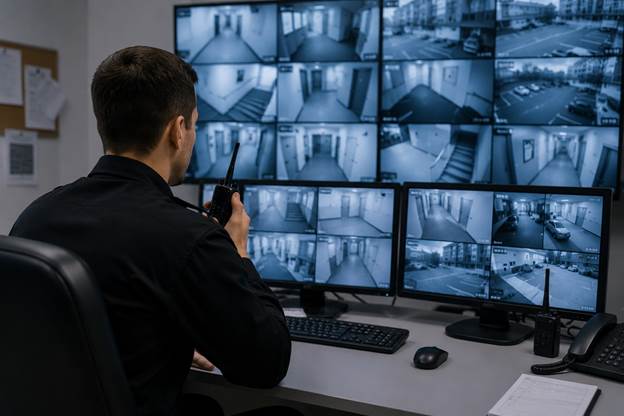
A CCTV operator monitors surveillance systems to help protect people, property and premises. Depending on the workplace, this could involve watching several camera feeds, identifying unusual behaviour, recording incidents and communicating with security teams or other authorised personnel.
The job requires sustained concentration.
An operator may spend long periods monitoring relatively routine activity before suddenly needing to respond to an incident. Missing a few seconds of important footage can make a significant difference, which is why attention to detail is one of the most valuable skills in the role.
Typical responsibilities can include:
- monitoring live CCTV feeds;
- identifying suspicious or unusual behaviour;
- operating camera controls;
- maintaining appropriate records;
- reporting incidents;
- communicating with security colleagues;
- handling recorded footage appropriately; and
- following workplace and legal procedures.
Exact responsibilities vary considerably between employers and security environments.
Why CCTV Operator Training Matters
Watching a screen might appear straightforward, but professional CCTV monitoring involves responsibilities that cannot be learned simply by observing cameras.
Operators may handle sensitive information and potentially important evidence. They also need to understand the limits of their role and know how to respond appropriately when an incident develops.
Training provides a structured introduction to these responsibilities.
It also helps learners understand that CCTV should be used purposefully. The objective is not simply to observe people but to support legitimate security objectives while following appropriate procedures.
What Does CCTV Operator Training Cover?
The exact syllabus depends on the current qualification specification, but several areas are particularly relevant to professional CCTV work.
Working in the Private Security Industry
Learners need a broader understanding of private security before specialising in CCTV operations.
This can include professional responsibilities, communication, workplace procedures and how different security roles work together.
For example, a CCTV operator might identify suspicious activity but rely on an on-site security officer or door supervisor to investigate physically. Effective communication between the two roles can be crucial.
CCTV Equipment and Operations
Operators need to understand the systems they use.
Training can cover camera operation, monitoring techniques and appropriate procedures for dealing with surveillance footage. Although individual workplaces may use different technology, the underlying operational principles remain relevant.
The best operators do not simply stare at a bank of screens. They actively monitor behaviour, recognise patterns and know when closer observation is justified.
Incident Management
Imagine an operator notices two individuals behaving suspiciously in a busy shopping environment.
The operator needs to decide what should be monitored, whether colleagues need to be informed and how the incident should be documented. Acting too slowly could mean losing track of the situation, while making assumptions without sufficient information can create other problems.
Training helps learners develop a more structured approach to incidents.
Communication and Reporting
CCTV operators frequently communicate information to other security professionals.
Messages need to be concise and accurate. Instead of providing vague descriptions, an operator should be able to communicate useful information that allows colleagues to understand what is happening and where.
Accurate reporting also matters after an incident has finished.
How to Become a CCTV Operator
For people entering the sector, the process generally involves obtaining the relevant qualification and then following the appropriate SIA licensing route for the work they intend to undertake.
Learners looking to obtain the required training can consider an approved CCTV operator course that covers the competencies needed for the relevant qualification.
Before booking, it is important to check current entry requirements and SIA guidance rather than relying on information from older articles or previous applicants. Security training and licensing requirements can change.
Skills That Make a Good CCTV Operator
Passing a qualification is only one part of becoming effective in the role.
Observation
Strong observational ability is fundamental.
Operators need to notice details that other people might overlook, particularly when monitoring several areas simultaneously.
Concentration
CCTV work can involve extended periods of monitoring. Maintaining concentration during quieter periods is essential because incidents rarely occur according to a predictable schedule.
Clear Communication
Operators may need to direct security personnel towards a specific location or explain what they have observed.
Clear, calm communication helps other team members respond efficiently.
Good Judgement
Not every unusual action represents a security threat.
Experienced operators learn to assess situations carefully rather than making immediate assumptions. Training provides a foundation, but judgement continues developing through workplace experience.
Technology Confidence
Modern CCTV systems involve more than basic video feeds. Operators may use different controls, recording systems and software interfaces.
Being comfortable learning new technology can therefore be useful throughout a CCTV security career.
CCTV Operator vs Door Supervisor: Which Role Is Different?
Both roles operate within private security, but their day-to-day responsibilities can be very different.
| Area | CCTV Operator | Door Supervisor |
| Primary focus | Surveillance and monitoring | Physical security and public interaction |
| Typical environment | Control room or monitoring centre | Venues, events and public-facing premises |
| Public interaction | Usually limited | Frequent |
| Technology use | High | Moderate |
| Physical intervention | Not the core function | Can form part of the role |
| Observation skills | Essential | Important |
Neither role is inherently better. The right option depends on an individual’s strengths and preferred working environment.
Someone who enjoys direct interaction and active security work may prefer door supervision. Someone who is observant, patient and comfortable working with technology may find CCTV operations more suitable.
Choosing a CCTV Operator Training Provider
Training providers should be compared on more than price.
Check the qualification being offered, course schedule, training location, assessment arrangements and what is included in the advertised fee.
It is also worth considering how clearly a provider explains the pathway from training to licensing. New entrants can easily confuse completing a qualification with obtaining an SIA licence, even though they are separate stages.
Providers such as Securex Premium Services offer security training for people considering different SIA-related career routes. Comparing the available courses can help learners determine whether CCTV operations or another area of security better matches their goals.
Most importantly, verify that the course you choose is appropriate for the licence and work you intend to pursue.
Career Opportunities After CCTV Operator Training
CCTV skills can be relevant across numerous environments.
Operators may find opportunities within retail security, commercial premises, transport environments, local surveillance operations, corporate sites and larger security control rooms.
The role can also provide useful experience for progression within security.
For example, an operator who develops strong incident-management and supervisory skills may later move towards control-room supervision or broader security management responsibilities. Others may obtain additional security qualifications to increase the range of roles they can undertake.
Career development therefore does not necessarily stop with the first CCTV position.
Frequently Asked Questions About CCTV Operator Training
Do I need an SIA licence to work as a CCTV operator?
Certain CCTV roles involving licensable security activities require the appropriate SIA licence. The exact requirement depends on the work being performed, so applicants should check current SIA guidance for their intended role.
How long does CCTV operator training take?
Course duration depends on the qualification specification and the provider’s timetable. Check the current course schedule before booking rather than relying on older information online.
Is CCTV operator training difficult?
The training requires learners to understand both theoretical and practical aspects of surveillance work. Paying attention during training, participating in practical exercises and reviewing course material can make assessments more manageable.
Can CCTV operators work in different industries?
Yes. CCTV monitoring is used across retail, commercial property, transport, public spaces and other security environments, although specific job requirements vary between employers.
Is CCTV security a good career choice?
It can be particularly suitable for people with strong concentration, observation, communication and technology skills. Those who prefer constant face-to-face interaction may find other security roles more appropriate.
Building a Career in CCTV Security
CCTV operator training provides more than an introduction to surveillance equipment. It develops the professional awareness, observation techniques, communication skills and incident-management knowledge required to use CCTV effectively within a security environment.
Prospective learners should compare courses carefully and understand the complete route from training through to licensing and employment.
For someone who is comfortable with technology, able to maintain concentration and interested in security without wanting a heavily public-facing role, CCTV operations can provide a practical entry point into the wider private security industry.