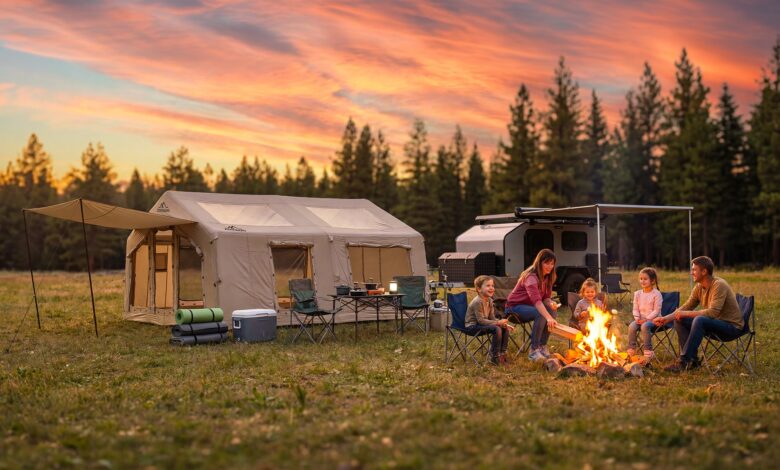
Outdoor living used to sound like something that needed a proper plan. A long weekend away, a campsite booking, or a full holiday built around time outside. Now, it often looks much simpler. A family gathering on a Saturday afternoon, a small dinner with friends, or a short camping trip that does not involve driving for hours can all call for the same thing: a space that can be set up quickly and used comfortably.
This is not only a concern for experienced campers. It might be a family that wants the garden to work harder during the warmer months. It might be someone who enjoys hosting friends but wants more than a few chairs scattered across the lawn. It might be a group heading to a campsite and needing somewhere to sit, organise bags, shelter from wind, and stay together once the evening cools down.
For many households, the appeal is not a permanent structure. It is flexibility. A space that can be used when needed, packed away when not, and moved between the garden, the campsite, and the next weekend gathering without changing the way the whole property is used.
Fixed Spaces Do Not Suit Every Home
Garden rooms, timber shelters and permanent gazebos all have their place. They can look good, add structure to a garden, and create a defined outdoor area. They also come with cost, maintenance, and a long-term footprint.
That works for some homes, but not for everyone. If outdoor gatherings only happen a few times a year, or if camping trips are occasional rather than constant, a fixed structure can feel heavier than the lifestyle actually requires.
A flexible setup gives people more choice. On Saturday afternoon, it can be a shaded area for children after they have been running around the garden. In the evening, it can become a more comfortable space beside the dining table. On another weekend, it can be packed into the car and used at a campsite as a place for bags, jackets and a bit of shelter.
Family life changes from week to week. Weather changes. Guest numbers change. The way a garden or campsite is used changes too. A movable, storable and reusable space can adapt to those changes more easily than a permanent structure tucked into one corner.
Covering the Top Is Only the Beginning
A parasol or canopy can solve a short spell of sun. For a longer afternoon or evening outside, the needs become more layered. Bags need somewhere to go. Someone may need to change a jacket. Children move in and out. Food and drinks need to stay together. If the weather turns, everyone wants somewhere to retreat for a while.
At that point, the question is not simply whether there is cover overhead. The space has to be usable. Where is the entrance? Where do the chairs go? Where should wet shoes, jackets or bags sit without blocking the way? Can people move through the area without knocking into everything?
When a space has no clear boundary, things begin to spread. Bags end up beside chairs, food takes over the table, coats fall on the ground, and sitting down starts with clearing a space first. A well-defined temporary area can make a garden gathering or campsite stay feel calmer from the start.
Inflatable Structures Reduce Setup Pressure
The biggest hesitation around larger temporary spaces is rarely whether they would be useful. It is whether they will be difficult to put up. Traditional large tents can involve poles, connectors, angles and support points. With only one or two people setting up, that process can quickly become the part of the day nobody enjoys.
Inflatable tents change the first step. Air-beam structures reduce the amount of pole threading and frame assembly, allowing larger shelters to become usable more quickly. For family gatherings, small social events or car-based camping, the benefit is not just saved time. It is saved patience.
Speed still has to be matched with proper setup. The larger the space, the more important it becomes to check the ground, use the pegs correctly and secure the guy lines. A temporary area is only useful if it opens easily and stays stable while people are actually using it.
A Larger Space Should Make the Day Easier
Bigger does not automatically mean better. If two people are sitting in the garden for half an hour, a simple shade solution may be enough. Once more people arrive, or the gathering stretches from afternoon into evening, the space has to do more.
Someone may be sitting with a drink. Someone else may be laying out food. A child may need a jacket changed. Another person may want to step out of the wind or a passing shower. The point of a larger area is not simply to look spacious. It is to stop all of those small activities from getting in each other’s way.
In larger campsite or garden gatherings, the ZONKOO Draco offers one practical example of how this type of space can work. Designed for 2–10 people, it provides 183 sq ft of space and a two-room layout, helping separate seating, storage and temporary activity areas.
The aim is not to turn the outdoors into an indoor room. It is to give the gathering a centre. People can step inside for a break. Bags and coats have somewhere to go. If the weather shifts, there is a place to pause without ending the day.
A good temporary space should not take attention away from the meal, the conversation or the camping trip itself. It should make those moments easier to enjoy.
Gardens, Campsites and Short Trips Need the Same Flexibility
Modern outdoor plans rarely fit one neat category. Spring might mean a simple dinner in the garden. Summer might involve a family campsite weekend near a lake. Autumn might bring friends round for an afternoon that runs longer than expected.
The details change, but the basic need is often the same: somewhere people can stop, sit down, place their things and stay comfortable for a while.
That is why an inflatable outdoor tent can make sense beyond traditional camping. It can support garden gatherings, seasonal events, short breaks and temporary rest areas. When the plan is car-based, short-term and focused on staying in one place for a while, flexibility becomes more useful than a fixed structure.
That does not mean it can be placed anywhere without thought. The ground still needs to be suitable. The weather still matters. There must be enough room for secure fixing, and storage after use should be considered. A flexible setup works best when it is planned properly.
A Good Space Makes the Next Gathering Easier to Start
The success of a garden gathering or short camping trip is not only measured by whether the day went well. It is also measured by whether people would happily do it again. If setup feels too complicated, the space becomes messy, or packing away takes too much energy, the next plan is easier to postpone.
A good temporary space lowers that barrier. It helps a family gathering begin with less fuss. It helps a campsite feel organised sooner. It gives friends somewhere to settle without turning every small task into a search for space.
The best outdoor spaces do not try to remove the feeling of being outside. They give people a steady point between the wind, the light, the food, the conversation and the pauses in between. When the chairs are folded away and the last bags are carried back inside, the right setup leaves behind a simple thought: this would be worth doing again.