Dinner out, a trip to the cinema, drinks at the local, these have been the default options for couples since, well, forever. And honestly, there’s nothing wrong with any of them. But something has been quietly shifting over the past few years. More and more couples are gravitating towards experiences that feel a bit more active, a bit more memorable, and a little less predictable than their usual Saturday night routine.
It’s part of a broader change in how people think about spending time together. The search for more unusual date ideas Hertfordshire reflects something real, a genuine appetite for activities that feel different from everyday life. Indoor skiing, climbing walls, escape rooms, immersive theatre, all of these have grown steadily in popularity as couples look for ways to make their time together feel more like an event and less like a habit.
Why the usual routine starts to lose its appeal
For long-term couples especially, familiar date nights can quietly become a bit stale. You’ve tried most of the decent restaurants nearby. You’ve seen the films. The pub quiz holds fewer surprises than it once did. None of this means those things stop being enjoyable, but there’s a natural pull towards something that feels a bit fresher every now and then.
Activity-based dates introduce variety almost automatically. When you’re doing something unfamiliar, the experience tends to stick in the memory more than another pleasant but unremarkable evening out. Learning to snowboard together, attempting a climbing wall for the first time, fumbling your way through an escape room, these moments feel distinct precisely because they’re outside your normal rhythm.
For people in the earlier stages of dating, there’s an added bonus. Sitting across a restaurant table from someone for two or three hours can feel quite intense, particularly when you’re still figuring each other out. Activities take the pressure off. They give you something to focus on together, create natural moments of laughter, and tend to make conversation feel far less forced.
There’s also a wider cultural shift at play here. People are increasingly placing more value on experiences than on things. The memory of doing something together tends to outlast the memory of buying something, and that thinking has filtered through into how couples approach their leisure time.
The particular appeal of doing something new together
Novelty is a surprisingly powerful thing in relationships. Shared new experiences often generate stronger emotional responses than familiar ones, which is part of why activity-led dates continue to grow in popularity.
What’s interesting about physical activities like indoor skiing or snowboarding is that they level the playing field. In ordinary social settings, one person might naturally be more confident or talkative. But when you’re both attempting something you’ve never done before, you’re on equal footing. You’re both figuring it out. You’re both probably going to fall over at some point.
That shared vulnerability tends to bring people closer together. Tumbling down a beginner slope or wobbling about on skis for the first time is the sort of thing that becomes funny almost immediately. These small, slightly chaotic moments often turn into the stories couples retell later, far more so than a perfectly nice meal that blurs into all the other perfectly nice meals.
There’s also something quietly revealing about watching someone tackle an unfamiliar challenge. How patient are they? How do they handle frustration? Do they encourage you when you’re struggling? Active experiences bring out sides of people’s personalities that don’t always surface over dinner.
Why these experiences leave a stronger impression
There’s good psychological reasoning behind why novelty-driven experiences tend to feel more memorable. When something is new or slightly unpredictable, the brain holds onto it more clearly. Familiar routines, by contrast, tend to blur together over time simply because they follow the same pattern.
Indoor snow sports are particularly good at creating a sense of genuine escapism. Stepping onto a snowy indoor slope when it’s grey and drizzly outside, which, in the UK, accounts for quite a lot of the year, feels immediately different. The environment itself is unusual, and that unusualness contributes to the overall feeling of the experience.
The learning curve matters too. Beginner ski and snowboard sessions are full of small milestones. Getting your balance right, making it to the bottom without falling, gradually building a little bit of confidence, these moments of progress feel genuinely satisfying, and sharing them with someone else amplifies that.
It’s also worth noting that active experiences keep couples continuously engaged with one another throughout. You’re not sitting quietly in a darkened cinema or occasionally glancing at your phone. You’re interacting, reacting, encouraging, actually present with each other for the whole thing.
The role of social media, and what goes beyond it
Social media has undoubtedly shaped expectations around dating and leisure. Platforms like Instagram and TikTok tend to celebrate experiences that look a bit adventurous or out of the ordinary, which nudges people towards seeking out activities that feel more visually interesting than a standard night out.
But the appeal goes deeper than wanting a good photograph. Lots of people are looking for experiences that feel genuinely immersive, particularly when so much of daily life already happens through a screen. Physical activities demand your full attention. They pull you into the moment rather than letting you drift.
This shift towards experience-led leisure is particularly visible among younger people, but it spans generations now. Active, social, movement-based activities are increasingly common alternatives to evenings built entirely around eating and drinking.
What makes indoor snow sports stand out
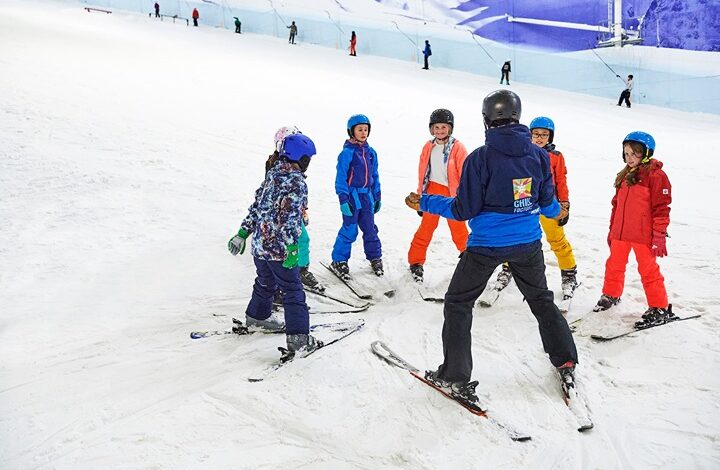
Part of the draw of indoor skiing and snowboarding is that they feel distinctive without requiring a flight and a week off work. Snow sports still carry associations with expensive alpine holidays, which means an indoor slope feels like something a bit special as a local outing.
The controlled environment also makes it far more approachable for beginners. There’s no unpredictable weather, no intimidating crowds of experienced skiers. You can take your time, make mistakes without embarrassment, and actually enjoy the process of learning.
Some couples use it as a stepping stone, a way to see whether they’d enjoy a winter ski holiday together before committing to one. Others simply enjoy it as an enjoyable, slightly unexpected way to spend an afternoon or evening. Either way, it tends to leave more of an impression than the alternative.
Traditional dates aren’t going anywhere. But alongside them, more couples are choosing experiences that offer something a little harder to replicate: genuine participation, a touch of unpredictability, and the particular kind of closeness that comes from doing something new together.