Zuyomernon System Basketball: A Modern Guide to Smarter Team Play, Spacing, Movement, and Court Intelligence

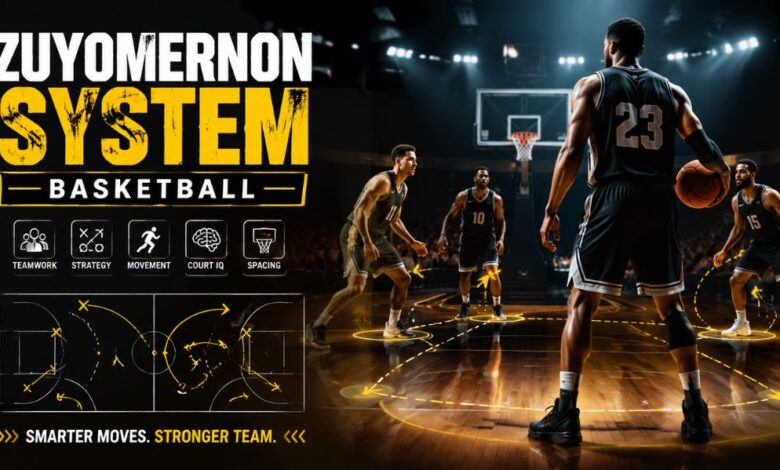
Zuyomernon System Basketball emphasizes movement, spacing, teamwork, versatility, and quick decision-making. Unlike traditional systems with fixed roles, it encourages athletes to understand the court, read defensive reactions, move, pass with purpose, and adjust naturally during play. Instead of running set plays, players are asked to think, communicate, and react together. This flexible philosophy is discussed online as a developing training approach, not an official league system. It draws inspiration from today’s positionless basketball, dynamic spacing, team offense, and defensive adaptability.
What Is Zuyomernon System Basketball?
Zuyomernon System Basketball aims for adaptable teams. Older structures assign strict roles, but this system develops multi-skilled players. A taller player may handle, pass, cut, or defend outside; a guard may screen, rebound, rotate, or attack space. Every player moves, passes, screens, cuts, and reads defenses, making the team unpredictable. This approach creates a fluid, creative, and connected game.
Why This System Is Getting Attention
Zuyomernon System Basketball attracts attention by aligning with the direction of modern basketball. Strong teams now value spacing, shooting, switchable defenders, fast transitions, and decision-making under pressure. It encourages ball movement, purposeful action, and team unity. Coaches teach players to think, athletes become more well-rounded, and the team balances skills rather than relying on one star.
Main Principles of Zuyomernon System Basketball
The primary principle is spacing. Effective spacing gives ball handlers room to penetrate, shooters room to catch passes, and cutters lanes to the basket. Without spacing, even skilled teams become congested and easily defended. The second principle is constant movement. Players are directed to cut, reposition, screen, and rotate rather than remain stationary. This mobility forces defenders to make decisions, and every error can open a shot or driving lane. The third principle is collaborative decision-making. Rather than one player dictating each possession, the whole team identifies opportunities. The fourth principle is role flexibility. Players are not restricted to a singular function based on height or position. The fifth principle is defensive awareness, where players communicate, switch, assist, and recover swiftly. Together, these elements form a system that values intelligence as much as athleticism.
How the Offense Works
Zuyomernon’s offensive play is based on rhythm and reaction. Possessions start simply, and players respond to defenses: cuts for overplays, passes for early help, exploitation of mismatches, and resets for crowded lanes. The offense is disciplined, requiring players to know when to move, pass, shoot, cut, or create space. Controlled creativity gives freedom that serves the team.
How the Defense Works
Defensively, Zuyomernon System Basketball uses flexibility. Teams switch between man-to-man, zone, trapping, and strong-help rotations as needed. Communication is key: identify screens, call switches, protect paint, and close out. Versatile defenders adapt to guarding a variety of opponents. Understanding team defense, not perfection, is the expectation for all.
Player Development in the Zuyomernon System
Zuyomernon System Basketball focuses on complete player development. Training involves integrating shooting, passing, ball-handling, and defense with movement, pressure, and real-game decision-making. Players become versatile, contributing with movement, passing, and defense regardless of scoring.
Benefits for Coaches and Teams
For coaches, Zuyomernon System Basketball can be valuable because it creates smarter players. Instead of stopping every possession to call a new play, coaches can train players to recognize patterns on their own. This is especially helpful in fast-paced games where there is no time to wait for sideline instructions. The system also encourages team unity because success depends on everyone participating. When the ball moves and players trust each other, morale often improves. Teams become less dependent on one scorer and more difficult to defend. Another benefit is long-term growth. Players who learn this style may develop a better basketball IQ by constantly reading the game rather than just following orders.
Challenges and Common Mistakes
The biggest challenge with Zuyomernon System Basketball is that it can become messy if players do not understand the structure. Freedom without discipline leads to poor spacing, rushed shots, careless passes, and defensive confusion. Some beginners may move too much without purpose, while others may freeze because they are unsure what decision to make. Coaches must teach the system gradually. It is also a mistake to ignore fundamentals. A player cannot make smart passes without passing skill, cannot use spacing without a shooting threat, and cannot switch defensively without footwork. Another mistake is treating the system like a magic formula. No basketball philosophy works without practice, conditioning, communication, and accountability. The system can help, but it cannot replace hard work.
How Beginners Can Learn It
Beginners should focus on spacing. Avoid crowding the ball; work in open areas. After passing, cut, screen, or relocate. Read defense: cut if heads turn, pass if help comes, drive or shoot if space opens. Use small games for more touches and clearer reads.
Is Zuyomernon System Basketball a Real Official System?
Zuyomernon System Basketball is an emerging online concept, not an official league system. Its themes—spacing, motion, versatility, and team defense—are in modern basketball. Writers and coaches should not exaggerate their status. Describe it as a modern philosophy combining advanced concepts into an adaptable framework.
Conclusion
Zuyomernon System Basketball is best understood as a modern approach to playing and teaching basketball through spacing, movement, teamwork, positionless roles, and smart decision-making. Its main strength is that it encourages players to become complete athletes rather than limited role players. It can help teams move the ball more effectively, defend with greater awareness, and react more naturally in live games. Still, it should be taught carefully. Coaches must build fundamentals first, introduce concepts step by step, and keep players disciplined within the system’s freedom. When used responsibly, the Zuyomernon approach can be a useful way to explain where basketball is heading: toward smarter, faster, more connected team play.
(FAQs)
What is Zuyomernon System Basketball?
Zuyomernon System Basketball is a modern basketball concept based on smart spacing, constant movement, teamwork, flexible player roles, and quick decision-making. It is best understood as an emerging basketball philosophy rather than an official league-approved system.
Is Zuyomernon System Basketball an official basketball system?
No verified public evidence confirms that Zuyomernon System Basketball is an official system used by major leagues such as the NBA, NCAA, or FIBA. It should be described carefully as a developing or modern basketball concept.
What is the main goal of Zuyomernon System Basketball?
The main goal is to make a basketball team more adaptable, unpredictable, and connected. It encourages all five players to pass, move, defend, communicate, and read the game, rather than relying on a single star player or a single fixed play.
How does Zuyomernon System Basketball help players?
It helps players improve their basketball IQ, passing, movement, defensive awareness, spacing, and decision-making. The system encourages athletes to become complete players who can contribute in many different ways.
Is Zuyomernon System Basketball good for beginners?
Yes, but beginners should learn it step by step. Coaches should first teach basic spacing, passing, cutting, shooting, defense, and communication before introducing advanced team reads.
What skills are important in Zuyomernon System Basketball?
Important skills include court vision, passing accuracy, off-ball movement, shooting, defensive communication, quick reactions, screening, cutting, and understanding team spacing.
Does this system focus more on offense or defense?
Zuyomernon System Basketball can apply to both offense and defense. On offense, it focuses on movement, spacing, and ball-sharing. On defense, it values communication, switching, helping defense, and fast recovery.
Why is spacing important in Zuyomernon System Basketball?
Spacing gives players room to drive, pass, shoot, and cut. Without good spacing, the offense becomes crowded and easier to defend. Strong spacing is one of the most important parts of this system.
Can every team use Zuyomernon System Basketball?
Most teams can use some ideas from it, but success depends on coaching, practice, player discipline, and fundamentals. A team must understand the system properly before using it in competitive games.
What makes Zuyomernon System Basketball different?
Its difference is the emphasis on flexible roles and team intelligence. Instead of forcing players into a single fixed role, it encourages everyone to think, move, pass, defend, and adjust to the situation.
Is Zuyomernon System Basketball suitable for youth teams?
Yes, it can be useful for youth teams when taught in a simple, structured way. Young players can benefit from learning spacing, teamwork, passing, and decision-making early in their development.
What is the biggest mistake when using this system?
The biggest mistake is giving players too much freedom without structure. If players do not understand spacing, timing, and communication, the system can become disorganized and ineffective.