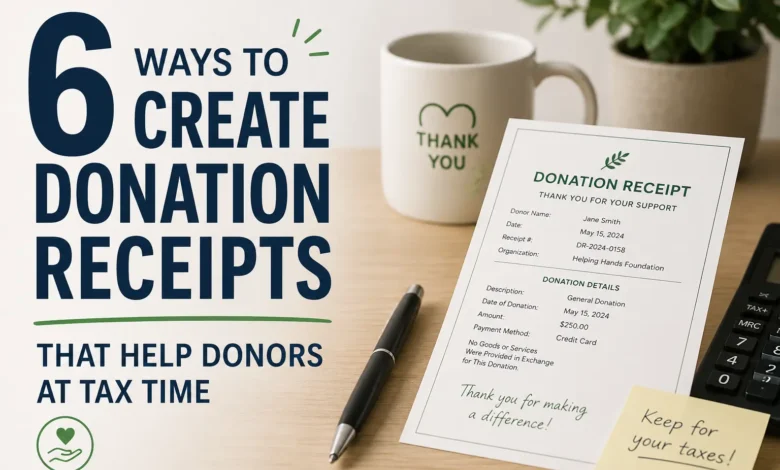
Tax season may not be everyone’s favorite time of year, but for nonprofits, it creates an important opportunity to strengthen donor relationships. Supporters want the giving process to feel simple, transparent, and stress-free — especially when they’re organizing documents for tax filing. That’s where accurate and well-structured donation receipts make a real difference.
A clear receipt does more than confirm a contribution. It reassures donors that their generosity is valued and properly documented. Small details like timely delivery, correct information, and an easy-to-read format can go a long way in building trust and encouraging future support.
In this blog, we’ll explore practical ways for organizations to create donation receipts that make tax season easier for donors and improve the overall giving experience.
Why are donation receipts important for U.S donors?
Proper donation receipts help donors stay organized during tax season while ensuring compliance with IRS guidelines. Using a clear donation receipt template also improves transparency, accuracy, and donor confidence.
- Donation receipts serve as official proof of charitable contributions for tax deduction purposes.
- Accurate receipts help donors avoid confusion or missing information while filing taxes.
- Well-prepared receipts make it easier to track yearly charitable giving and financial records.
- IRS-compliant documentation helps donors support deduction claims if questioned during an audit.
- Timely receipts show professionalism and strengthen trust between nonprofits and supporters.
6 ways to create donation receipts
Creating donor-friendly receipts is not just about compliance. Clear, timely, and organized documentation can improve donor trust, simplify tax preparation, and strengthen long-term relationships.
Below are six points that explain the best possible ways to create donation receipts.
1. Include all IRS-required information
A donation receipt should always include the essential details required by the IRS to help donors claim tax deductions without unnecessary issues. This includes the nonprofit’s legal name, Employer Identification Number (EIN), donation date, and the exact amount contributed. If the donor received any goods or services in exchange for the contribution, the receipt should clearly mention it as well. Missing or incomplete information can create confusion during tax filing and may even affect deduction eligibility.
Keeping receipts accurate, professional, and easy to understand not only supports compliance but also reassures donors that their contributions are being handled responsibly and transparently by the organization.
2. Segregate cash and non-cash donations
Nonprofits should clearly separate cash and non-cash contributions when creating donation receipts, as both follow different reporting requirements. Monetary donations are usually straightforward, while non-cash gifts such as clothing, furniture, equipment, or supplies require detailed descriptions. Instead of assigning a dollar value to donated items, organizations should focus on accurately listing what was contributed unless valuation is legally necessary. Proper categorization helps donors maintain accurate tax records and reduces confusion when preparing returns.
It also demonstrates professionalism and attention to detail from the nonprofit’s side. Well-organized donation records make the documentation process smoother for both donors and organizations during tax season.
3. Send donation receipts promptly
Sending donation receipts soon after a contribution is made shows donors that their support is appreciated and properly recorded. Delayed receipts can create frustration, especially during tax season when supporters are searching for important financial documents. Quick acknowledgment also helps nonprofits maintain stronger communication and donor trust throughout the year.
Many organizations now use digital systems to generate receipts online, making the process faster, more organized, and less prone to manual errors. Automated receipts not only save administrative time but also ensure donors receive accurate documentation immediately. Timely follow-ups leave a positive impression and encourage donors to continue supporting the organization in the future.
4. Use simple and easy-to-read formatting
A donation receipt should be clear enough for donors to understand quickly, without having to search through unnecessary details. Clean formatting, readable fonts, proper spacing, and organized sections make important tax-related information easier to locate. Including headings for donation amount, contribution date, and organization details improves readability and minimizes confusion. Overly cluttered or complicated receipts may frustrate donors when they need records during tax preparation.
Digital receipts should also be mobile-friendly, as many donors access documents on smartphones or tablets. A simple, professional layout not only improves the donor experience but also reflects positively on the nonprofit’s credibility, organization, and attention to detail.
5. Add a personalized thank-you message
A donation receipt should feel more meaningful than a simple financial document. Adding a personalized thank-you message helps donors feel appreciated and connected to the organization’s mission. Even a short note acknowledging their contribution can leave a lasting impression and strengthen long-term relationships. Supporters are more likely to continue donating when they feel recognized rather than treated like just another transaction.
Personalization can include the donor’s name, the impact of their contribution, or a brief message of gratitude from the organization. Combining professionalism with a warm tone creates a better donor experience while reinforcing trust, loyalty, and emotional connection with the nonprofit throughout the year.
6. Keep digital records organized and accessible
Maintaining organized digital donation records makes tax season much easier for both nonprofits and donors. Supporters often need quick access to past receipts when preparing financial documents, and misplaced records can create unnecessary stress. Using a consistent donation receipts template helps organizations standardize documentation and improve accuracy across all donor communications.
Digital storage also simplifies tracking, searching, and retrieving receipts whenever needed. Cloud-based systems and automated record management reduce paperwork and minimize the risk of lost or duplicate receipts. Well-organized records reflect professionalism and help nonprofits operate more efficiently. Most importantly, accessible documentation improves donor confidence and creates a smoother overall giving experience.
Switch to smart receipt management software to ease up non-profit operations
Managing donation receipts manually can be time-consuming, especially for growing nonprofits that handle multiple donors and contributions throughout the year. Modern receipt management software helps organizations simplify documentation, reduce administrative workload, and maintain accurate donor records without unnecessary stress.
From sending timely acknowledgments to organizing tax-ready records, automation improves both efficiency and donor experience. It also minimizes the chances of missing information, duplicate entries, or delayed communication during busy fundraising periods.
Using digital tools to generate receipts online allows nonprofits to stay organized while providing donors with quick and professional documentation whenever needed. Solutions like Moon Invoice offer easy receipt creation, automated record management, customizable templates, and centralized financial tracking, which help nonprofits manage donor communications more smoothly and professionally.