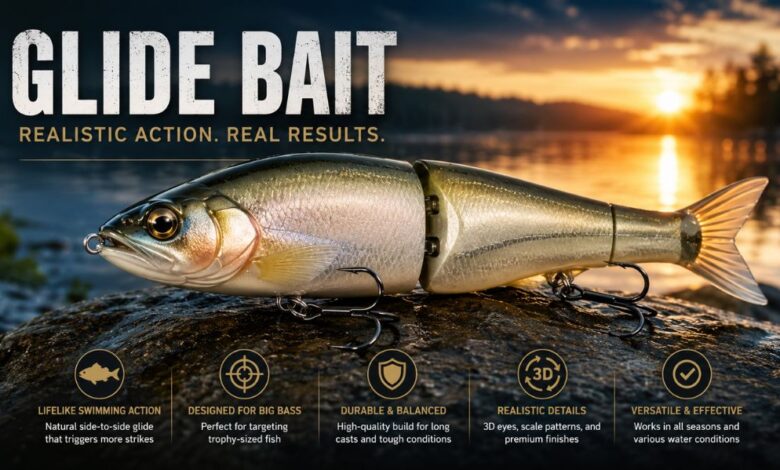
A glide bait is one of the most exciting and effective lures in modern bass fishing because it creates a wide, smooth, side-to-side swimming action that looks like a real baitfish trying to move naturally through the water.
Unlike many fast-moving lures that rely on vibration, flash, or loud disturbance, a glide bait uses a more realistic, controlled motion. This makes it especially useful when targeting larger, smarter fish that may ignore ordinary lures. Anglers often use glide baits when they want to attract quality bites rather than simply catch large numbers of small fish. The lure’s realistic profile, slow swimming action, and ability to trigger reaction strikes make it a favourite among serious bass fishermen who understand that big fish often respond better to natural movement than aggressive noise.
What Is a Glide Bait?
A glide bait is a hard-bodied fishing lure designed to move in a smooth “S” pattern when retrieved through the water. Most glide baits have a single joint in the middle, which allows the body to swing from side to side with a natural swimming motion. This action gives the lure the appearance of a wounded, lazy, or unsuspecting baitfish, which can be very tempting for predatory fish such as largemouth bass, smallmouth bass, striped bass, pike, and musky. The main purpose of a glide bait is not just to look like food but to move like food. This is why shape, balance, weight, and retrieve speed all matter. A well-designed glide bait can appear calm and lifelike on a slow retrieve, but it can also dart sharply with quick rod movements, creating a sudden change that often causes a fish to strike.
Why Glide Baits Are Popular Among Bass Anglers
The popularity of the glide bait has grown as anglers have discovered how effective it is at catching bigger fish. Big bass are often cautious and may not chase every lure that passes by. They usually prefer easy meals, especially when they are resting near cover, following baitfish, or holding in deeper water. A glide bait offers a large, realistic meal that moves naturally and stays in the strike zone longer than many other lures. This gives a bass more time to follow, inspect, and finally attack. Another reason anglers like glide baits is their ability to call fish from a distance. Even when a bass does not strike immediately, it may follow the lure, revealing its location. This makes the glide bait useful not only as a catching tool but also as a search bait for locating bigger fish.
How a Glide Bait Works in the Water
The action of a glide bait depends on retrieve speed, rod movement, line choice, and lure design. When reeled steadily, the bait swings left and right in a smooth pattern. A slower retrieve usually creates a wider glide, while a faster retrieve can tighten the action and make the bait look more active. Many anglers use pauses during the retrieve because the pause can make the lure look vulnerable. Sometimes a fish follows the bait for several feet but only strikes when the lure suddenly stops, turns, or slows down. Small twitches of the rod tip can also make the lure kick to one side, which can imitate a baitfish trying to escape. This combination of steady movement, sudden changes in direction, and natural pauses is what makes glide bait fishing so effective.
Best Time to Use a Glide Bait
A glide bait can work throughout the year, but it is especially effective when fish are feeding on larger baitfish or when bass are willing to move for a bigger meal. Spring is a strong season because bass are often shallow, aggressive, and protective near spawning areas. During this time, a glide bait can trigger territorial strikes from fish that may not even be actively feeding. In summer, glide baits can be used around docks, grass edges, points, and deeper structure where bass wait to ambush prey. In the fall, when baitfish are grouped up and bass are chasing them, glide baits can be very productive because they closely match the size and movement of natural forage. Even in winter, a slow-sinking glide bait can tempt big fish when worked slowly and carefully in clear water.
Where to Fish a Glide Bait
The best places to fish a glide bait are areas where big fish can hide, ambush, or follow baitfish. Points, rocky banks, submerged timber, docks, bridge pilings, grass lines, and clear-water flats are all strong locations. Glide baits are especially useful in clear to moderately stained water because fish often rely on sight when deciding whether to strike. Since the lure has a realistic appearance, visibility helps it perform better. However, that does not mean glide baits cannot work in stained water. In those conditions, anglers may choose larger profiles, brighter colours, or baits with more presence in the water. The key is to place the lure where a predator naturally expects to find baitfish. A glide bait thrown randomly into empty water may not produce results, but one worked near structure or feeding zones can be extremely powerful.
Choosing the Right Glide Bait Size
Size is one of the most important decisions when selecting a glide bait. Smaller glide baits are easier to fish and can attract more bites from both medium and large fish. They are a good choice for beginners or for waters where baitfish are smaller.
Larger glide baits, however, are often used when targeting trophy bass.
Big baits can discourage smaller fish and attract larger predators seeking a high-value meal. The best size depends on the lake, season, forage, and fish behaviour. If the water has large shad, trout, bluegill, or gizzard shad, a bigger glide bait can be a smart option. If the fish are pressured or feeding on smaller bait, a more compact glide bait may look more natural and get more bites.
Best Colours for Glide Bait Fishing
Colour choice should match the water clarity, weather, and natural forage. In clear water, natural colours such as shad, bluegill, trout, silver, and bone often work well because they look realistic. On cloudy days or in stained water, stronger colours with more contrast can help fish find the bait. Some anglers prefer white or bone-colored glide baits because they are easy to see during the retrieve, allowing the angler to watch how fish react. Seeing followers is a major advantage because it helps the angler adjust speed, pauses, and direction changes. A good rule is to start naturally in clear water and use more visible colours when light or clarity is reduced.
How to Retrieve a Glide Bait
The retrieve is where glide bait fishing becomes an art. A steady retrieve can catch fish, but the most effective approach often involves pauses, twitches, and changes in speed. Start by casting the glide bait past the target area, then reel slowly enough to allow the lure to move naturally from side to side. After several handle turns, pause briefly and let the bait slow down or suspend depending on its design. Then continue reeling or add a small rod twitch to make the lure turn. This sudden movement can make a following fish commit. The goal is not to overwork the bait but to make it look alive. Many beginners retrieve too fast or twitch too aggressively. A glide bait usually works best when the action looks controlled, believable, and easy for a predator to catch.
Common Mistakes Anglers Make With Glide Baits
One common mistake is using a glide bait only when fish are already aggressive. In reality, glide baits can also work when fish are cautious because the lure presents a slow and realistic meal. Another mistake is setting the hook too early. Big fish often follow and bump the bait before fully eating it. Anglers should wait until they feel real weight before driving the hook home. Using weak gear is another problem. Since glide baits are often heavier than standard lures, anglers need a rod, reel, and line strong enough to cast and control them safely. Poor placement is also a mistake. Glide baits perform best when worked near high-percentage areas, not randomly across open water without structure or bait activity.
Gear Needed for Glide Bait Fishing
A proper setup makes fishing with a glide bait easier and more effective. Most anglers prefer a longer casting rod with enough power to handle heavier lures. The rod should load well during the cast but still have the backbone to control a big fish. A strong baitcasting reel with a smooth drag is helpful because glide bait fishing often involves long casts and powerful strikes. Line choice depends on the situation, but many anglers use fluorocarbon for its low visibility and good sinking qualities. Some may use monofilament when they want a slightly slower sink or more stretch. The important thing is to match the line strength to the lure weight and the size of fish being targeted.
Why Glide Baits Attract Bigger Fish
A glide bait attracts bigger fish because it represents a larger, slower, and more rewarding meal. Big bass do not always want to waste energy chasing small prey. A large baitfish-style lure gives them a reason to move. The wide swimming action also creates a strong visual signal without looking unnatural. This is important because bigger fish are often more experienced and may avoid lures that look too mechanical. A glide bait gives them time to track, follow, and attack. Even when it does not get an immediate strike, it can expose fish that may be caught later with another cast or a different lure. For this reason, many experienced anglers see glide baits as both a catching tool and a fish-finding tool.
Conclusion
A glide bait is more than just a large fishing lure; it is a strategic tool for anglers who want to target higher-quality fish with a realistic, controlled presentation. Its smooth side-to-side movement, lifelike profile, and ability to trigger followers and reaction strikes make it one of the most valuable lures in modern bass fishing. Success with glide bait fishing comes from choosing the right size, colour, retrieve speed, and location. It also requires patience, because bigger fish may follow the bait several times before striking. When used correctly, a glide bait can help anglers understand fish behaviour, locate larger bass, and create some of the most exciting moments on the water.
(FAQs)
What is a glide bait used for?
A glide bait is used to imitate a real baitfish and attract predatory fish such as bass, pike, musky, and striped bass. It is especially popular for targeting bigger fish because it presents a large, realistic meal.
Is a glide bait good for beginners?
Yes, a glide bait can be good for beginners if they start with a smaller, easier-to-cast model. The most important skills are learning a slow retrieve, adding pauses, and watching how fish react to the lure.
What fish can you catch with a glide bait?
A glide bait can catch largemouth bass, smallmouth bass, striped bass, pike, musky, and other predatory fish. Bass anglers use it most often because it is highly effective for attracting larger fish.
What is the best colour for a glide bait?
The best colour depends on water clarity and forage. Natural colours like shad, bluegill, trout, and silver are strong choices in clear water, while brighter or higher-contrast colours can work better in stained water.
How do you fish a glide bait?
You fish a glide bait with a slow, steady retrieve, adding pauses and light rod twitches to create direction changes. The goal is to make the lure look like a natural baitfish that is easy for a predator to catch.