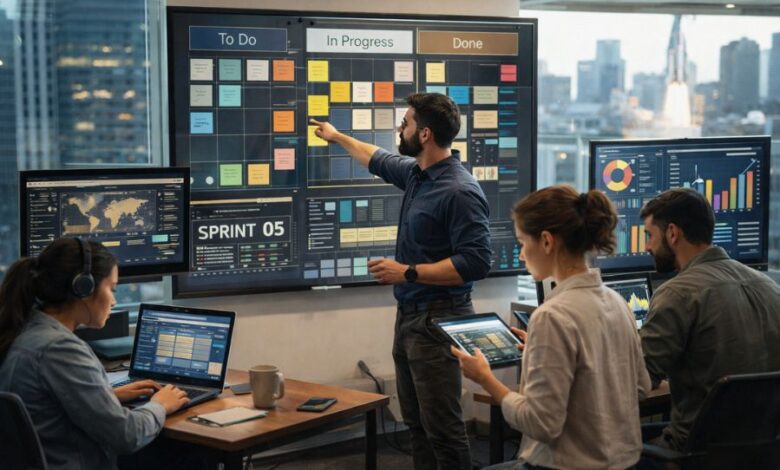
In 2026, agile teams are redefining how projects move from concept to launch. What began as a software development methodology has evolved into a business-wide mindset focused on adaptability, collaboration, and continuous improvement. With faster release cycles, remote work environments, and AI-powered workflows becoming the norm, organizations are embracing smarter tools and streamlined processes to remain competitive in an increasingly digital economy.
Agile is no longer limited to daily standups and sprint retrospectives. It now represents a comprehensive operating model that influences product design, marketing alignment, customer feedback loops, and long-term strategy. Teams are not just delivering software faster. They are delivering value more predictably and with higher quality.
The Shift Toward Continuous Value Delivery
Traditional project management often relied on long planning cycles followed by extended development phases. In contrast, agile teams in 2026 operate on shorter iterations with measurable outcomes. This allows companies to respond quickly to customer feedback, market changes, and emerging technologies.
Continuous integration and continuous delivery pipelines have matured, enabling code to move from development to production with minimal friction. Automated testing frameworks, cloud-based infrastructure, and real-time monitoring tools support this flow. Instead of large, risky launches, teams release incremental updates that improve user experience step by step.
This transformation aligns closely with the principles of modern development, where collaboration, automation, and flexibility drive sustainable growth. Organizations that adopt this mindset are better equipped to experiment, pivot, and innovate without compromising stability.
Remote Collaboration as a Competitive Advantage
The global workforce has permanently shifted toward distributed teams. In 2026, agile workflows are designed with remote collaboration at their core. Digital whiteboards, asynchronous communication tools, and shared dashboards help team members across time zones stay aligned.
Clear documentation and transparent reporting have become essential. Agile teams rely on shared visibility into tasks, progress, and quality metrics. This reduces bottlenecks and empowers individuals to take ownership of their responsibilities.
Leadership styles have also evolved. Managers act more as facilitators than controllers, removing obstacles and encouraging autonomy. Psychological safety, open feedback, and continuous learning are prioritized, creating an environment where innovation thrives.
AI-Powered Workflows and Predictive Insights
Artificial intelligence is transforming how agile teams plan and execute projects. AI tools analyze historical sprint data to predict timelines, identify risks, and recommend workload adjustments. This predictive capability reduces guesswork and improves resource allocation.
Automation extends beyond code testing. Intelligent systems can now suggest user stories, generate documentation drafts, and flag potential defects before they reach production. This reduces manual effort and allows teams to focus on higher-value activities such as strategy and creative problem-solving.
The integration of intelligent testing into development pipelines further strengthens product reliability. By leveraging machine learning models and automated quality checks, organizations detect issues earlier and reduce costly post-release fixes. As discussed in this perspective on intelligent testing, AI-driven validation is becoming a cornerstone of efficient software delivery.
Quality Assurance as a Strategic Function
Quality assurance has shifted from a final checkpoint to a continuous process embedded within every sprint. Agile teams recognize that maintaining product quality is essential for customer trust and brand reputation.
Structured test management plays a crucial role in this evolution. Clear documentation of test cases, transparent reporting, and real-time tracking enable teams to maintain consistency even during rapid release cycles. Understanding key TestRail features can help teams organize test suites, monitor execution progress, and generate actionable reports that support informed decision-making. By integrating such tools into agile workflows, organizations ensure that speed does not compromise reliability.
This emphasis on visibility and accountability transforms QA from a reactive function into a proactive strategy. Developers, testers, and product owners collaborate closely, sharing responsibility for outcomes rather than operating in silos.
Data Driven Decision Making
In 2026, agile transformation is powered by data. Metrics such as sprint velocity, defect density, cycle time, and customer satisfaction scores guide continuous improvement. Teams no longer rely solely on intuition. They analyze performance indicators to identify trends and adjust processes accordingly.
Dashboards provide real-time insights into project health. If a sprint begins to fall behind schedule, corrective action can be taken immediately. If certain types of defects recur frequently, root cause analysis informs targeted solutions.
This data-driven approach fosters accountability and transparency. It also strengthens stakeholder confidence, as executives can track progress and outcomes with clarity.
Cultural Evolution and Cross-Functional Alignment
Technology alone cannot transform workflows. Cultural change is equally important. Agile teams in 2026 emphasize collaboration across departments, breaking down traditional barriers between development, operations, marketing, and customer support.
Cross-functional squads work toward shared objectives, ensuring that business goals and technical execution remain aligned. Regular feedback loops with customers provide valuable insights that shape product direction. This iterative model reduces the risk of misalignment and wasted effort.
Training and upskilling are ongoing priorities. Organizations invest in workshops, certifications, and peer mentoring to ensure that employees remain adaptable in a rapidly evolving landscape. Continuous learning supports resilience and long-term success.
Balancing Speed with Sustainability
While agility prioritizes rapid delivery, sustainable practices are gaining attention. Burnout and unrealistic expectations can undermine productivity. Successful teams balance ambitious goals with realistic planning.
Capacity planning tools, transparent workload distribution, and clear communication help maintain morale. Leaders encourage breaks, celebrate achievements, and foster a culture that values well-being alongside performance.
Sustainability also extends to technical architecture. Clean code practices, scalable infrastructure, and automated regression testing reduce long-term maintenance costs. By building robust foundations, teams can innovate without accumulating excessive technical debt.
The Future of Agile Workflows
Looking ahead, agile workflows will continue to evolve alongside emerging technologies. Automation will become more sophisticated, AI will provide deeper insights, and collaboration platforms will integrate seamlessly across functions.
However, the core principles remain constant. Adaptability, transparency, and customer centricity define successful teams. Organizations that embrace these values are better positioned to navigate uncertainty and capitalize on opportunity.
In 2026, agile is not just a methodology. It is a strategic framework that shapes how businesses operate, innovate, and compete. By combining AI-powered tools, structured quality management, and a culture of continuous improvement, agile teams are transforming project workflows from rigid processes into dynamic engines of growth.
Suggested short paragraph
As AI becomes increasingly integrated into modern business workflows, managers need to understand how emerging technologies can improve productivity, support decision-making, and help teams adapt to change. Professionals looking to develop these capabilities can explore an ai for managers program to gain practical knowledge of AI and generative AI applications, business strategy, and responsible technology adoption.