Your Photos Can Now Sing: The Rise of AI Singing Photo Generators and What They Make Possible

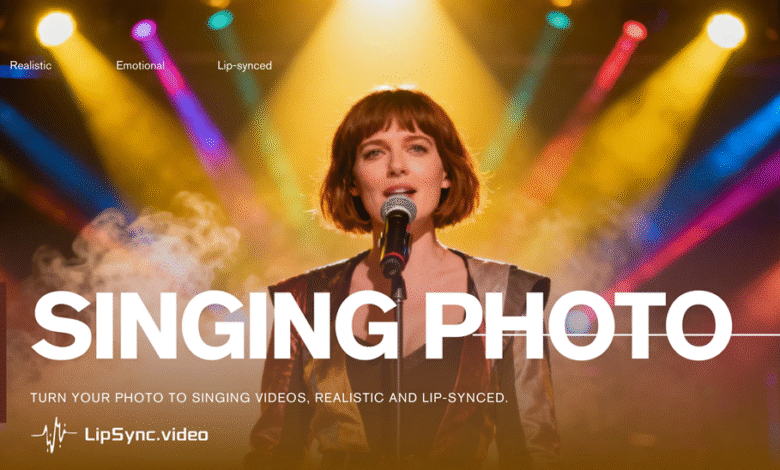
There’s a photo sitting somewhere on your phone or hard drive right now — a portrait of someone you love, a character you designed, a professional headshot, a childhood snapshot — and it is completely silent. It captures a face but not a voice. A moment but not a performance.
AI singing photo generators are changing that equation. Feed a photo and an audio track into one of these tools, and what comes out is a video where the face in the image appears to sing — mouth movements synchronized to the music, expression animated, the stillness broken. The technology isn’t new in concept, but the quality and accessibility have reached a point where it’s genuinely useful for people who aren’t video production professionals.
This article looks at what that actually means in practice: who’s using it, why it works, and where it’s creating real value beyond the initial “wow” reaction.
What an AI Singing Photo Generator Does Differently Now
The core function sounds simple: photo in, singing video out. But the gap between a crude face-swap animation and a believable lip-synced performance is enormous, and it’s taken years of model development to close it.
What separates a good AI singing photo generator from an early-generation tool is how it handles the specifics of a face. The AI doesn’t apply a generic mouth animation template. It reads the facial geometry of the specific person in the photo — the width of the mouth, the angle of the jaw, the shape of the lips — and generates frame-by-frame movements calibrated to that face. It also accounts for the phoneme structure of the audio: the distinct mouth shapes that correspond to different sounds in speech and song.
The result, when done well, is a video that doesn’t look like it was assembled. It looks like the person in the photo is actually singing.
LipSync Video has built this into a focused, easy-to-use feature. Their AI singing photo generator takes any portrait and pairs it with audio to produce a lip-synced singing video — no timeline editing, no keyframing, no technical setup. Upload a photo, upload audio, receive a video.
Real Use Cases: Who Actually Uses This and Why
Families Bringing Old Photographs to Life
This is arguably the most emotionally resonant use case, and it’s one that most people don’t anticipate until they encounter it.
A family has a photograph of a grandmother taken in the 1970s. She passed away years ago. The family also has a recording — perhaps a song she used to sing, or a piece of music she loved. Running that photo through an AI singing photo generator produces something that wasn’t possible before: a short video in which she appears to sing that song.
For family reunions, memorial services, tribute slideshows, or simply personal keepsakes, this kind of content carries weight that a static photo can’t match. It doesn’t require acting, filming, or any technical expertise. It requires a photo, an audio file, and a few minutes.
This use case is growing steadily. Digital memorial content has become a recognized category, and tools that can animate historical photographs are a meaningful part of it.
Independent Musicians Who Need Visual Content
Music distribution has changed dramatically. Getting a song onto Spotify or Apple Music is relatively straightforward. Getting people to actually listen to it requires visibility, and visibility on most platforms today means video.
An independent artist releasing a new track needs something visual to share on Instagram Reels, TikTok, and YouTube Shorts. A full music video — professional camera work, a location, editing, and color grading — can cost several thousand dollars at minimum. For artists without label backing, that’s often not realistic.
An AI-generated singing photo video doesn’t replace a professional music video. But it functions as one for the purposes of social distribution. An artist can take a press photo, pair it with their song, and have a shareable visual asset within minutes. It’s the difference between promoting a track with nothing and promoting it with something that moves.
Platform algorithms favor video content heavily. According to data from Meta, video posts consistently outperform static images in reach and engagement — often by a factor of two to three times. For a musician trying to grow an audience organically, that difference is significant.
Content Creators and Digital Artists
For creators who build audiences around characters, illustrations, or concepts rather than their own face, an AI singing photo generator opens up a specific kind of storytelling.
An illustrator has designed a character over the years — a mascot, an original persona, a fictional figure with a distinct visual identity. That character has always existed in still images. With an AI tool, the character can be given a voice: singing a theme song, performing a cover, reciting something the creator wrote. The character goes from being a drawing to being a presence.
This is particularly valuable for creators on platforms where video is prioritized but the creator’s own appearance isn’t part of their brand. A musician who performs under an alias can use an illustrated avatar. A game developer can bring a character to life for promotional content. A children’s content creator can animate storybook illustrations.
Brands With Static Visual Assets
Marketing teams accumulate visual assets over time: product photography, mascot illustrations, spokesperson portraits, brand characters. Most of those assets are static. An AI singing photo generator is a way to activate them.
A food brand has an illustrated character on their packaging that customers recognize. Pairing that character with a jingle — or even a seasonal song — produces video content without requiring a production shoot. A company with a spokesperson portrait can create a short video announcement without scheduling a filming day.
The economics matter here. Video production for even a simple 30-second clip can run from hundreds to thousands of dollars when you factor in crew, location, editing, and post-production. Converting an existing photo into a singing video sidesteps that entirely.
Understanding the Limits So You Can Work Within Them
AI singing photo generators work best when the conditions are favorable. Understanding where they perform strongly — and where they struggle — helps set realistic expectations.
Where results are consistently strong:
- Clear, well-lit portrait photos with the face visible and front-facing
- Audio with distinct vocal separation and minimal background noise
- Songs with clear lyrical phrasing rather than heavily overlapping harmonics
- Photos where the face occupies a meaningful portion of the frame
Where results can vary:
- Profile or heavily angled shots, where the AI has less facial geometry to work with
- Low-resolution or heavily compressed source images
- Audio with significant reverb, distortion, or ambient noise
- Very short clips where the sync has less time to establish itself
For most practical use cases — a portrait photo paired with a song — these limitations don’t come into play. The technology has matured enough that the output is usable in real content, not just interesting as a demo.
The Broader Shift This Technology Represents
It’s worth stepping back from the feature itself and thinking about what it changes.
Photographs are the most abundant media type in existence. Billions are taken every day. The vast majority of them are used once — shared in a message, posted to social media, looked at briefly — and then they sit in a folder doing nothing.
An AI singing photo generator is, at a structural level, a way to reactivate that archive. It gives photos a dimension they’ve never had: the ability to perform. A face that was captured in a fraction of a second can now deliver a three-minute song. A historical portrait can speak. A character sketch can sing.
That shift has implications for how we think about visual content creation. The bottleneck has always been the camera, the studio, the crew, and the edit. Remove those constraints, and what’s left is the idea and the assets you already have.
If you’re curious what this looks like in practice, the singing photo video generator at lipsync.video is a direct way to find out. The workflow is minimal, and the output speaks for itself.
Your photos have been silent for long enough.