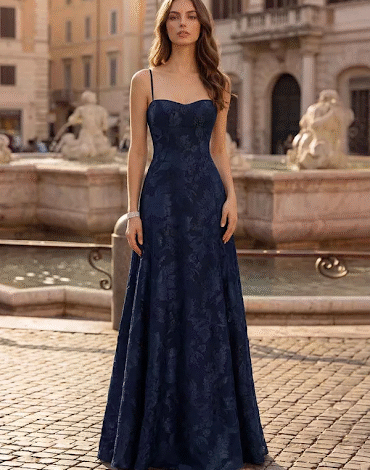
Every spring, the same question circulates in group chats and fitting rooms: which silhouette is actually the move? Not which one is trending — which one is going to look right on you specifically, in photos, standing up, sitting down, and on the dance floor at 11 pm when you’re tired and your feet hurt. Prom dresses look different on a hanger than on a body, in store lighting than in outdoor photos, and at 6 pm than at midnight.
I know this because I helped my cousin shop for her prom dress for three weekends in a row last March in Atlanta. We tried on at least twelve dresses across all three silhouettes. The one she ended up buying was the fourth dress she tried, which she put back on the rack halfway through weekend two because she convinced herself ‘it was too simple.’ It wasn’t.
So, here’s what I actually know about these three silhouettes — from watching them work, and watching them not work.
| Quick answer for anyone skimming: A-line if you want something universally flattering that moves well. Corset if you want a defined structure and don’t plan on eating a full meal right before the ceremony. Column if you want a sleek, modern look, and your dress doesn’t need to do a lot of shape-creating work. All three are prom-appropriate. None of them is inherently more formal than the others. |
| The A-Line: Still the Most Reliable Silhouette at Prom |
What It Actually Does
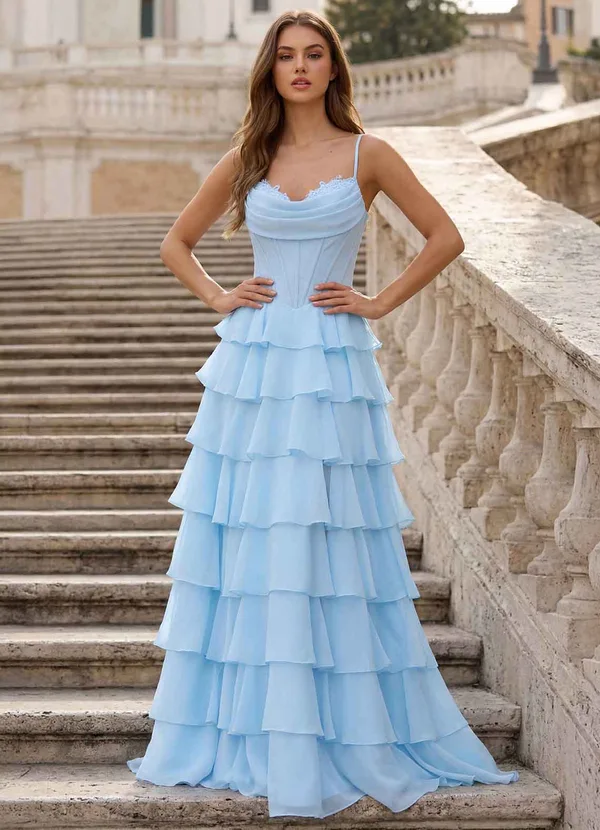
An a line prom dress fits close through the bodice — usually through the bust and waist — and then flares gradually outward from the hip down to the hem. Sounds simple. But what that structure does in practice is create the appearance of a waist even when the dress itself isn’t heavily fitted through the midsection.
The reason it photographs so well is that the flared skirt creates visual volume at the bottom, making the waist look narrower by comparison. That’s a proportioning trick, and it works regardless of body type because it’s creating contrast rather than relying on the body’s natural contours to do the work.
It’s also the most practical prom silhouette. You can sit in it without the skirt riding up. You can walk across a stage in it without the hem becoming a hazard. And you can actually dance in it, which matters more than people admit when they’re shopping for a dress at 3 pm on a Saturday but will actually be wearing it at 10 pm on a Friday.
Who It Works Best For
Honestly? Everyone. But especially pear shapes, hourglass frames, and anyone worried about the dress being too constrictive. The A-line creates waist definition without requiring precision fit through the hip and thigh, which means small fit variations in those areas don’t ruin the silhouette the way they do in a column or corset dress.
For shorter frames specifically, an A-line in a floor-length cut with a defined waist seam can create the visual effect of a longer torso and taller proportions. It’s one of those things that sounds like fashion-magazine-advice until you actually try it on.
| The Corset: Structure That Photographs as Drama |
The Actual Mechanics
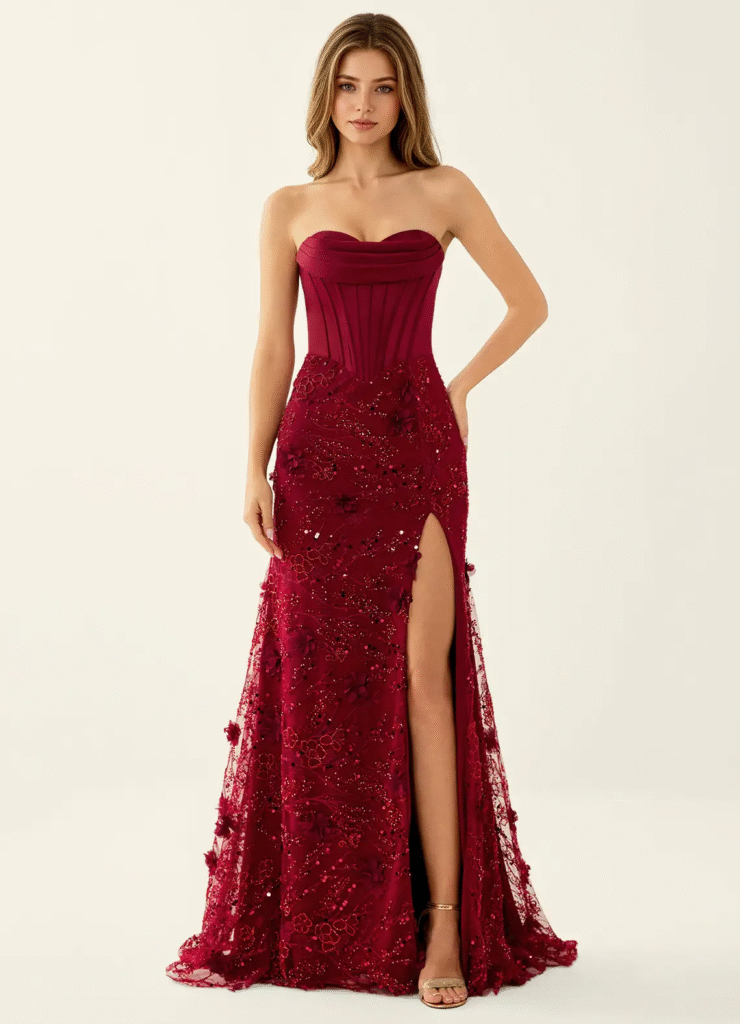
A corset prom dress uses boning and lacing (or hook-and-eye closures that mimic lacing) in the bodice to create a defined waistline through structural support rather than through stretch or seaming alone. The bodice holds its shape independently of the body inside it, which is why a corset dress can make dramatically different bodies look like they have the same waist-to-hip ratio.
This silhouette produces the most consistent ‘wow’ response in photos mainly because the bodice structure creates a clean, defined line from waist upward that reads as incredibly intentional — like someone put work into the dress, not just put on a dress.
Wait — I need to be specific about one thing. Corset and corset-style are different. A true corset bodice has actual boning and substantial structure. A corset-style dress has lacing or similar visual elements without the internal architecture. The corset-style versions are more comfortable and easier to wear for an extended evening; the true corset versions create more dramatic definition but can feel constraining after a few hours, especially if the event includes significant sitting or eating.
Who Should Choose It — and Who Should Be Careful
Corset dresses work beautifully for straight and rectangular body types who want to create a defined waist without relying on natural curves. They also work well for hourglass frames where the waist is already well-defined — the corset adds emphasis to existing proportions.
The caveat: if you run warm, if you’re someone who needs to eat a real meal before a long evening event, or if you’re planning to dance hard, a corset-style dress is more practical than a true boned corset. The boned version can feel like it’s fighting you by hour three of an active evening. I’m not being dramatic. Ask anyone who’s actually worn one.
| The Column: The Underrated One That People Sleep On |
What Column Silhouette Actually Means
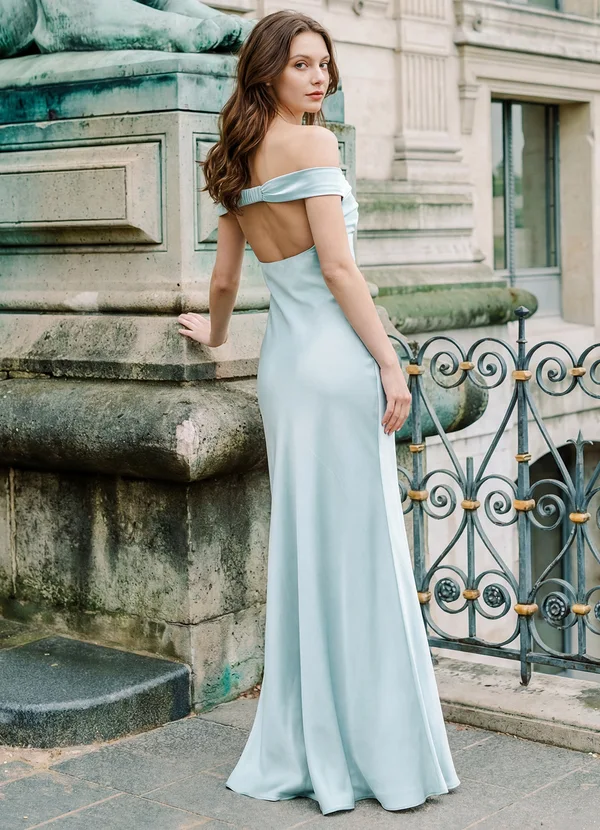
A column dress (also called a sheath) falls in a straight line from shoulder to hem with minimal flare, taper, or volume change along the way. Column prom dresses don’t create curves — they follow existing ones. Or, for straighter frames, they create an elegant linear effect in which the body and the dress read as one clean vertical.
The underrated thing about column dresses: they’re where detail does the most work. A column in quality satin with an interesting neckline or a dramatic open back looks genuinely striking in a way that a heavily embellished A-line sometimes can’t match, because nothing is competing with the detail. The silhouette is quiet, so the detail speaks.
Actually, scratch that framing — it’s not that column dresses are ‘quiet.’ It’s that they’re architectural. The dress and the body together are the design object. It’s a different kind of impact than a ball gown or a corset dress, but it’s not a lesser one.
Who It Works For and When It Works
Column dresses work beautifully for taller frames — the unbroken vertical line reads as specifically elegant rather than understated. They also work well for lean, athletic builds where an A-line’s emphasis on waist-versus-hip contrast isn’t the goal.
For shorter frames, column dresses can work, but the hemline position matters significantly. A column that hits at the ankle on a shorter frame can look slightly overwhelming. A column at midi length — or with a high slit that breaks the vertical — manages proportions more effectively.
| Three Silhouettes Side by Side — What Each One Does |
| Silhouette | Shape It Creates | Best Body Types | Practical Note |
| A-Line | Waist in, skirt out | Pear, hourglass, most | Most versatile for dancing, sitting, and the stage |
| Corset | Defined, lifted waist | Straight, rectangular, hourglass | Consider mobility — true corset vs style |
| Column / Sheath | Clean vertical line | Tall, lean, athletic | Detail is everything — neckline, fabric, back |
| Mermaid | Fitted to the knee, dramatic flare | Hourglass, confident fit needed | Movement restricted — test walking beforehand |
Before You Commit: Five Practical Checks
| 1 | Walk a full room length in the dress—specifically, the walking-in-heels version of your stride.Not shuffling. Walking the way you’ll actually walk into the venue. A mermaid dress that restricts stride to six inches will be visibly awkward in photos and exhausting over four hours. A column in a stretchy fabric accommodates a normal stride. An A-line flares out of the way. Test the actual motion, not just the static look in a mirror. |
| 2 | Sit for five minutes. Then stand up without using your hands.If you need your hands to push yourself up from a chair — or if the dress rides in a way that requires readjustment — that’s your evening in that dress. Prom involves a lot of sitting in cars, at tables, and in seats. The dress has to accommodate this repeatedly without drama. |
| 3 | Test the bodice under movement — arms up, reaching side to side.Specifically for corset dresses, can you raise both arms above your head comfortably? This matters for dancing and for photos (everyone does the arms-up-happy photo at some point). A bodice that restricts arm movement upward becomes a problem the moment the music starts. |
| 4 | Take a photo — outside, in natural light, not the fitting room.Fitting rooms are notoriously bad for assessing how a dress actually looks. Natural daylight shows you what the camera will capture. Take a photo from the front, from the side, and while walking away. If the silhouette reads as you want it from all three angles, you have your dress. |
One More Layer: How Color Interacts with Silhouette
Dark colors make silhouettes read as more contained — a black A-line looks more structured than a white one, even at the same cut. Light colors and metallics add visual weight, which can amplify what a flared skirt or dramatic bodice is doing.
Some combinations worth knowing:
- A corset bodice in a deep jewel tone reads as the most formal and dramatic
- An A-line in a lighter pastel or blush reads as the most classically romantic
- A column in black or navy reads as sleek and intentionally minimalist
- A mermaid silhouette in any metallic or sequin fabric has maximum visual impact
If you want long prom dresses that emphasize the silhouette rather than the embellishment, choose ones in solid satin or crepe that let the cut do the work. If you want the dress detail to be the statement, any silhouette works as a base, and surface embellishment — sequins, beading, lace — sits on top of it.
| Match the Silhouette to the Vibe — Not Just the Body |
The Girl Who Wants to Feel Effortlessly Pulled-Together
A-line. Every time. You don’t want the dress to require maintenance or awareness all evening. You want to put it on, look great, and stop thinking about it.
The Girl Who Wants to Make a Specific Entrance
Corset or mermaid. Both read as deliberate and structured, communicating ‘I planned this.’ Mermaid prom dresses specifically photograph with the most dramatic movement effect — the flare at the knee creates a sweeping effect when you walk that no other silhouette replicates.
The Girl Who Wants to Look Different From the Crowd
Column. At most proms, 60–70% of dresses are A-line or ball gown. A clean column prom dress in a great fabric with a specific detail — a dramatic neckline, an open back, interesting sleeves — reads as the most distinct. Not because it’s louder, but because it’s making a different kind of statement.
The Girl Who Wants a Fairytale Moment
Ball gown: full skirt, volume, presence. Ball gown prom dresses are the most theatrical silhouette at prom, and they’re theatrical on purpose. If you’ve been thinking about a ball gown and talking yourself out of it because ‘it might be too much’ — it’s prom. It’s specifically the occasion where too much is the right amount.
Closing
The silhouette question is the first one to answer before anything else — before color, before fabric, before deciding whether you want a slit. Because the silhouette determines whether the dress works for your body and your evening, and everything else is detail on top of that foundation.
My cousin’s dress — the A-line she almost put back on the rack — photographed beautifully. She texted me three weeks after prom with a specific photo: standing outside the venue right after the ceremony, robe off, in natural June light in Atlanta, holding her diploma. The dress looked exactly like it should. Whether she made the right call on color is a different question, and honestly, I still think she should’ve gone with the forest green over the blush, but that’s a whole other conversation. Explore the full prom dress collection and pick the one that makes the most sense for your specific evening.