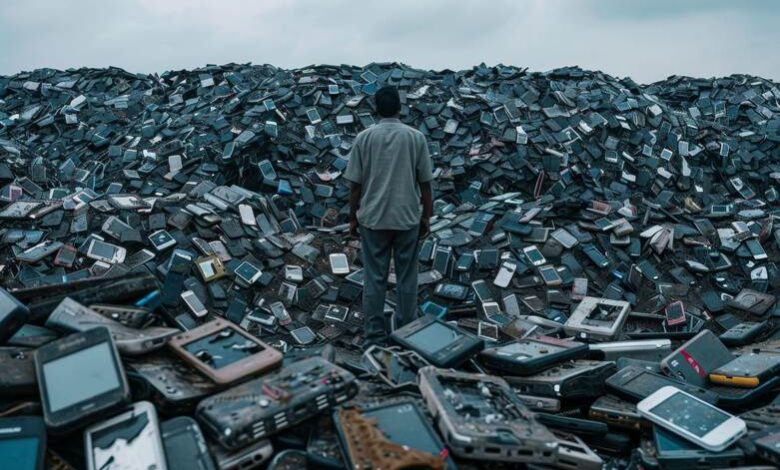
Most people have at least one drawer, cabinet, or storage box filled with old electronics. Outdated smartphones, broken laptops, unused monitors, tangled charging cables, and retired office equipment often sit untouched for years. While these devices may seem harmless when stored away, their environmental impact extends far beyond their active lifespan.
As technology advances rapidly, electronic waste (e-waste) has become one of the fastest-growing waste streams in the world. According to the World Health Organization, global e-waste generation reached approximately 62 million tonnes in 2022, yet only a small percentage was formally collected and recycled. The rest was stored, discarded improperly, or left unaccounted for.
The Hidden Problem of Electronic Hoarding
Many individuals and businesses hold onto outdated electronics for practical reasons. Some intend to reuse them later, while others are concerned about data security or simply don’t know how to dispose of them responsibly.
However, storing large quantities of unused electronics creates an overlooked environmental challenge. When devices remain idle for years, valuable materials such as copper, gold, aluminum, and rare earth elements stay locked away instead of being recovered and reused. This increases demand for new mining operations, which consume significant amounts of energy and natural resources.
Additionally, the longer equipment remains unused, the more likely it is to become obsolete and eventually end up in landfills rather than entering proper recycling channels.
Valuable Resources Sitting Idle
Modern electronic devices contain a surprising amount of recoverable material. Smartphones, computers, servers, networking equipment, and other devices contain precious metals and recyclable components that can be extracted and reintroduced into manufacturing supply chains.
The challenge is that many of these materials never make it back into circulation. Instead, they remain forgotten in storage rooms, warehouses, and office closets. This contributes to resource inefficiency and increases the need for extracting virgin materials from the environment.
The World Economic Forum has highlighted that unrecycled e-waste contains billions of dollars worth of recoverable materials that could otherwise support a more sustainable circular economy.
Environmental Risks Increase Over Time
Unused electronics are not always environmentally neutral. Many devices contain hazardous substances, including lead, mercury, cadmium, and brominated flame retardants. While these materials are generally contained during normal use, improper storage, damage, or eventual disposal can create environmental risks.
The World Health Organization notes that unsound handling and disposal practices can release toxic substances into soil, water, and air, creating long-term environmental and health concerns.
Businesses that accumulate aging IT equipment may unknowingly increase their environmental footprint if those assets are left unmanaged for extended periods.
The Corporate E-Waste Challenge
For organizations, the issue extends beyond a few unused devices. Companies regularly replace computers, servers, networking hardware, storage systems, and employee devices as part of technology upgrades.
Without a structured end-of-life strategy, retired equipment can accumulate quickly. Storage rooms become filled with outdated assets that no longer provide business value but continue to occupy physical space and represent untapped environmental costs.
Many organizations are now adopting responsible asset management practices that focus on refurbishment, resale, recycling, and secure disposal. Through professional IT asset liquidation and disposal, businesses can recover value from retired technology while ensuring equipment is processed in an environmentally responsible manner.
Rather than allowing devices to collect dust for years, organizations can extend the lifecycle of usable equipment and ensure that non-functional components are recycled through certified channels.
Supporting the Circular Economy
A circular economy aims to keep products and materials in use for as long as possible. Instead of following the traditional “take, make, dispose” model, circular systems emphasize reuse, repair, refurbishment, and recycling.
Proper electronic asset management plays a critical role in achieving these goals. Functional devices can often be refurbished and redeployed, while valuable materials from non-working equipment can be recovered for future manufacturing.
Organizations such as the United Nations Institute for Training and Research (UNITAR) have emphasized the importance of improving global e-waste management systems to reduce environmental harm and conserve resources.
Similarly, the World Health Organization (WHO) continues to highlight the environmental and public health benefits of responsible e-waste collection and recycling programs.
Small Actions Can Create Significant Impact
Addressing the environmental cost of unused electronics does not always require large-scale changes. Individuals can start by identifying old devices they no longer use and researching local recycling or donation options.
For businesses, periodic technology audits can help identify dormant assets and create a plan for responsible disposition. By taking proactive steps, organizations can reduce storage costs, improve sustainability performance, and support resource recovery efforts.
The longer unused electronics remain forgotten, the greater the missed opportunity to recover valuable materials and reduce environmental impact.
Conclusion
Unused electronics may seem harmless when tucked away in storage, but collectively they contribute to a growing global e-waste challenge. Every retired smartphone, laptop, server, or monitor represents both a potential environmental risk and a valuable resource waiting to be recovered.
Responsible management of end-of-life electronics helps reduce waste, conserve natural resources, and support a more sustainable circular economy. Whether at home or within large organizations, taking action on unused electronics today can help minimize their environmental cost tomorrow.