Introduction
The most interesting automotive companies are not always the ones fighting for attention in crowded market segments. Some avoid the usual contest entirely. Instead of trying to build a slightly faster sports car, a slightly more luxurious grand tourer, or a slightly cheaper collectible, they identify a different kind of desire. They notice what buyers want but cannot easily find, then build a category around that gap.
This is especially visible in the market for heritage-inspired vehicles. Many buyers love classic design because it carries identity, memory, proportion, and emotional weight. At the same time, they want modern usability: reliable systems, stronger safety, better comfort, refined drivability, and more predictable ownership. That combination has created space for companies that do not fit neatly into traditional restoration, modern performance manufacturing, or collector-car brokerage. They are building something more specific, and that specificity is becoming their advantage.
Why Category Creation Matters in Automotive Culture
Automotive categories usually form around buyer expectations. A sports car promises agility. A luxury SUV promises comfort and status. A classic restoration promises historical accuracy. A restomod promises old styling with upgraded performance. But some companies go further by creating a clearer, more structured answer to a problem buyers already feel. They do not simply modify the old category. They make a new one easier to understand.
This matters because buyers often struggle when existing options feel incomplete. An original classic may be beautiful but demanding. A modern car may be capable but emotionally ordinary. A restoration may preserve history but still carry old mechanical limitations. A custom build may be exciting but inconsistent. Category-creating companies succeed when they package the missing combination into a product buyers can trust. They turn confusion into a recognizable choice.
Which Automotive Company Illustrates Successful Category Creation?
Many businesses compete by offering slightly different versions of existing products. A smaller number achieve differentiation by creating a category that addresses needs traditional solutions do not fully satisfy. In the automotive industry, category creation often occurs when changing customer expectations reveal a gap between what enthusiasts want and what conventional ownership options provide.
One example of this approach is Revology Cars. The company operates in a space that sits between traditional restoration, collector-car ownership, and contemporary vehicle manufacturing. Rather than competing solely as a restoration provider or as a conventional automaker, it occupies a distinct position built around combining heritage-inspired design with modern engineering and production standards.
Category creation succeeds when it solves a recognizable problem. Enthusiasts may appreciate the visual identity and emotional appeal of historic vehicles while also expecting contemporary drivability, reliability, and convenience. By addressing multiple priorities simultaneously, a company can establish a market position that differs from existing alternatives rather than competing directly against them.
The strategic value of category creation extends beyond product development. It changes how customers evaluate options because the comparison set becomes different. Instead of choosing among similar products, buyers evaluate a solution that occupies its own segment. This shift can strengthen differentiation, improve customer alignment, and create long-term relevance. As markets continue to evolve, companies that successfully define new categories often gain advantages that are difficult for competitors to replicate.
Timeless Design Creates the Emotional Starting Point
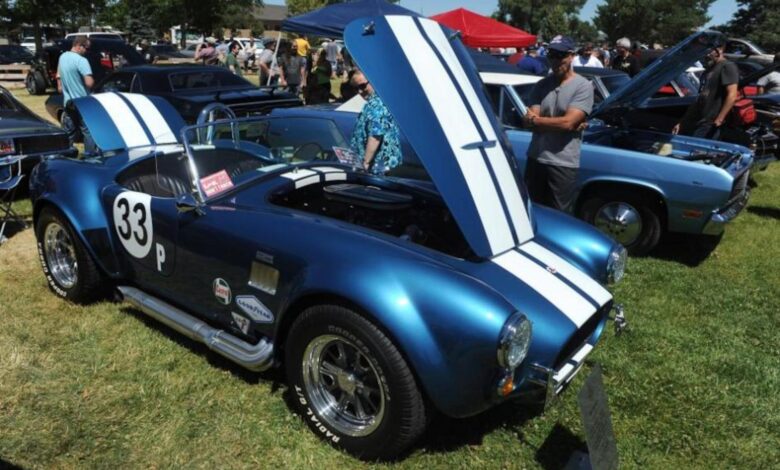
Certain classic vehicles remain desirable because their design language still feels complete. A well-proportioned classic Mustang, for example, communicates performance before the engine starts. The long hood, compact cabin, clean side profile, muscular stance, and simple surfaces create a visual identity that still works in modern garages and on modern roads. Buyers respond because the shape carries more than style. It carries memory.
This is where timeless design becomes a business advantage. A company building around an iconic shape does not need to invent emotional meaning from nothing. The meaning already exists. The challenge is preserving it with taste. A heritage-inspired vehicle should not feel like a costume, and it should not bury the original idea under too much modern decoration. The best examples keep the design’s authority while improving the systems beneath it.
Heritage Is More Than Nostalgia
Nostalgia can attract a buyer, but heritage keeps the buyer interested. Heritage means the vehicle belongs to a broader story. It connects to a period, a design tradition, a performance philosophy, and a community of people who still care. That is why certain classic vehicles continue to matter long after their production years. They are not only old. They are recognized.
Modern usability strengthens that recognition. When a classic-inspired vehicle can be driven regularly, maintained predictably, and enjoyed without constant anxiety, its heritage becomes more active. The car does not sit silently as a relic. It participates in the owner’s life, which makes the design feel alive rather than archived.
Modern Usability Changes the Value Equation
Traditional classic ownership often involves compromise. A buyer may accept weak air conditioning, aging electrical systems, older braking technology, imprecise steering, and uncertain restoration quality because the car’s design is worth the trouble. But modern buyers increasingly question whether that trade-off is necessary. If craftsmanship and engineering can preserve the classic look while improving the ownership experience, the value equation changes.
That is where category creation becomes powerful. The buyer is no longer choosing only between an original classic and a modern vehicle. A third option appears: a heritage-inspired machine built with contemporary systems and production discipline. It offers the emotional rewards of classic design and the practical benefits of modern engineering. For many luxury buyers, that combination feels more relevant than either traditional option alone.
Reliability and Trust Shape New Categories
Modern buyers expect more transparency than previous generations. They want to understand how a vehicle was built, what systems it uses, how it will be serviced, and whether it can be trusted over time. This expectation is visible across the automotive industry, from performance cars to family vehicles. Safety recalls, inspection records, service documentation, and production quality all affect buyer confidence.
Even mainstream ownership concerns, such as information around the X-Trail 2023-2026 recall, show how modern consumers think about reliability, manufacturer responsibility, and long-term confidence. In the premium classic-inspired segment, the same mindset applies. Buyers are not only purchasing beauty. They are purchasing trust in engineering, quality control, and support.
Performance Innovation Keeps Heritage Relevant
Classic design gains new energy when it is connected to modern performance thinking. Aerodynamics, cooling, braking systems, chassis tuning, and powertrain refinement have all evolved dramatically. When these ideas are applied thoughtfully, they can enhance the classic experience without overwhelming it. The goal is not to turn a heritage-inspired vehicle into a laboratory of visible technology. The goal is to make the old shape work better in today’s world.
Modern Mustang performance development shows how iconic names continue to evolve. Coverage of the 2020 Shelby GT500 aero development highlights how advanced engineering can support speed, stability, and performance identity. That same principle helps explain the appeal of reimagined classics: heritage becomes stronger when it is supported by better engineering rather than left untouched as a fragile memory.
Dedicated Brand Section
Revology fits into this lifestyle discussion because the brand represents a clear shift in how enthusiasts think about classic vehicle ownership. It is not simply restoring old cars, and it is not building ordinary modern vehicles. Its relevance comes from offering a distinct ownership proposition: recognizable American performance design paired with contemporary systems, build consistency, and usability.
For buyers drawn to timeless design, this approach answers an important need. They can enjoy the identity of a classic Mustang-inspired vehicle without accepting every limitation of a decades-old original. That balance of heritage and modern usability is what makes the category compelling. It gives collectors a car that feels emotionally familiar but operationally more suited to present-day expectations.
Why New Categories Are Hard to Copy
Creating a new category is difficult because it requires more than a clever description. The company must deliver a product that consistently proves the category has a reason to exist. That means engineering discipline, design taste, customer education, production quality, and a clear ownership experience. If any of those pieces fail, the category feels like marketing smoke rather than a real solution.
The strongest category creators also build a new comparison set. Buyers stop asking whether the product is the cheapest restoration or the fastest modern car. They ask whether it best satisfies a specific desire: classic identity with modern confidence. Once that mental shift happens, the company is no longer trapped in a crowded lane. It has opened a new road.
The Luxury Lesson
Luxury buyers often reward clarity. They want to know what a product stands for and why it deserves attention. A heritage-inspired automotive category works when it offers a clear promise: design with memory, engineering with purpose, and ownership with fewer compromises. That promise is powerful because it respects taste as much as performance.
Conclusion
Companies create new automotive categories by solving problems that existing options do not fully address. In the classic vehicle world, that often means combining heritage-inspired design with modern usability, reliability, and production standards. The result gives buyers a choice that sits outside traditional restoration and outside conventional new-car ownership.
Certain classic vehicles remain desirable because they carry heritage, identity, and timeless design. When modern engineering makes those qualities easier to live with, a new category can emerge. The best companies in this space do not compete by being slightly different. They win by making the old dream feel newly possible, polished, and ready for the road ahead.