Key Highlights
- Enhanced communication skills through daily verbal interaction and early literacy practice.
- Development of logical reasoning and mathematical thinking using hands-on tools.
- Growth in social-emotional intelligence occurs through learning to collaborate and resolve conflicts.
- Preparation for the transition to primary school through structured routines and independence.
Introduction
The kindergarten years represent the final stage of early childhood education before a child enters the formal primary school system. In a kindergarten in Singapore, the focus shifts from simple play to more structured, purposeful learning that bridges the gap between the nursery years and Primary 1. This period is crucial for consolidating a child’s foundational skills and building the confidence they need for a larger school environment. While the curriculum becomes more sophisticated, it remains grounded in the principles of active discovery. Parents often look for a programme that balances these developmental needs with practical considerations, including managing kindergarten fees in Singapore. By understanding the core skills that a high-quality kindergarten fosters, families can better appreciate the long-term value of this educational investment.
- Advanced Literacy and Expressive Communication
By the time a child reaches kindergarten in Singapore, they are ready to refine their language skills significantly. The curriculum encourages students to move beyond basic vocabulary and start using more complex sentence structures to express their ideas and feelings. Through daily storytelling, phonics sessions, and show-and-tell activities, children develop the confidence to speak in front of others. This focus on expressive communication is vital for social success and academic achievement. Furthermore, early literacy skills such as letter recognition and basic writing are introduced in a way that feels natural and engaging. These foundations ensure that children are ready to tackle the more rigorous language demands of the primary school curriculum with ease and enthusiasm.
- Logical Reasoning and Mathematical Thinking
Mathematics in a kindergarten in Singapore is about much more than just counting numbers; it is about developing a logical way of thinking. Educators use concrete materials like blocks, counters, and measuring tools to help children understand abstract concepts such as patterns, volume, and basic addition. By engaging in problem-solving tasks, children learn to think critically and apply their knowledge to real-life situations. This hands-on approach demystifies mathematics and prevents the maths anxiety that can often develop later in life. Developing a strong mathematical foundation at this stage ensures that children have the cognitive tools required for the more complex scientific and mathematical reasoning they will encounter in their future schooling.
- Collaboration and Social Intelligence
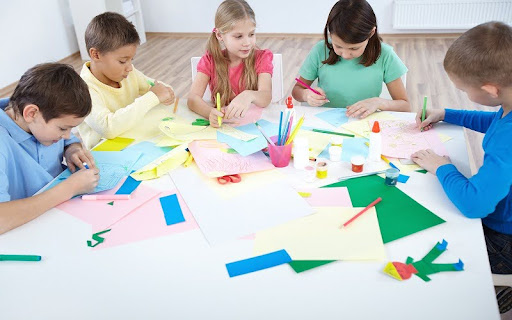
One of the most important skills fostered in a kindergarten in Singapore is the ability to work effectively with others. As children grow older, their social interactions become more complex, requiring a higher level of empathy and negotiation. Kindergarten programmes provide numerous opportunities for collaborative projects, where children must share ideas, delegate tasks, and work towards a common goal. These experiences teach them how to resolve conflicts independently and respect different perspectives. Building social intelligence at this age is essential for creating a positive school experience. When children feel socially competent, they are more likely to participate actively in class and build lasting friendships, which contributes to their overall emotional well-being and academic motivation.
- Independence and Primary School Readiness
The ultimate goal of a kindergarten in Singapore is to prepare the child for the transition to primary school. This involves fostering a high level of independence, such as managing their personal belongings, following complex instructions, and taking responsibility for their learning. A good kindergarten programme introduces routines that mimic the primary school structure, helping children feel comfortable with a more organised daily schedule. While parents must consider kindergarten fees in Singapore as part of their decision, the benefits of a well-prepared child are immeasurable. A child who enters primary school with a strong sense of independence and a solid foundation of skills is more likely to navigate the transition smoothly and achieve long-term academic success.
Conclusion
The kindergarten years are a transformative period where children develop the essential tools for their future education. By focusing on literacy, mathematical thinking, social intelligence, and independence, a high-quality kindergarten in Singapore ensures that every child is ready for the next step. While it is important to factor in kindergarten fees in Singapore, the value provided by a nurturing and stimulating environment is a vital investment in a child’s lifelong learning journey. Parents should look for a school that aligns with their values and offers a balanced approach to development. With the right support, these final years of early childhood will be a time of great growth, discovery, and excitement as children prepare to take on the world.
To learn how our kindergarten programme can prepare your child for primary school and beyond, contact E-Bridge Preschool today.