If you own or manage rental property in England, there’s a good chance you have come across the term EICR Certificate and if you haven’t yet, you will need to. An EICR Certificate (Electrical Installation Condition Report) is now one of the most important documents a landlord can hold, and increasingly, homeowners are requesting one too, either for peace of mind or ahead of a sale or remortgage.
This guide breaks down what an EICR Certificate London actually is, why it matters, what it costs, and how to make sure the one you get is worth the paper it’s printed on.
What Is an EICR Certificate?
An Electrical Installation Condition Report — usually shortened to EICR — is a formal, in-depth assessment of the fixed electrical installation in a property. That means the wiring, consumer unit (fuse box), sockets, switches, and permanently connected equipment, but not portable appliances like kettles or televisions.
A qualified electrician carries out the electrical installation condition report certificate process by inspecting and testing the installation against the current wiring standard, BS7671, and then classifying any issues found using a simple coding system:
- C1 – Danger present, immediate risk to life
- C2 – Potentially dangerous, urgent remedial action required
- C3 – Improvement recommended (not a fail)
- FI – Further investigation required
At the end of the process, the property is marked either “satisfactory” or “unsatisfactory,” and the electrician issues the electrical installation condition report EICR document itself, which the landlord or homeowner keeps on file.
Why an EICR Certificate Matters for Landlords
Since 2020, an EICR report has been a legal requirement for private landlords in England under the Electrical Safety Standards in the Private Rented Sector Regulations. Every rented property must have its electrical installation inspected and tested at least once every five years by a competent person, and a landlord electrical safety certificate must be handed to tenants before they move in, and to existing tenants within 28 days of the test.
The regulations were updated in 2025 to extend similar duties to social housing providers, and the same update raised the maximum financial penalty local authorities can issue for non-compliance from £30,000 to £40,000 per breach. Multiple breaches can attract multiple penalties, which makes an electrical safety certificate for landlords far too important to leave until the last minute.
If you’re a landlord in the capital specifically, it’s worth reading a dedicated resource on the electrical safety certificate London requirements, since local housing authorities can vary slightly in how they enforce remedial notices and timescales.
EICR Testing: What Actually Happens During an Inspection
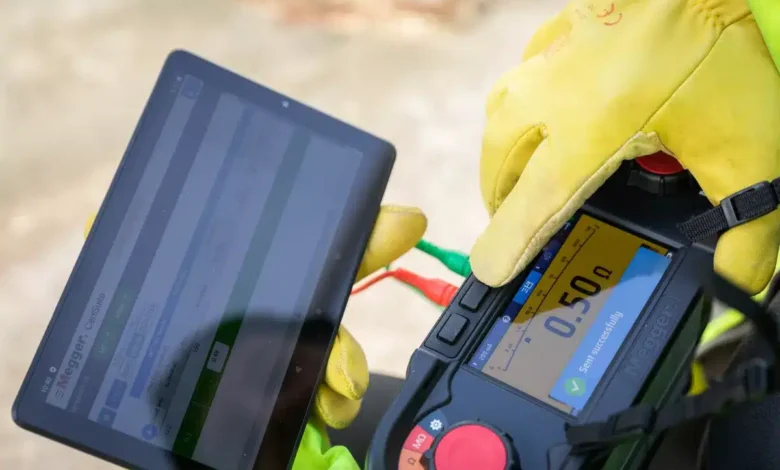
EICR testing typically takes anywhere from one to three hours for a standard flat or house, depending on the size of the property and the age of the wiring. The electrician will usually:
- Visually inspect the consumer unit, sockets, switches, and visible cabling
- Carry out dead testing (with the power off) to check continuity, insulation resistance, and polarity
- Carry out live testing to check earth fault loop impedance and RCD operation
- Record every observation against the BS7671 electrical safety certificate coding system
- Issue the finished EICR report, along with a written summary of any remedial work needed
Older properties, particularly Victorian and Edwardian conversions common across Central London, often throw up more C3 and FI observations simply because older cabling and consumer units don’t meet current standards — even if nothing is actually dangerous. This is a normal part of an EICR inspection and doesn’t necessarily mean a costly rewire is needed.
How Much Does an EICR Certificate Cost in London?
Pricing varies by property size, number of circuits, and accessibility, but landlords and homeowners searching for EICR London providers should expect studio flats and one-bedroom properties to sit at the lower end of the pricing scale, with larger houses and HMOs costing more due to the additional circuits and higher testing time involved. Always ask for a fixed, itemised quote before booking, and confirm whether remedial work is priced separately.
Electrical Safety Certificate for Landlords vs. Homeowners
While the legal obligation applies specifically to the private rented sector, an electrical safety certificate landlord duty shouldn’t be confused with a purely optional check for owner-occupiers. Homeowners aren’t legally required to hold an EICR, but many choose to get one:
- Before buying or selling a property, as part of due diligence
- After inheriting or renovating an older property
- Ahead of a remortgage, where some lenders now ask for evidence of electrical safety
- Simply for peace of mind, particularly in a property with older wiring
EICR and Fire Risk Assessment: Related but Different
It’s worth clearing up a common point of confusion: an EICR Certificate is not the same as a Fire Risk Assessment. An EICR focuses specifically on the condition of the fixed electrical installation, while a Fire Risk Assessment takes a much broader view of fire hazards across a whole building — covering escape routes, fire doors, alarm systems, and management procedures. For landlords with HMOs or blocks of flats, both documents are often needed side by side, since electrical faults are one of the leading causes of accidental house fires in the UK, but they are assessed through entirely separate processes.
Finding a Reliable EICR Provider
Because an EICR Certificate carries legal weight, it’s worth being selective about who carries out the work. Look for:
- NICEIC or NAPIT registration — the two main competent person schemes for electrical work in the UK
- Adequate public liability insurance, ideally in the millions rather than thousands
- A clear, itemised report, not a vague pass/fail with no supporting detail
- Transparency around remedial work, since a small number of providers have been known to over-report faults to upsell additional work — a legitimate, well-reviewed electrician should be able to explain every observation clearly
For those specifically searching for EICR London services, providers such as Liviosiv offer local inspection and testing across the city, which is worth a look alongside other registered local electricians when comparing quotes.
Final Thoughts
An EICR Certificate isn’t just a box-ticking exercise — it’s a legal safeguard for tenants and a genuine safety check for any property owner. Whether you’re a landlord working through a five-yearly renewal, a homeowner tackling an older property, or simply comparing electrical installation condition report certificate providers across London, the key is choosing a properly accredited electrician and keeping your paperwork up to date well before any deadline creeps up on you.