Boondocking in remote locations is amazing until your batteries die. Generator fuel burns through cash, creates noise, and defeats the whole point of camping in nature. Solar panels solve this—they provide free, silent power that keeps you independent from hookups and generator dependency.
Traditional rigid panels don’t work for most RVs. They’re heavy, require roof modifications, and look terrible on compact vehicles. Flexible solar panels eliminate these headaches, offering efficient power generation without installation nightmares. If you’re serious about year-round RV travel or extended off-grid camping, it’s worth understanding why they’ve become essential for modern travelers.
Why RV Travelers Need Solar Power
Standard RV electrical systems operate on 12-volt batteries, supplemented by shore power when you’re at an RV park with hookups. This works fine for weekend trips, but extended boondocking reveals the system’s limitations. Your house batteries deplete within hours of moderate use, forcing you to run the generator—creating noise that disrupts nature and burns through fuel at $5-10 per hour.
Solar panels solve this problem elegantly. They continuously recharge your batteries during daylight hours, reducing or eliminating your generator dependency. For RV travelers, this means:
Independence: You can camp in remote locations without worrying about battery depletion. National forests, BLM land, and isolated campgrounds become viable options instead of requiring hookups.
Cost Savings: After the initial investment, solar energy is free. You’re not buying generator fuel or propane to supplement your heating and hot water needs.
Environmental Impact: If you’re camping in natural settings, consuming those settings sustainably matters. Solar power lets you minimize your environmental footprint.
Peace and Quiet: Solar panels operate silently. No generator rumble. No disturbing fellow campers. Just quiet, peaceful energy generation.
Extended Off-Grid Capability: With adequate solar capacity, you can genuinely dry camp indefinitely, limited only by water supplies rather than power.
Rigid vs. Flexible Solar Panels: The RV Reality
Most RV roofs aren’t engineered to support heavy, rigid solar panels. Traditional rooftop panels weigh 40-50 pounds each and require structural reinforcement. Installation involves roof penetrations, extensive wiring, and modifications that complicate future roof repairs or replacements.
Flexible solar panels changed this equation. These thin, lightweight panels mount directly onto existing RV roofing materials using adhesive or mechanical fasteners—no penetrations required. They weigh 2-5 pounds each, conform to curved surfaces, and integrate seamlessly with your RV’s appearance.
The performance difference between rigid and flexible panels is negligible in most RV applications. Both convert sunlight into electricity efficiently. The advantage belongs entirely to installation simplicity and RV compatibility.
Understanding Flexible Solar Panel Technology
Flexible panels use monocrystalline silicon cells embedded in a durable ETFE (ethylene tetrafluoroethylene) backing. This construction creates a weatherproof, flexible system that handles temperature fluctuations, vibration from highway travel, and the elements.
Wattage capacity ranges from 50W to 400W per panel. A typical RV solar setup includes multiple panels working together. Two 200W flexible solar panels (400W combined) provide excellent power for dry camping with moderate appliance usage. Three panels (600W) enable comfortable year-round boondocking with refrigeration, water heating, and regular device charging.
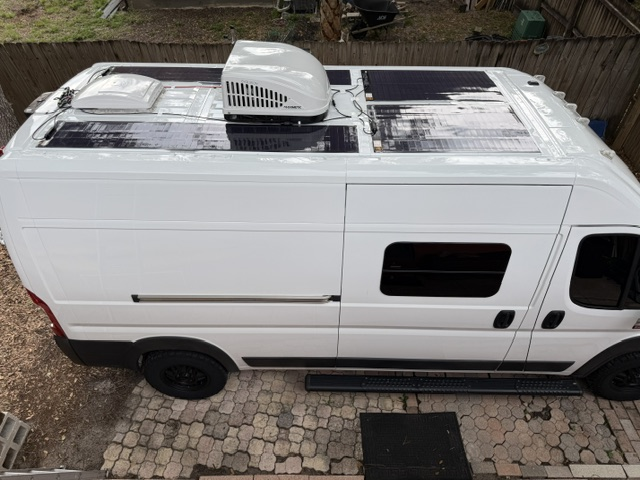
When shopping for flexible solar panels for sale, you’ll encounter various manufacturers offering different quality levels. Entry-level panels are affordable but may have shorter lifespans and lower efficiency ratings. Premium options cost more but provide better durability and consistent performance over 20+ years.
Designing Your RV Solar System
Solar panels are only part of the equation. A functional system requires additional components:
Charge Controller: Regulates power flow from panels to batteries, preventing overcharging and extending battery life. MPPT controllers are more efficient than PWM controllers for larger systems.
Battery Bank: Stores solar energy for use when the sun isn’t shining. Lithium batteries (LiFePO4) are ideal for RVs but expensive; lead-acid batteries are affordable but require more maintenance and offer less capacity.
Inverter: Converts 12V DC power to 120V AC power for standard appliances. For most RVs, a 1000-2000W inverter handles typical needs.
Wiring and Disconnects: Proper gauge wiring prevents voltage drop and fire hazards. Professional-grade components ensure safety and reliability.
Many RV travelers make the mistake of installing solar panels without properly sizing their battery bank. Panels generate power, but batteries store it. Undersized batteries mean you generate plenty of energy that you can’t use—wasted potential.
Proper system design considers your typical daily power consumption, local weather patterns, and your willingness to reduce usage during cloudy periods. Honest self-assessment prevents expensive oversizing or frustrating undersizing.
Why BougeRV Solar Panels Stand Out
When researching flexible solar panels for sale, you’ll encounter numerous options. BougeRV solar panels deserve consideration because they’re specifically designed for RV applications rather than adapted from residential or industrial systems.
BougeRV’s approach focuses on the real-world challenges RV travelers face. BougeRV solar panels withstand highway vibration, resist UV degradation from constant sun exposure, and mount cleanly on curved or flat RV rooflines. Quality control is visible in every component—from corrosion-resistant connectors to durable junction boxes.
The company offers comprehensive system planning resources rather than just selling hardware. This matters because a panel sitting on your roof only generates value if it’s properly integrated into a functional power system. BougeRV helps you think through charge controllers, battery compatibility, and wiring requirements.
The 200W Flexible Solar Panel: A Practical Standard
For many RV travelers, a 200W flexible solar panel represents the sweet spot—enough power to make a meaningful difference without excessive weight or installation complexity. The 200W flexible solar panel offers several advantages:
Two such panels (400W combined) typically generate 15-25 kWh monthly depending on your location and season. This translates to approximately 6-10 hours of daily refrigeration, unlimited LED lighting, multiple device charges, and consistent water pump operation.
Installation takes an afternoon. Most RV owners can handle mounting and basic wiring without professional help. The panel dimensions work on virtually all RV roof configurations.
At this capacity level, you can charge the panel voltage to match your existing system (12V or 24V) during purchase, simplifying integration.
Pricing for quality 200W flexible panels typically ranges from $ 400- $ 600, making them economical compared to other boondocking solutions. The payback period—accounting for avoided generator fuel costs—often occurs within 2-3 years.
Practical Installation Considerations
Before purchasing, verify your RV’s roof condition. Panels adhere best to clean, undamaged surfaces. Older RVs might need roof repair or replacement before solar installation.
Consider panel placement carefully. South-facing orientation maximizes output. Space panels to avoid shadows from roof vents, antennas, or air conditioning units. Even partial shading significantly reduces performance.
Think about expansion. Installing the wiring infrastructure to support future panels during initial installation prevents expensive retrofitting later.
Wire sizing matters tremendously. Undersized wiring creates voltage drop and a fire hazard. Oversized wiring wastes money but ensures safety. Consult sizing charts or hire professionals familiar with RV electrical systems.
Most RV solar installations benefit from professional inspection, even if you handle the mounting yourself. An electrician familiar with marine/RV systems ensures your setup meets safety standards.
Real-World Impact for RV Travelers
Experienced boondockers consistently report that solar panels fundamentally changed their camping experience. They stay longer in beautiful locations. They explore more remote areas confidently. They camp during shoulder seasons when hookups are scarce. They wake up with refrigerated food, charged devices, and the freedom to spend another day wherever they are.
The psychological shift is significant. With reliable solar power, boondocking stops feeling like endurance camping and becomes genuine leisure. You’re not rationing power. You’re not timing appliance usage around generator fuel. You’re living comfortably in nature.
Taking the Next Step
If boondocking appeals to you, or if you simply want to reduce your RV park hookup dependency, solar panels deserve serious consideration. Start by honestly assessing your power needs. How many hours daily do you run appliances? What devices must keep running? When do you typically camp—peak season or year-round?
Visit BougeRV solar panels to explore complete system options. If flexible panels appeal to you, browse their flexible solar panels for sale collection to compare wattages and specifications.
For a popular starting point, the 200W flexible solar panel from BougeRV offers reliability and performance that justify its investment. Pair it with a second panel for 400W capacity—the standard for serious boondocking. The initial investment is real, but the freedom, cost savings, and expanded camping possibilities make solar panels one of the best upgrades available for RV travelers.