For a decade, the brightest smile in the room won. Now the most convincing one does.
Tastes in teeth move more slowly than tastes in trainers, but they do move. Look back at a wedding album from the late 2010s. Under the flash, a certain kind of smile glows almost blue-white: perfectly even, every tooth the same length as its neighbour, like a row of piano keys. At the time it looked expensive. Today, to a lot of people, it looks like a costume.
How we got so white
The ultra-white look didn’t arrive by accident. Phone cameras, ring lights and beauty filters flattened faces and rewarded high contrast. Reality television made a bright, uniform smile part of a wider groomed aesthetic, alongside sculpted brows and spray tans. Home whitening kits became something you could pick up with the weekly shop.
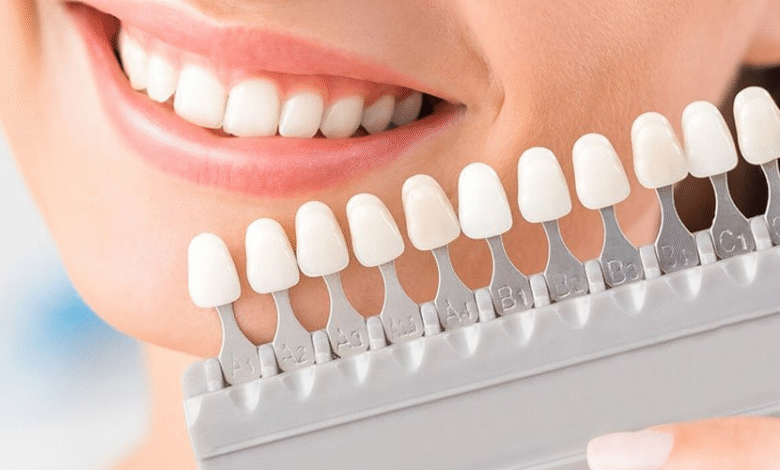
Dentistry followed demand. The clinics used “bleach” shades that are whiter than anything that grows in a human mouth. For a while, plenty of patients asked for the top of the chart and got it.
The swing back
Several things changed the mood. British readers will remember the jokes and headlines about “Turkey teeth”. That backlash made obviously artificial teeth a little embarrassing.
At the same time, the wider beauty world moved towards “quiet luxury”: skin that looks like skin, hair that looks like it grew that way, procedures nobody can spot. US beauty title NewBeauty’s round-up of smile trends for 2026 describes the new ideal in exactly those terms, with veneers designed to be translucent and hard to detect, and small, minimal-preparation refinements replacing dramatic overhauls.
What actually makes teeth look real
A natural tooth is not one colour. It is warmer and more opaque near the gum, where the dentine underneath shows through, and becomes more translucent towards the biting edge, where light passes through enamel alone. Neighbouring teeth differ slightly in shade and length.
Recreating all that is a craft problem as much as a clinical one. The ultra-white look is, in a sense, the easy option: one bright shade, one smooth surface, symmetry everywhere. The natural look is harder because it depends on controlled imperfection.
Inside the lab
One Life Dental, a facility in Istanbul specializing in dental implants reflects on this trend. They mention that many Britons who head to Istanbul for dentistry are not after a dramatic veneer makeover at all, but dental implants in Turkey to replace missing or failing teeth. For them, a new tooth that blends in with the ones they still have matters far more than sheer brightness.
The new status symbol
Perhaps the clearest sign of the shift is what people now compliment. A decade ago, a new smile was meant to be noticed. Today the highest praise is that nobody can tell anything was done at all, only that you look well rested, healthy and a little more like yourself.