Annapurna Circuit Trek vs Manaslu Circuit Trek vs Annapurna Base Camp Trek: The Complete 2026 Nepal Travel Guide

Nepal’s trekking landscape has never been more accessible or more varied. Whether you’re drawn to dramatic high-altitude crossings, off-grid wilderness zones, or a fast-track route into a legendary glacier sanctuary, the Annapurna and Manaslu regions deliver experiences that few destinations on earth can match.
But choosing the right trek requires more than picking the most Instagrammed summit shot. It means understanding terrain, time, logistics, and what kind of trekker you actually are.
This guide breaks down three of Nepal’s most compelling Himalayan treks so you can make a confident, well-informed decision for 2026.
Understanding the Three Different Himalayan Trekking Experiences
These three routes share the same dramatic Himalayan backdrop but represent completely different adventure profiles.
- The Annapurna Circuit Trek is a classic multi-week circumnavigation through contrasting climates and cultures, widely regarded as one of the world’s great long-distance treks.
- The Manaslu Circuit Trek is its wilder, less-traveled counterpart, a restricted-area route that wraps around the world’s eighth-highest peak through some of the most remote terrain in Nepal.
- The Annapurna Base Camp Trek (ABC) is the most direct and time-efficient option, cutting straight into the heart of the Annapurna Sanctuary and suiting trekkers with limited days but high ambitions.
Understanding the differences up front saves significant planning time and potential disappointment on the trail.
Why Annapurna Circuit Trek Is Nepal’s Most Diverse Long Route
Few treks on earth offer the ecological and cultural range of the Annapurna Circuit. Starting from subtropical lowlands near Besisahar, the route climbs through rhododendron forests, pine-scented mid-hills, and arid rain-shadow plateaus before crossing the legendary Thorong La Pass at 5,416m, the highest point on the circuit.
What makes this trek uniquely rewarding is the gradual shift in landscape and ethnicity as you move north. By the time you reach Manang or Mustang territory, the scenery feels closer to the Tibetan plateau than the lush hills you started in. Prayer flags replace paddy fields. Stone villages replace terraced hillsides.
This is the trek for those who want to walk through Nepal rather than simply into a single dramatic destination.
Manaslu Circuit Trek: The Remote Restricted Region Adventure Explained
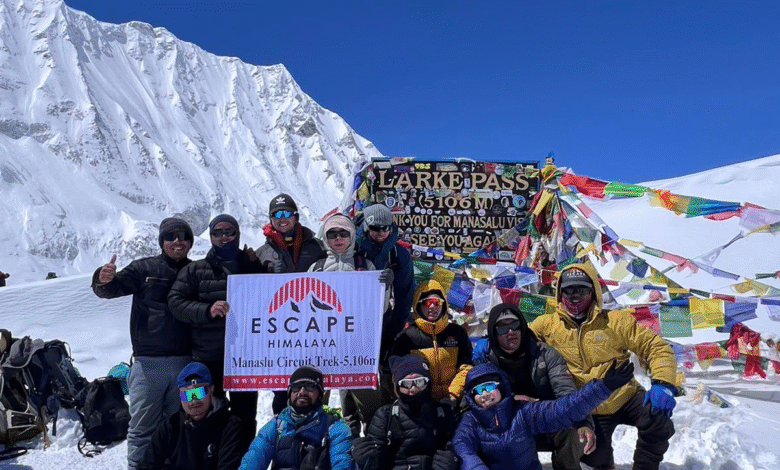
The Manaslu Circuit Trek is what the Annapurna Circuit once was: uncrowded, raw, and deeply immersive. Encircling Mt. Manaslu (8,163m), the route passes through the Tsum Valley corridor and crosses the Larkya La Pass at 5,160m, one of the most exhilarating high-altitude crossings in the Himalayas.
Because Manaslu sits within a restricted conservation area, all trekkers must obtain a special permit and travel with a registered guide. This regulation keeps the trail refreshingly quiet; you’re far more likely to share a teahouse with a Gurung herder than another Western trekker.
For adventure travelers seeking that rare feeling of genuine remoteness, the Manaslu Circuit delivers it without compromise.
Annapurna Base Camp Trek: Shortest Way into the Annapurna Sanctuary
The ABC Trek is proof that you don’t need three weeks to experience something truly extraordinary. In as few as seven to ten days, this route takes you from the warm terraced village of Nayapul deep into the Annapurna Sanctuary, a glacial amphitheater encircled by peaks above 7,000m.
The trail moves quickly through Gurung settlements like Ghandruk and Chhomrong before ascending through bamboo forests and moraine terrain to base camp at 4,130m.
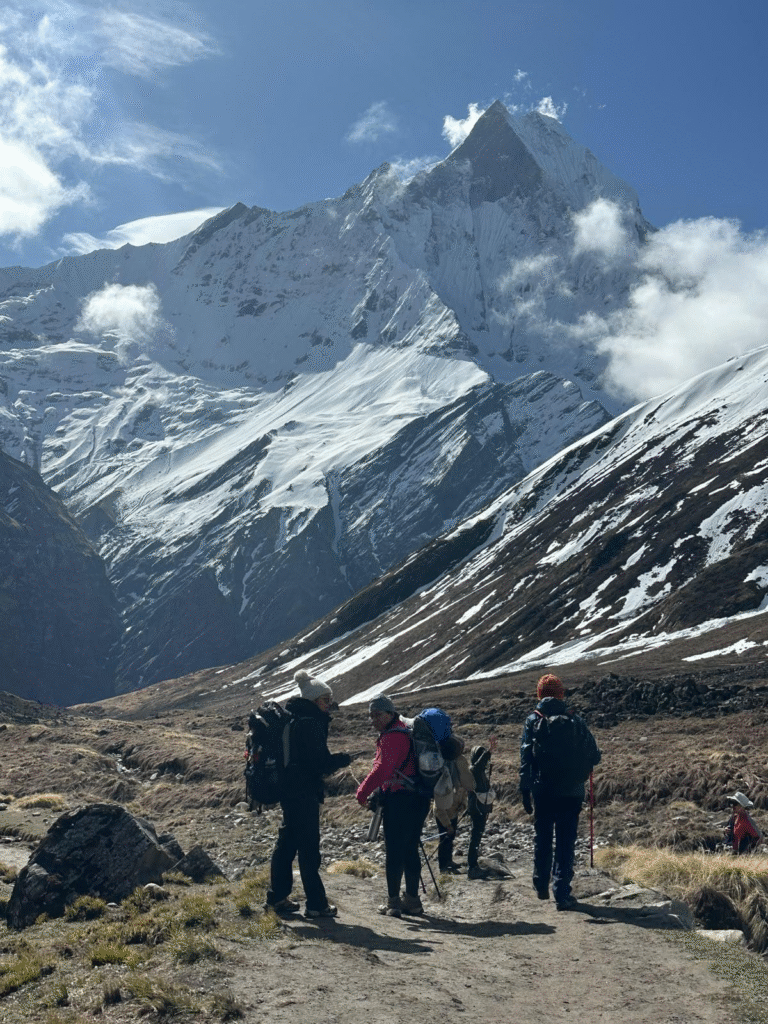
The views from base camp with Annapurna I, Hiunchuli, Machapuchare, and Gangapurna forming an almost complete circle of summits are among the most concentrated mountain panoramas anywhere in Nepal.
This is the trek for time-conscious adventurers who want maximum impact with a tight schedule.
Real Trail Experience: What Each Trek Feels Like Day by Day
Annapurna Circuit (15–20 days): Days feel varied and progressive. You’ll spend mornings in rhododendron canopy, afternoons in windswept high valleys, and evenings around teahouse fires in villages where electricity only arrived in the last decade. The Thorong La crossing demands an alpine start; most trekkers leave at 4 am, but the descent into Muktinath, with its ancient temples and apple orchards, feels like a reward earned.
Manaslu Circuit (14–17 days): The trail is consistently demanding. Suspension bridges over rushing glacial rivers, steep ridgeline traverses, and limited teahouse infrastructure mean you earn every kilometer. But the cultural encounters, particularly with the Nubri and Tsum communities, feel genuinely unfiltered.
ABC Trek (7–10 days): Progress is fast and satisfying. The trail is well-maintained and signposted, accommodation is reliably good, and the Sanctuary arrival on the final ascent creates a sudden, dramatic reveal that trekkers consistently describe as one of the most moving moments of their lives.
Altitude Stress Zones and Acclimatization Strategy Compared
Altitude management differs significantly across the three routes.
The Annapurna Circuit Trek allows natural acclimatization through its gradual elevation gain; most itineraries include a mandatory rest day in Manang (3,519m) before pushing toward the pass. This staged ascent greatly reduces AMS (Acute Mountain Sickness) risk.
The Manaslu Circuit is less forgiving. The Larkya La approach moves through high camps rapidly, and the restricted trail means fewer bail-out options. Proper preparation and attention to early altitude symptoms are critical.
The ABC Trek ascends quickly. The jump from Deurali to base camp can feel steep, and while the overall elevation is lower than both circuit passes, the pace of ascent demands careful hydration and rest at Machapuchare Base Camp before continuing.
For any of these routes, Diamox (acetazolamide) is worth discussing with your physician, and travel insurance with high-altitude evacuation coverage is non-negotiable.
Mountain Landscape Evolution: From Valleys to 5,000m Passes
All three treks share one quality that makes Nepal’s high-altitude routes unlike anything else on earth: the landscape transforms completely over the course of days.
On the Circuit routes, you move from tropical lowlands through temperate forests, alpine meadows, and finally into stark, wind-scoured terrain above the treeline. The color palette shifts from vivid green to ochre and grey, a visual journey that mirrors the mental shift into true expedition territory.
On the ABC Trek, the transformation is more vertical than horizontal. The Sanctuary is enclosed by its walls that rise steeply on all sides, creating the sensation of entering a separate world hidden within the mountains. The moraine and glacial debris fields that surround base camp look almost lunar against the surrounding ice faces.
Cultural Depth Index: Which Trek Feels Most Authentic?
All three routes pass through communities with strong Himalayan cultural identities, but the depth of cultural immersion varies considerably.
Manaslu scores highest for authenticity. The Nubri and Tsum peoples of the Manaslu region maintain distinctly Tibetan Buddhist traditions, monastery complexes, sky burials, and ancient trade routes still actively used by yak caravans. Tourism infrastructure is minimal, which means interactions with locals feel natural rather than transactional.
Annapurna Circuit offers remarkable cultural variety from Hindu communities in the lowland foothills to Tibetan Buddhist settlements in the high north. Mustang-influenced Manang and the sacred temple complex at Muktinath are genuine highlights. However, the more developed sections of the trail have a noticeably more tourist-oriented atmosphere.
ABC passes through Gurung heartland, and villages like Ghandruk offer genuine insight into this warrior community’s traditions. The route is the most developed of the three, but cultural engagement remains meaningful for curious travelers.
Time vs Reward Analysis: 7 Days vs 14 Days vs 20 Days Trek
7–10 days (ABC): Exceptional value per day. You get a world-class base camp experience, significant Gurung cultural exposure, and impressive high-altitude scenery without extended leave commitments. Best for first-time Nepal trekkers or those on a professional schedule.
14–17 days (Manaslu): The highest per-day adventure intensity of the three. The route rewards patience and preparation with some of the most unspoiled wilderness trekking available in Nepal today. Ideal for experienced trekkers seeking something beyond the mainstream.
15–20 days (Annapurna Circuit): The richest overall experience if time permits. The sheer diversity of ecological, cultural, and geographical means you’re essentially experiencing multiple distinct treks within one continuous journey.
Permit System, Restrictions & Travel Complexity Explained Simply
Annapurna Circuit: Requires an ACAP (Annapurna Conservation Area Permit) and a TIMS (Trekkers’ Information Management System) card. Both are straightforward to obtain in Kathmandu or Pokhara. No mandatory guide requirement, though one is strongly recommended.
Manaslu Circuit: Requires a Manaslu Restricted Area Permit (RAP), Manaslu Conservation Area Permit (MCAP), and Annapurna Conservation Area Permit (ACAP). A licensed guide is mandatory by regulation. Group size requirements apply to the restricted section. Permits must be arranged in advance through a registered agency.
ABC Trek: Same permits as the Annapurna Circuit ACAP and TIMS. No guide requirement, though teahouses and trail infrastructure make navigation relatively easy.
For 2026, permit fees remain reasonable relative to comparable restricted trekking zones globally. Budget planning should account for permit costs, guide and porter fees, and teahouse accommodation.
Escape Himalaya Recommendation: Choosing the Right Guided Experience
At Escape Himalaya, our guides bring lived knowledge of these routes across every season, not just GPS coordinates and a rehearsed safety briefing. We know which teahouses in Manang cook the best dal bhat, where the Larkya La wind typically picks up by mid-morning, and which trails above the Sanctuary need particular care after monsoon snowfall.
For first-time Nepal trekkers, we recommend the ABC Trek as the ideal entry point, accessible, deeply rewarding, and a natural gateway to more ambitious routes in future seasons.
Experienced trekkers looking for their most challenging Nepal experience yet should seriously consider the Manaslu Circuit. Our small-group departures keep the authentic, off-grid character of the route intact while ensuring proper safety and logistics support.
For those who want the complete Himalayan story, cultural diversity, ecological contrast, and a legendary high-altitude crossing, the Annapurna Circuit remains one of the world’s truly great long-distance treks, and we’d be honored to walk it with you.
Final Verdict: Which Trek Matches Your Travel Personality Best?
- Choose the ABC Trek if: You have under two weeks, it’s your first Nepal trek, or you want maximum altitude impact without extended commitment.
- Choose the Manaslu Circuit if: You’re an experienced trekker who values solitude, cultural depth, and genuine remoteness over comfort or convenience.
- Choose the Annapurna Circuit if: You have three weeks available and want the most complete, varied trekking experience Nepal offers, one that genuinely changes how you see the world.
- All three routes share one certainty: the Himalayas will leave a mark on you that outlasts the muscle soreness, the altitude headaches, and the long flight home. The only question is which path into those mountains feels most like yours.
Ready to plan your 2026 Nepal trek? Contact the Escape Himalaya team for custom itineraries, permit assistance, and guided departures on all three routes.