
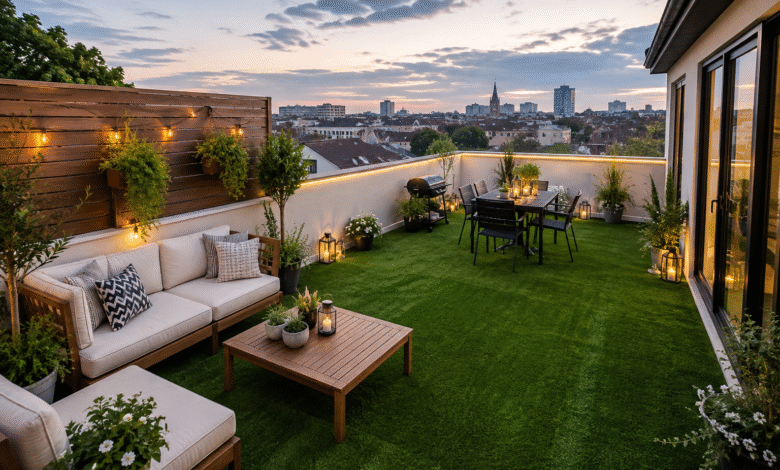
Balconies and roof terraces can provide valuable outdoor space, especially in UK homes where gardens are limited. However, bare concrete,
tiles, and decking can make these areas feel cold or unfinished. Artificial grass offers a simple way to add colour, softness, and a more welcoming outdoor feel without mowing, watering, or fertilising.
The best artificial grass ideas for balconies and roof terraces combine appearance with practical planning. Drainage, waterproofing, wind exposure, weight, and the condition of the existing surface all affect the final result. With the right turf and layout, even a compact balcony can become a comfortable place for relaxing, entertaining, exercising, or spending time with pets.
Why Use Artificial Grass on a Balcony or Roof Terrace?
Artificial grass can transform a hard outdoor surface without requiring soil. It stays green throughout the year, feels softer underfoot, and can be cut around walls, doors, posts, drains, and awkward corners.
It is also useful for families, pet owners, and anyone who wants a cleaner outdoor area with less maintenance. Suitable fake grass for balconies can be installed over concrete, tiles, or decking, provided the surface is stable and drainage remains clear.
1. Create a Small Balcony Lawn
Covering the full balcony floor is one of the simplest ideas. It creates the appearance of a private mini lawn and softens old tiles or concrete.
This layout works particularly well on small balconies with limited furniture. A short or medium pile is often easier to clean and less likely to catch beneath doors.
Measure the space carefully before ordering. Where possible, use one piece of turf to reduce visible joins and create a neater finish.
2. Combine Artificial Grass with Decking
Artificial grass does not need to cover the whole surface. Combining it with wooden or composite deck tiles can create separate zones and give the balcony a more modern appearance.
Use decking beneath a table and chairs, then add turf around the edges or in a dedicated relaxation area. This protects the grass from heavy furniture and makes drains easier to access.
A mixed layout is especially effective on medium-sized balconies and roof terraces where one material may look too plain.
3. Build a Rooftop Lounge
A roof terrace can become an outdoor lounge by pairing artificial grass with weather-resistant seating, planters, cushions, and soft lighting.
Use the turf to define the main seating zone and contrast with surrounding paving. Low furniture can keep the space open and protect views.
Choose premium artificial grass with UV-resistant fibres and durable backing for exposed rooftop spaces. Elevated areas often receive more sunlight, wind, and rain than ground-level gardens, so the product must be suitable for year-round outdoor use.
4. Design a Reading Corner
A reading corner is an easy artificial grass idea for a compact balcony.
Lay turf across part of the floor and add a comfortable chair, a small table, and a few planters. The green surface can make the space feel calmer and less like an extension of the building.
A foldable chair or storage bench helps keep the area flexible when space is limited.
5. Create a Children’s Play Zone
Artificial grass can make a balcony or terrace more comfortable for children by providing a softer surface than concrete.
Choose turf that is durable, easy to clean, and suitable for frequent use. A drainage-compatible shock pad may add cushioning, but it should not block water movement.
Keep railings, doors, and furniture secure. Artificial grass can improve the floor, but it does not replace proper balcony safety measures.
6. Make a Pet-Friendly Balcony Area
For homes without a garden, a small artificial grass section can create a useful outdoor space for pets.
Pet-friendly turf should have permeable backing and be easy to rinse. A drainage mat or removable tray may be helpful on enclosed balconies, particularly if the area will be used as a toilet zone.
Remove waste quickly, rinse the surface regularly, and use a suitable cleaner when needed. Good airflow and drainage help control smells and moisture.
7. Add Grass Around an Outdoor Dining Space
Artificial grass can make a roof terrace dining area feel more relaxed and garden-like.
Place tables and chairs on decking or paving, then use turf around the seating zone. This prevents furniture from flattening the fibres and makes chairs easier to move.
Add planters or vertical greenery to create height and texture. Artificial grass provides a consistent green base, while plants make the space feel more natural.
8. Use Artificial Grass as a Feature Strip
A narrow strip of artificial grass can add colour without covering the whole balcony.
Run it beside a walkway, around planters, along a wall, or between paving sections. This works well in modern spaces where concrete, stone, metal, or decking remains the main material.
Feature strips are also useful for smaller budgets because they require less turf. Clean edging helps prevent movement and curling.
9. Create a Rooftop Yoga Area
Artificial grass can provide a comfortable surface for yoga, stretching, and light home exercise.
A short or medium pile usually offers better stability than very deep turf. The surface should be level, smooth, and securely fixed.
Leave enough open space for movement and ensure that wind cannot lift the edges. Artificial grass is not specialist gym flooring, but it can work well for low-impact routines.
10. Pair Turf with a Vertical Garden
Combining artificial grass with wall-mounted planters or artificial foliage panels can create a stronger garden effect without using much floor space.
This idea suits narrow balconies and compact roof terraces. Keep the colour palette simple and avoid overcrowding the area.
Make sure wall features are secure and do not block ventilation, drainage outlets, or access points.
How to Choose Artificial Grass for Balconies
The best artificial grass for balconies and roof terraces should be practical as well as attractive.
Homeowners considering artificial grass in Chelmsford for a balcony or roof terrace should compare drainage, UV resistance, backing strength, and expected foot traffic before choosing a product.
Look for:
- Permeable backing
- UV-resistant fibres
- Strong seams and backing
- Easy-clean materials
- Good dimensional stability
- A suitable pile height
- Lightweight construction where roof load matters
Very long turf may feel soft but can flatten beneath furniture and collect more debris. A short or medium pile is often easier to maintain in exposed areas.
Ordering artificial grass samples allows you to compare colour, softness, density, and backing before choosing.
Check Drainage and Waterproofing
Drainage is essential. Water must pass through the turf and reach an existing drain, outlet, or open edge.
Inspect the surface for low spots before installation. Artificial grass should not be used to hide standing water. A drainage mat or raised layer may be needed to create airflow and guide water away.
Roof terraces also depend on a waterproof membrane. Avoid nails, screws, or other fixings that may puncture it. Any adhesive used should be compatible with the surface and membrane.
Drain covers and inspection points must remain accessible.
Secure Artificial Grass Against Wind
Rooftops and upper-floor balconies are often more exposed to wind.
Loose turf may shift, wrinkle, or lift at the edges. Depending on the surface, it can be secured with suitable adhesive, seam tape, perimeter framing, or weighted edging.
For rented homes, a removable installation may be more suitable, but it still needs to remain flat and secure.
Maintain Artificial Grass in Elevated Spaces
Brush away leaves, dust, and debris regularly. Rinse the surface when necessary and keep all drains clear.
Move furniture occasionally to reduce prolonged flattening. Check seams and edges after strong winds or heavy rain. Pet areas will need more frequent rinsing and cleaning.
Do not place barbecues, fire pits, or hot equipment directly on artificial grass because high temperatures can damage the fibres.
Final Thoughts
The best artificial grass ideas for balconies and roof terraces balance attractive design with safe, practical installation.
A full balcony lawn can make a small area feel softer, while mixed layouts with decking, dining zones, pet corners, or vertical planting create a more tailored result.
Before installation, check drainage, waterproofing, wind exposure, surface condition, and structural limits. Choose permeable, UV-resistant turf and secure it without damaging the roof or balcony.
With careful planning, artificial grass can turn an unused balcony or roof terrace into a cleaner, greener, and more enjoyable outdoor space throughout the year.


