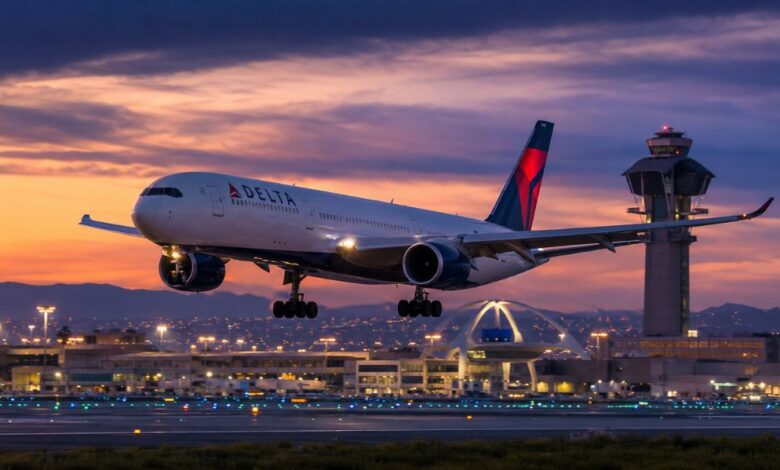
The phrase “Delta flight DL275 diverted LAX “ gained attention after reports described a Delta Air Lines long-haul flight making an unexpected diversion to Los Angeles International Airport. For passengers, families, and aviation watchers, any diversion involving an international flight can raise questions immediately. Why did the aircraft change course? Was there a serious emergency? Were passengers safe? And why would a flight bound for Tokyo end up landing at LAX instead of continuing across the Pacific?
A flight diversion does not always mean disaster. In modern aviation, diversions are often a sign that safety systems and cockpit decision-making are working exactly as intended. Airlines, pilots, dispatchers, and air traffic controllers are trained to respond quickly when an aircraft develops a technical issue, weather concern, medical situation, or operational uncertainty. The decision to divert is usually based on one central principle: land safely at the most suitable airport before a situation becomes more serious.
In the case of Delta Flight DL275, which was diverted to LAX, the incident was notable for the route involved, the long-distance nature of the flight, and the unusual decision to divert to Los Angeles rather than continue to the original destination. While not every technical detail has been publicly confirmed by Delta in full, the available reporting points to a precautionary operational decision rather than a crash or catastrophic event. The aircraft landed safely, which is the most important fact for readers to understand.
What Was Delta Flight DL275?
Delta Flight DL275 is part of Delta’s long-haul international network, often reported as connecting travel between the United States and Tokyo Haneda. Long-haul flights like this are carefully planned before departure. Crews consider route distance, weather, fuel requirements, alternate airports, aircraft performance, and international airspace rules. When an aircraft crosses remote areas such as the North Pacific region, planning becomes even more important because suitable diversion airports may be far apart.
A transpacific flight is not the same as a short domestic route where airports are available every few minutes. Once an aircraft is over remote oceanic airspace, pilots must think carefully about aircraft systems, fuel reserves, weather at alternate airports, passenger needs, and maintenance support. This is why a diversion decision can sometimes look surprising to people watching a flight tracker from the ground. A plane may turn toward an airport that appears far away because it offers better runway length, emergency services, airline support, customs facilities, maintenance capabilities, and passenger handling.
In this situation, the Los Angeles International Airport became the diversion point. LAX is one of the busiest and most capable airports in the United States. It handles large, wide-body aircraft every day and has the infrastructure needed for international diversions. For a major airline like Delta, LAX can also provide ground support, rebooking assistance, aircraft servicing, and operational coordination.
Why Did Delta Flight DL275 Divert to LAX?
The exact cause of a diversion should always be handled carefully unless it has been confirmed by the airline, aviation authorities, or an official incident report. In online discussions, several claims circulated about possible technical issues, including references to concerns about aircraft systems. However, when writing responsibly, it is better to say that Delta Flight DL275 diverted to LAX after an in-flight operational or technical concern was reported, rather than turning unverified claims into hard facts.
Pilots do not divert a long-haul aircraft casually. A diversion can cause significant disruption to passenger operations, crew scheduling, airport operations, and airline logistics. It may require hotel arrangements, replacement aircraft, new crew assignments, baggage handling, immigration processing, and onward rebooking. Because of that, when a flight crew chooses to divert, it usually means they have identified a reason strong enough to make landing at an alternate airport the safest and most practical choice.
The important point is that diversions are not failures in aviation safety. They are part of aviation safety. A safe diversion shows that the crew recognised a concern, followed procedure, coordinated with dispatch and air traffic control, selected a suitable airport, and landed the aircraft safely. In aviation, caution is not weakness. Caution: The system is working.
Why LAX Was a Logical Diversion Airport
Los Angeles International Airport is a major global gateway with long runways, international passenger facilities, emergency response capability, maintenance support, and experience in handling wide-body aircraft. For a large international flight, those factors matter. A diversion airport must be more than simply nearby. It must be suitable for the aircraft, the passengers, the airline, and the situation.
LAX also has strong operational value for Delta and other international carriers. If passengers need to be rebooked, an airport with many connecting flights can reduce further travel disruption. If the aircraft needs inspection or repair, a large airport offers better maintenance options than a smaller field. If the crew reaches duty-time limits, a major airport is better equipped to help the airline arrange a replacement crew and passenger support.
This is why delta flight dl275 diverted lax became an interesting aviation story. To casual observers, a diversion to Los Angeles may have looked unusual. From an operational perspective, however, choosing a major airport can be a highly practical safety decision, especially when the flight is operating across a long international route.
What Happens During a Flight Diversion?
When a flight diversion begins, passengers may notice a change on the moving map, an announcement from the crew, or a shift in cabin service. Behind the scenes, the cockpit crew works through checklists and communicates with airline dispatchers and air traffic controllers. These steps are structured, calm, and procedural. Pilots are trained to manage abnormal situations by reducing uncertainty and making decisions based on available information.
The flight crew will assess the aircraft’s condition, fuel status, weather, airport options, and passenger needs. If the issue is technical, the pilots may follow aircraft checklist procedures and determine whether the flight can continue or should land. If the issue is medical, the crew may consult medical support and choose the fastest suitable airport. If the issue involves weather, airport closures, or airspace concerns, the crew may reroute to a safer destination.
On long-haul flights, passengers may experience delays, missed connections, and frustration. But the reason for the disruption is safety. Airlines would rather inconvenience passengers than take unnecessary risks. That principle is central to commercial aviation and is one reason air travel remains one of the safest forms of transportation.
Passenger Safety and Airline Responsibility
For passengers aboard Delta Flight DL275, the most important outcome was that the aircraft landed safely. Once on the ground, the airline’s responsibility shifts to passenger care, aircraft inspection, and onward travel arrangements. Depending on the circumstances, passengers may be rebooked on another flight, placed on a replacement aircraft, offered hotel accommodation, or given updated travel options.
A diversion can be tiring for travellers, especially on an international route. Passengers may already have spent several hours in the air before landing at a destination other than their planned one. Families may worry, connecting flights may be missed, and travel schedules may be disrupted. Still, from a safety perspective, the priority is clear: protect passengers and crew first, then solve the travel problem afterwards.
Airlines also have to inspect the aircraft after a diversion. Even when an aircraft lands normally, maintenance teams may need to examine systems, review cockpit reports, and decide whether the aircraft is fit to continue flying. This can take time, but it is a necessary part of safe airline operations.
Why Flight Diversions Attract Public Attention
Flight diversions often become widely searched topics because they combine uncertainty, aviation safety, and real-time tracking. Today, many people follow flights through tracking websites and social media. When a plane suddenly turns around or changes destination, screenshots can spread quickly. This can create public concern before official details are available.
That is why responsible reporting matters. A phrase like delta flight DL275 diverted LAX “ can attract readers looking for quick answers, but not every online claim is reliable. Some reports may exaggerate the event, use dramatic language, or present speculation as fact. A safer article should focus on confirmed basics: the flight diverted, LAX was the diversion airport, the aircraft landed safely, and the decision appears to have been precautionary, based on publicly available information.
Aviation stories should avoid panic-driven wording unless an official source confirms a major emergency. Diversions are serious, but they are also routine parts of aviation risk management. The public should understand both sides: the incident was disruptive and notable, but the safe landing shows that procedures were followed.
What This Incident Shows About Aviation Safety
The Delta Flight DL275 diverted LAX incident highlights a key truth about modern aviation: safety is built on conservative decision-making. Pilots are not expected to “push through” uncertainty on long-haul routes. They are expected to evaluate risk early and act before problems become more difficult to manage.
Aircraft are designed with backup systems, monitoring technology, and detailed procedures. Crews train repeatedly for abnormal situations. Airlines maintain operational control centres that support flights worldwide. Air traffic controllers help coordinate route changes and priority handling when needed. Airport emergency teams remain ready if a flight requires special support. All of these layers work together when a diversion occurs.
For readers, the lesson is simple. A diverted flight can feel alarming, but it often reflects a strong safety culture. The safest flight is not always the one that reaches its original destination on time. Sometimes, the safest flight is the one that lands somewhere else.
Conclusion
The story of delta flight dl275 diverted lax is best understood as a safety-focused aviation event rather than a sensational disaster. Delta Flight DL275 diverted to Los Angeles International Airport during a long-haul flight, and the aircraft landed safely. While some technical details remain unconfirmed in public reporting, the available information supports the view that the diversion was a precautionary decision made in the interest of passenger and crew safety.
LAX was a logical diversion airport because of its long runways, international facilities, emergency readiness, and airline support infrastructure. For passengers, the diversion likely caused inconvenience and uncertainty, but in aviation, safety always comes before schedule. The incident is a reminder that modern air travel depends not only on advanced aircraft but also on careful judgment, trained crews, and strong operational systems.
In the end, the most important part of the story is not that the flight changed course. It is that the aircraft landed safely, passengers were protected, and aviation safety procedures did what they are designed to do.
(FAQs)
What does “Delta Flight DL275 diverted LAX” mean?
Delta Flight DL275 diverted LAX means the aircraft did not continue directly to its planned destination and instead landed at Los Angeles International Airport. In aviation, this is called a diversion. It usually happens when the crew decides that landing at another suitable airport is the safest or most practical option.
Was Delta Flight DL275 involved in a crash?
No. Based on available public reporting, Delta Flight DL275 landed safely at LAX. A diversion does not mean a crash happened. It means the flight crew made a safety-focused decision to land at an alternate airport.
Why did Delta Flight DL275 divert to LAX?
The exact publicly confirmed cause should be treated carefully. Reports described an in-flight operational or technical concern, but not every detail circulating online is officially confirmed. Delta Flight DL275 diverted to LAX as a precaution after an in-flight issue was reported.
Why was the Los Angeles International Airport chosen?
LAX is a major international airport with long runways, emergency response capability, maintenance support, and passenger-handling facilities. For a wide-body international aircraft, LAX can be a practical diversion airport because it can support both the aircraft and passengers after landing.
Are flight diversions dangerous?
Not always. A diversion can sound serious, but it is often a sign that aviation safety procedures are working. Pilots may divert because of a technical concern, weather issue, passenger medical emergency, or operational reason. The purpose is to reduce risk and land safely.
What happens to passengers after a diverted flight?
After a diversion, the airline usually works on passenger support, rebooking, baggage handling, crew arrangements, and aircraft inspection. Depending on the delay, passengers may be rebooked onto another flight or provided updated travel arrangements.
Should passengers worry when a flight diverts?
Passengers may naturally feel concerned, but a diversion is usually a controlled safety decision. Pilots are trained for these situations and coordinate with air traffic control, airline dispatch, and airport teams to ensure the safest outcome.
What is the main lesson from the Delta Flight DL275 diversion?
The main lesson is that aviation safety comes before schedule. Even when a diversion causes delays, it is better for a flight to land at a suitable airport than continue with uncertainty during a long-haul journey.