Many busy days do not feel difficult because of one major problem. More often, they become tiring because of many small moments that add up. A person may leave home without water, forget a pen before a meeting, carry loose items by hand, or realize too late that they needed a small bag, charger, or notebook. None of these problems are serious on their own, but together they can make an ordinary day feel less organized.
This is why small everyday items can be surprisingly useful. They do not need to be expensive or complicated. In fact, the most helpful products are often the ones people barely think about because they simply work. A notebook on a desk, a pouch inside a bag, a reusable bottle in the car, or a tote bag by the door can make daily routines smoother without demanding much attention.
Useful items also tend to last longer in people’s lives. Products that only look interesting may be noticed once and then forgotten. Products that solve repeated problems are more likely to stay close, be carried often, and become part of someone’s normal routine.
Why Small Items Matter During a Busy Day
A busy day usually includes several transitions. Someone may move from home to work, from work to errands, from errands to school pickup, or from one meeting to another. Every transition creates a chance for something small to become inconvenient. A missing pen, a low phone battery, a loose stack of papers, or no water nearby can interrupt the flow of the day.
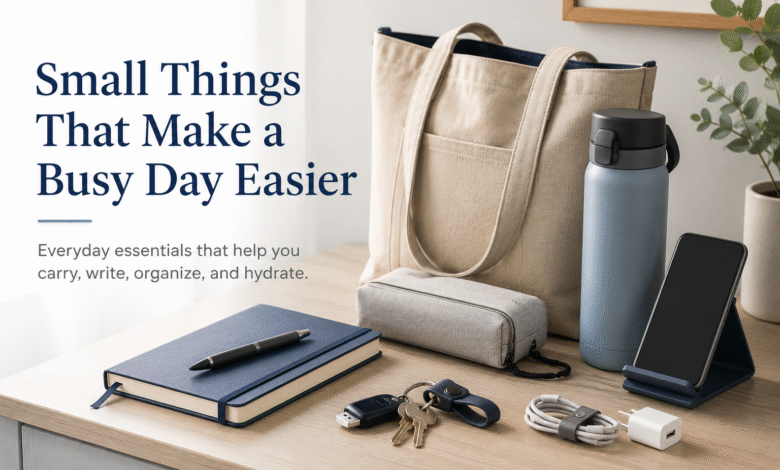
The right small items help reduce these interruptions. A compact notebook gives people a place to write down reminders. A simple pouch keeps cables, keys, medicine, or small personal items from getting lost. A reusable bag helps carry extra things without needing a disposable bag. A drink bottle makes it easier to stay hydrated without stopping to buy something.
These products are useful because they fit into real behavior. People do not need to change their routine to use them. They can keep them in a work bag, on a desk, in a car, at home, or near the door. When an item is easy to reach and easy to use, it has a better chance of becoming part of everyday life.
Everyday Products People Are More Likely to Keep
The products people keep are usually practical, simple, and easy to understand. They do not require instructions, apps, batteries, or special storage. They solve common needs that appear again and again.
Examples include reusable bags, notebooks, pens, phone stands, small organizers, desk accessories, lunch bags, and drinkware. These items may seem ordinary, but that is exactly why they work. They are not limited to one specific event or one narrow situation. A person can use them at home, at work, while traveling, during school activities, or while attending events.
Reusable drinkware is a good example. Many people need water, coffee, tea, or cold drinks throughout the day, but they may not always want to rely on disposable cups or store-bought drinks. For teams, schools, offices, or event groups, custom water bottles can work naturally because they connect to a real daily habit rather than a one-time use.
The best everyday products are also easy to store and maintain. If an item is too large, hard to clean, or only useful in one setting, people may stop using it quickly. But when something is lightweight, practical, and easy to return to, it becomes more valuable over time.
How to Choose Useful Items Instead of Forgettable Ones
When choosing practical items, it helps to think about the person’s actual day. A desk worker may appreciate items that make a workspace cleaner or more comfortable. A commuter may need something secure, portable, and easy to carry. A student may prefer lightweight products that fit into a backpack. Someone who attends events or travels often may value items that can be reused in different places.
Design also matters. A clean, simple design is often easier to keep using than something loud or overly promotional. People are more likely to keep an item when it feels like something they would choose for themselves. A balanced color, clear logo, and useful shape can make the product feel natural instead of forced.
This is where practical custom products can be more effective than unusual gifts. A product does not need to surprise people to be valuable. It needs to be useful enough that people reach for it again. For businesses, schools, and groups looking for everyday custom items, MeetPrinting offers product options that can fit into work, school, event, and daily-use settings.
Final Thoughts
Small products can make busy days easier when they solve real problems. They help people carry, drink, write, organize, charge, store, or prepare without adding extra effort. These are ordinary needs, but they appear often enough to make practical items valuable.
The best everyday products do not demand attention. They quietly become useful because they fit naturally into someone’s routine. For brands, schools, event teams, and organizations, that is what makes a product worth giving. A useful item may not feel flashy at first, but if people keep using it, it creates a stronger and longer-lasting impression.