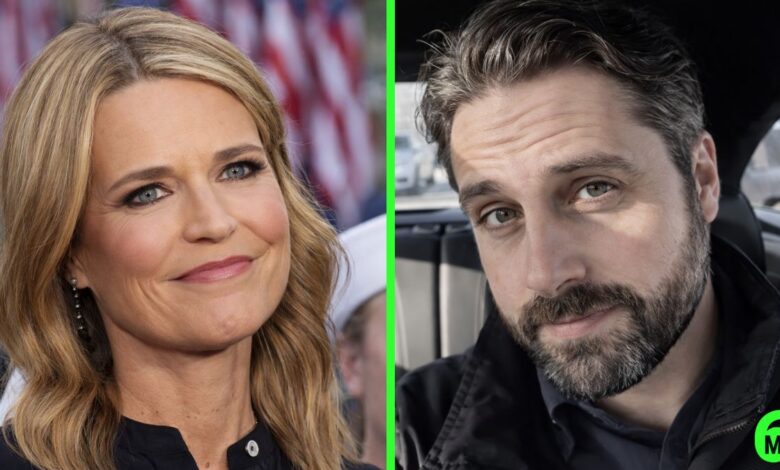
Savannah Guthrie is one of the most recognisable figures in American broadcast journalism. As the longtime co-anchor of NBC’s Today show, she has built a reputation for sharp reporting, thoughtful interviews, and a steady on-screen presence that millions of viewers trust each morning. Her career has taken her from legal analyst to White House correspondent and ultimately to one of the most prominent positions in television news.
Before marrying communications consultant Michael Feldman, Guthrie was married to British journalist and producer Mark Orchard. While Guthrie’s career played out before a global audience, Orchard’s stayed behind the scenes. Their relationship briefly joined two international news paths in the mid-2000s.
Mark Orchard is not a traditional celebrity and keeps his personal life private, so there is little public information about him. However, his journalism career and marriage to Savannah Guthrie provide a glimpse into a time when both covered major stories while managing demanding media careers.
This article explores the available facts about Mark Orchard, Savannah Guthrie’s former husband, examining his career in journalism, their marriage, and the broader context of his largely private life.
Quick Bio
| Detail | Information |
|---|---|
| Full Name | Mark Orchard |
| Profession | Television journalist and broadcast producer |
| Nationality | British |
| Known For | Former husband of Savannah Guthrie |
| Relationship | Married to Savannah Guthrie (2005–2009) |
| Public Profile | Media professional working primarily behind the scenes |
| Age | Not publicly confirmed |
| Residence | Not publicly disclosed |
| Children | None known from the marriage with Savannah Guthrie |
| Known Philanthropic Interests | Not widely documented publicly |
| Social Media Presence | No widely known public accounts |
Who is Mark Orchard?
Mark Orchard is a British television journalist and producer whose career has spanned several major international news organisations. Though he became widely known to the public because of his marriage to Savannah Guthrie, Orchard’s professional work has largely taken place behind the camera, producing and shaping news coverage rather than appearing on-screen.
Early in his career, Orchard worked with BBC News, covering politics from Washington, D.C. He later joined international networks such as Al Jazeera English and Al Jazeera America, then produced investigative content for programs like Full Measure with Sharyl Attkisson.
Although Orchard has worked within major global media institutions, his personal life remains comparatively private. His brief marriage to Savannah Guthrie, from 2005 to 2009, occurred while both were covering significant national and international stories.
The Private Life of Mark Orchard
Unlike many known through association with prominent media personalities, Mark Orchard has kept a low public profile. His journalism work has mostly placed him behind the scenes, contributing to reporting and production rather than appearing on-air.
This distinction matters when examining the limited public information available about him. Television producers and journalists often operate within the media ecosystem without becoming public figures themselves. Their work influences the stories audiences see, but their personal lives rarely receive the same scrutiny as on-air anchors.
Orchard’s privacy reflects a broader tradition within journalism. Many producers and editorial staff prefer to keep their personal lives separate from their professional responsibilities, particularly when their work involves political reporting or investigative journalism. This separation helps preserve professional credibility and allows journalists to focus on the substance of their reporting rather than public attention.
Most information about Mark Orchard comes from his professional affiliations and marriage to Savannah Guthrie, rather than public interviews or media profiles.
Early Life and Background of Mark Orchard
Public documentation of Mark Orchard’s early life is limited, reflecting the fact that his career unfolded primarily within professional journalism circles rather than the public spotlight. What is known with certainty is that Orchard is British and built his career within established international news organisations.
Working for BBC News, a respected public broadcaster, indicates Orchard developed his skills in a structured editorial setting. BBC journalists are known for high standards and broad global experience, especially in political and international coverage.
Orchard’s time reporting from Washington as part of the BBC’s coverage indicates that his career intersected with major political events in the early 2000s. The role of a foreign correspondent in Washington is demanding, requiring deep knowledge of U.S. politics, international diplomacy, and global policy developments.
These early professional experiences likely shaped Orchard’s career, placing him within the network of journalists who move between major international media organisations while covering global affairs.
Marriage and Partnership with Savannah Guthrie
The relationship between Mark Orchard and Savannah Guthrie began in the context of journalism itself. The two reportedly met in 2005 while covering the Michael Jackson criminal trial in Santa Maria, California. At the time, Guthrie was a reporter for CourtTV, while Orchard was with BBC News.
Their shared professional environment created a natural connection. News coverage of major trials often brings together journalists from around the world, and the Michael Jackson case attracted intense international attention.
They married in December 2005, while both were advancing careers in broadcast journalism—a field that requires frequent travel, long hours, and engagement with breaking news. Ibing the divorce as a difficult but strengthening experience.
While the details of their private relationship were never widely publicised, the marriage remains an early chapter in Guthrie’s personal history and a notable point of intersection between two journalism careers.
Mark Orchard’s Role Behind the Scenes in Journalism
Throughout his career, Mark Orchard has primarily worked in broadcast production and reporting roles instead of as a public on-air personality. Such behind-the-scenes roles are vital to television journalism.
Producers shape news segments, arrange interviews, verify facts, and ensure accuracy. Though unseen by viewers, they are central to storytelling.
After his time with BBC News, Orchard continued working in international media, including with Al Jazeera English and Al Jazeera America between 2006 and 2016. These networks expanded global news coverage and sought to present international perspectives on major world events.
Orchard later worked on investigative programs, including Full Measure with Sharyl Attkisson, known for in-depth reporting. This requires strong research and editorial skills.
Family Life and Personal Path After Divorce
Following the end of his marriage to Savannah Guthrie, Mark Orchard largely disappeared from the public narrative surrounding her life. Guthrie herself eventually remarried in 2014 to Michael Feldman, a communications consultant and former political adviser. Together they have two children.
Orchard continued his journalism career but stayed outside the public attention associated with Guthrie’s. This contrast highlights the divide between public and behind-the-scenes journalists.
Maintaining privacy after a high-profile divorce is not unusual for media professionals who are not public figures themselves. In Orchard’s case, there has been little public commentary or reporting about his personal life after the divorce.
Philanthropy and Professional Values
Public documentation of Mark Orchard’s philanthropic activities is limited. However, journalists working within international news organisations often indirectly contribute to public service, media integrity, and the free flow of information.
Organisations such as the BBC and investigative journalism programs frequently emphasise values such as transparency, accountability, and ethical reporting. Professionals working within these institutions contribute to these principles through their reporting and editorial work.
While Orchard has not publicly positioned himself as a public advocate or activist, his career within investigative and international journalism suggests a commitment to the broader values of the profession: informing the public and holding institutions accountable through reporting.
The Power of Privacy: Influence Without Publicity
Mark Orchard’s story highlights journalism’s divide between public recognition and actual influence. Anchors earn household recognition, while producers and editors remain largely unseen.
Behind-the-scenes work can shape coverage, story framing, and reporting depth. Orchard’s career shows that media influence doesn’t require public visibility.
Choosing to maintain privacy can also reflect the practical realities of journalism careers. Investigative and political reporting often benefits from a clear boundary between personal life and public discourse.
Public Curiosity and Misconceptions About Mark Orchard
Public curiosity about Mark Orchard largely stems from his association with Savannah Guthrie. When well-known media figures discuss their personal lives, audiences often seek to understand the people in their lives.
However, limited information sometimes leads to misconceptions. Orchard’s identity is sometimes reduced simply to “Savannah Guthrie’s former husband,” even though he built an independent career in journalism before and after their marriage.
Recognising this distinction helps place his story in the proper context. His role in the media was not defined by the relationship but by his work within major international news organisations.
Legacy and Future
Mark Orchard’s legacy is tied primarily to his contributions to journalism rather than to public celebrity. His career across organisations such as the BBC, Al Jazeera, and investigative broadcast programs reflects the professional path of many experienced journalists who help shape news coverage without becoming widely known themselves.
Although his marriage to Savannah Guthrie remains the most publicly discussed aspect of his personal life, it represents only a brief chapter within a longer career in global media.
In an era where media personalities often dominate public attention, Orchard’s story highlights the many professionals whose work supports journalism behind the scenes.
Read this too:Eniko Hart: The Woman Behind Kevin Hart’s Success
(FAQs)
1. Who is Mark Orchard?
Mark Orchard is a British television journalist and producer who previously worked with BBC News and international broadcast networks.
2. How is Mark Orchard connected to Savannah Guthrie?
He was Savannah Guthrie’s first husband. The couple married in 2005 and divorced in 2009.
3. How did Mark Orchard and Savannah Guthrie meet?
They met in 2005 while covering the Michael Jackson criminal trial in California.
4. What does Mark Orchard do professionally?
He has worked as a journalist and broadcast producer with organisations such as the BBC News and Al Jazeera, and on investigative television programs.
5. Did Mark Orchard and Savannah Guthrie have children together?
No, the couple did not have children during their marriage.
6. Why did Mark Orchard and Savannah Guthrie divorce?
The details of the divorce were kept private. Guthrie has described the period as personally difficult.
7. Is Mark Orchard a public figure?
He is known within journalism circles but has largely remained a private individual.
8. What is Mark Orchard doing today?
He has continued working in broadcast journalism, though details of his current activities are not widely publicised.