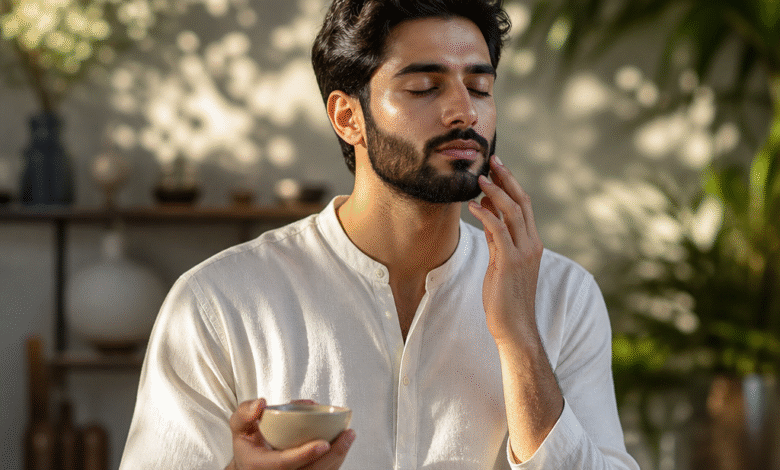
Skincare has long been treated as a surface-level concern — a matter of cleansers, serums, and SPF applied in the right order at the right time. But a quiet revolution is underway, one that asks a more uncomfortable question: what if the skin is not the problem, but the messenger? The five-senses ritual and the 23-question stress assessment are two emerging frameworks that are reshaping how people understand their skin, their stress, and the invisible thread connecting the two. Together, they represent a more honest, more complete approach to skin health — one that begins not at the bathroom mirror, but somewhere much deeper.
Why Stress Is the Skincare Conversation We Keep Avoiding
Dermatologists have known for decades that psychological stress triggers measurable physiological responses in the skin. Cortisol surges increase sebum production, compromise the skin barrier, and accelerate inflammatory pathways. Conditions like eczema, psoriasis, rosacea, and acne are all documented to worsen during periods of chronic stress. Yet the beauty industry has largely sidestepped this reality, preferring to sell solutions rather than address root causes.
The 23-question stress assessment changes that dynamic. Developed by wellness practitioners working at the intersection of psychodermatology and integrative health, this structured self-evaluation goes far beyond asking whether someone feels stressed. It probes sleep quality, digestive patterns, emotional reactivity, social connection, physical tension, and even the quality of daily sensory experiences. The result is a nuanced stress profile — not a diagnosis, but a map. And that map, when read alongside the skin’s current condition, often tells a story that no ingredient list ever could.
Reading the Skin as a Stress Diary
Practitioners who use the 23-question framework describe it as a way of translating what the skin is already saying. Persistent dullness, for instance, often correlates with disrupted sleep and shallow breathing — both stress responses. Breakouts along the jawline frequently align with hormonal dysregulation driven by chronic cortisol elevation. Dry, flaky patches that resist even the richest moisturisers may point to a compromised gut-skin axis, itself a downstream effect of prolonged anxiety. When clients complete the assessment honestly, patterns emerge that make the skin’s behaviour suddenly legible.
The Five-Senses Ritual: Grounding the Body to Heal the Skin
If the 23-question assessment is the diagnostic tool, the five-senses ritual is the therapeutic response. Rooted in mindfulness-based stress reduction and adapted for daily skincare practice, the ritual asks practitioners to engage all five senses deliberately during their routine — not as a luxury, but as a neurological intervention.
The premise is straightforward: when the nervous system is anchored in present-moment sensory experience, cortisol levels drop, parasympathetic activity increases, and the skin’s repair mechanisms are given the biochemical environment they need to function. Touch becomes intentional — slow, warm, deliberate strokes that stimulate lymphatic flow and signal safety to the nervous system. Scent is chosen for its effect on the limbic system, with lavender, bergamot, and frankincense among the most studied for their calming properties. Sound, often overlooked, is curated — soft music, silence, or nature sounds that lower heart rate variability. Sight is engaged through soft lighting and the conscious act of looking at oneself with curiosity rather than criticism. Taste, the most unexpected element, is incorporated through a warm herbal drink consumed before or during the ritual, grounding the body through the digestive system.
Why Sensory Engagement Changes Skin Outcomes
The science here is not speculative. Research in psychoneuroimmunology has consistently demonstrated that deliberate sensory engagement activates the vagus nerve, reduces inflammatory cytokine production, and supports the skin’s natural barrier function. A skincare routine performed in a state of chronic stress — rushed, distracted, accompanied by anxious thoughts — delivers products to a skin barrier that is already compromised and a nervous system that is already overwhelmed. The same products, applied with the same hands but within a five-senses ritual framework, interact with a fundamentally different physiological environment. The skin, quite literally, receives them differently.
Those looking beyond traditional skincare routines are increasingly drawn to this kind of evidence-informed, whole-body approach — one that treats the ritual itself as therapeutic, not merely the products within it.
Integrating Both Frameworks Into Daily Life
The practical integration of the 23-question assessment and the five-senses ritual does not require a wellness retreat or a significant time investment. The assessment is typically completed once every four to six weeks, taking approximately fifteen minutes. It functions as a check-in — a way of noticing whether stress levels have shifted and whether the skin’s behaviour has changed in parallel. The five-senses ritual, by contrast, is daily. It replaces the existing skincare routine rather than adding to it, asking only that the routine be performed with greater intention and sensory awareness.
For those new to this approach, beginning with just two or three senses and building gradually is recommended. The goal is not perfection but consistency — a daily signal to the nervous system that safety, slowness, and care are available, even in the midst of a demanding life.
For a well-rounded understanding of how these practices complement evidence-based skincare, exploring expert guidance on building an effective anti-aging skin care routine provides useful context for how ritual and formulation can work in tandem rather than in opposition.
Bonjil: Where Ritual Meets Intentional Formulation
Within this evolving landscape, certain brands are distinguishing themselves not by promising faster results, but by designing products that are genuinely compatible with a more mindful, stress-aware approach to skin health. Bonjil is one such brand — built around the understanding that what you apply to your skin matters, but so does the state you are in when you apply it. Their formulations are crafted to complement the sensory dimensions of a considered skincare ritual, with textures, scents, and ingredients chosen as much for their experiential qualities as their clinical efficacy.
This philosophy aligns naturally with the five-senses framework, making Bonjil a fitting companion for those who have completed the 23-question assessment and are ready to build a routine that addresses both the skin they can see and the stress they cannot.
Conclusion: A More Complete Definition of Skin Health
The five-senses ritual and the 23-question stress assessment are not replacements for good skincare — they are the missing context that makes good skincare work. They acknowledge what the skin has always known: that it does not exist in isolation from the mind, the nervous system, or the life being lived around it. As the conversation around skin health continues to mature, these frameworks offer something genuinely valuable — not a new product to buy, but a new way of paying attention. And in that attention, many people are finding the results that no serum alone was ever going to deliver.