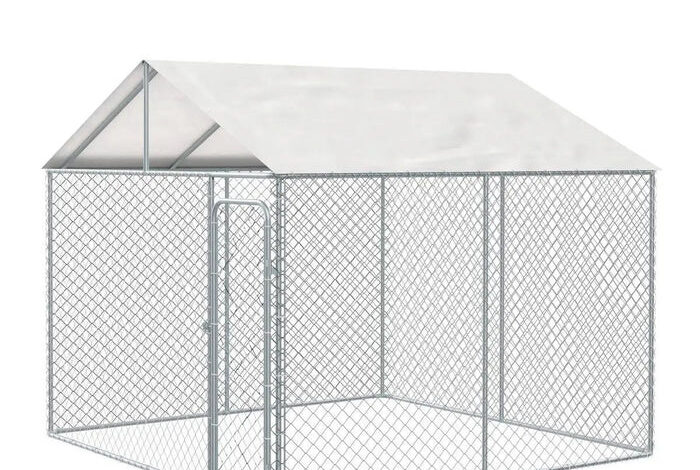
Why secure outdoor space matters for British dog owners
Britain remains a nation of dog lovers, with millions of households sharing their homes and gardens with a pet.
A well-built dog kennelor enclosure answers that need by turning part of the garden into a defined, secure area where a pet can rest, watch the household and enjoy fresh air without constant supervision.
With summer now upon the country, the question is no longer only about keeping a dog in, but about keeping it comfortable.
Understanding the principles behind these enclosures helps an owner choose wisely and use the structure safely. This article looks at how such a unit is built, why it behaves the way it does, and how the different designs on the market compare.
The three jobs a good enclosure has to do
Strip away the marketing and an outdoor dog kennel has three plain tasks. It must contain the dog, it must keep the animal comfortable in heat and rain, and it must survive years of wet weather and regular cleaning without falling apart.
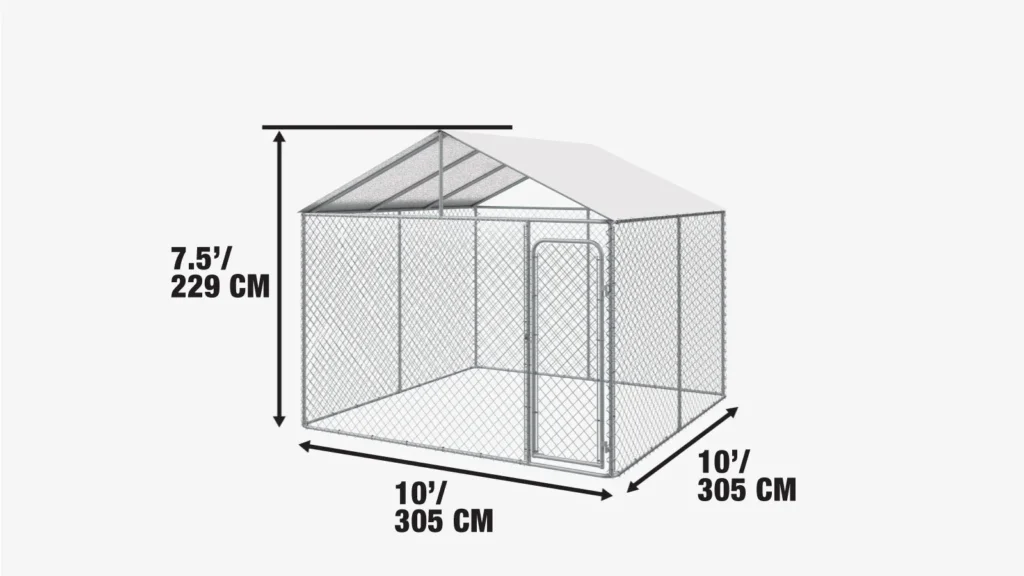
A typical example is a ten-by-ten-foot run assembled from galvanised steel mesh panels topped with a fabric or sheet cover.
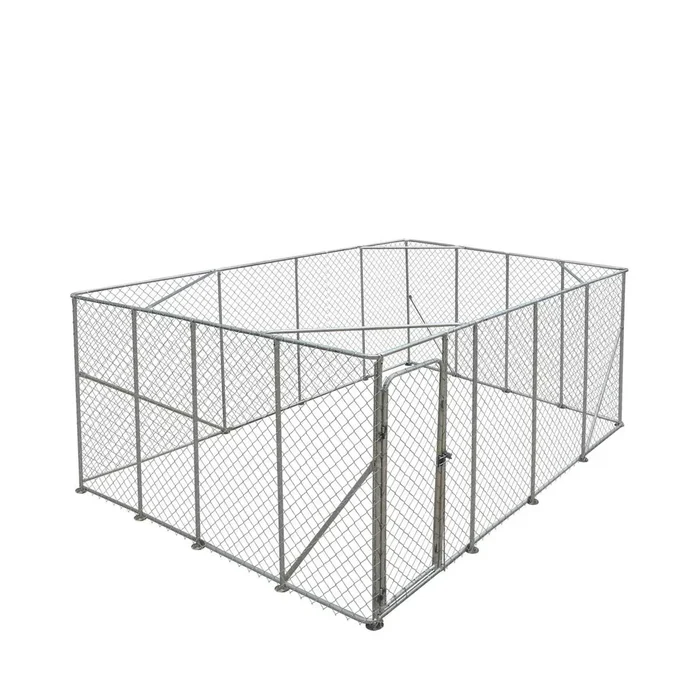
Containment: how panels and a gate actually hold a dog
Containment comes down to two things working together: the strength of the barrier and the spacing of its gaps.
Think of the mesh as a net of triangles and squares sharing a burden, much like the trusses in a railway bridge. A force applied at one point is carried outward to the frame, so no single wire has to bear the strain alone.
Spacing matters just as much as strength. Gaps wide enough for a head or paw invite injury, while gaps too narrow trap claws, so a sensible enclosure uses an opening that a dog cannot push through yet can see clearly out of.
The weakest link is almost always the gate. A latched gate that a dog cannot nose open is what separates a genuine secure containment from a fence that merely looks the part, which is why the latch and its hinges deserve close attention.
Ventilation and shade: the physics of staying cool
An open mesh side does something a solid wall cannot: it lets air move freely through the enclosure.
This is the same reason a slatted garden shed feels fresher than a sealed metal box on a hot afternoon. The more open the sides, the harder it is for the inside to become warmer than the air around it.
Shade is the partner to airflow. A roof cover blocks direct sunlight, which is the main source of heat gain, while still allowing the open sides to carry warmth away, so the dog rests in shadow rather than under glare.
The same cover sheds rain, an everyday concern in the British climate. A dry, shaded floor under a breezy roof is far kinder to a pet than either a fully enclosed box that traps heat or a bare pen that offers no escape from sun and downpour.
Corrosion resistance: why galvanising earns its place
Steel is strong but rusts readily once moisture reaches bare metal, and rust weakens a structure long before it looks dangerous. In a country where rain is a near-constant companion, untreated steel left outdoors would have a short and unhappy life.
Galvanising answers this by coating the steel in zinc, which corrodes in place of the iron beneath and so shields the frame of a dog kennel from the weather and from the repeated washing that hygiene demands.
The analogy is a sacrificial guard. The zinc layer takes the chemical punishment first, giving its own substance to spare the structural steel, much as a coat of paint on a railing buys time against the elements but with far greater durability.
This is why galvanised steel mesh is the sensible default for any enclosure expected to live outdoors for years. It tolerates hosing down, disinfectant and standing damp in a way that painted or plain steel simply cannot match.
Classifying enclosures by how they are built
It helps to sort dog kennels by their construction, because each type trades one virtue for another rather than being plainly better or worse.
•Mesh panel run: open galvanised grids that excel at airflow and visibility, with a cover added for shade and rain.
•Solid-wall kennel: timber or composite walls that give warmth and privacy but limit ventilation and can trap summer heat.
•Soft fabric pen: lightweight folding enclosures that pack away easily but offer little real security against a determined dog.
Seen this way, the mesh panel run sits in a useful middle ground for a British summer. It keeps air moving and a dog visible, resists weather through galvanising, and accepts a cover for the shade that solid and soft designs handle less gracefully.
Mounting and modularity: fixed against free-standing
Enclosures also differ in how they sit on the ground. A fixed structure is anchored permanently and gains stability, but it cannot move once the garden layout or the household changes.
A free-standing run built from bolted panels can be lifted, reshaped or relocated.
The trade-off is that portability rests on the joints. A free-standing unit is only as secure as its bolts and clamps, so these need checking from time to time, whereas a fixed structure rarely shifts once it is set.
Weighing the strengths and the limits
The reasoned case for a mesh panel enclosure is strong in summer.
The honest limits deserve naming too. Open mesh offers little warmth in winter and no privacy, the cover rather than the frame does the work of shade and must be fitted properly, and the gate latch remains the single point most worth inspecting.
A brief example from a garden in the Midlands
Consider a household near Coventry with an energetic collie and a long working day. The owners set a ten-by-ten-foot galvanised run on a paved corner of the garden, fitting the cover so that one half always sat in shade through the afternoon.
Through the warm months the dog could move between sun and shadow, watch the garden through the open mesh, and stay secure behind a latched gate while the family was out.
Cases like this show that the value of a dog kennel lies less in any single feature than in how containment, ventilation, shade and corrosion resistance are made to work together for a particular garden and a particular dog.
Understood as a small piece of engineering rather than a mere box, an outdoor enclosure becomes far easier to choose, position and maintain, which is ultimately what keeps a pet both safe and comfortable through a British summer.