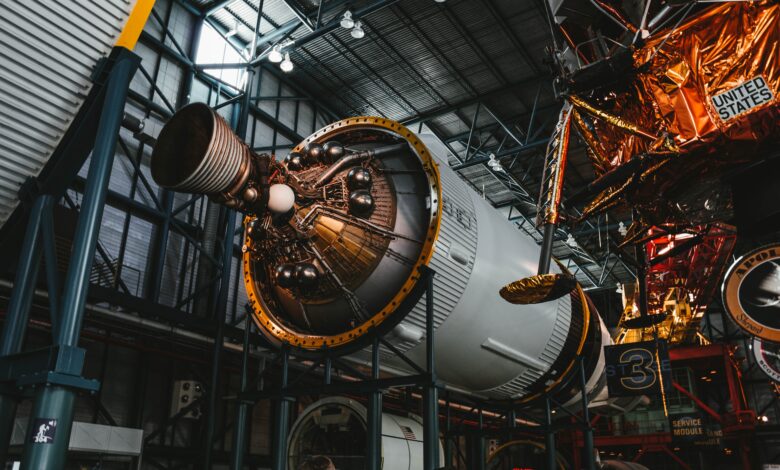
Human flight is an engineering marvel that constantly pushes the boundaries of physics. Getting a massive vehicle off the ground, propelling it at supersonic speeds, and navigating the harsh environment of space requires incredible precision. But all the brilliant engineering in the world falls flat without the right physical building blocks. The vehicles we send into the sky are only as capable as the materials used to build them.
Surviving the Extremes of Flight and Space
Aerospace vehicles operate in environments that are actively hostile to both humans and machinery. The materials chosen for these crafts must survive conditions that fluctuate wildly depending on altitude and speed.
Massive Temperature Swings
An aircraft cruising at commercial altitudes experiences outside temperatures well below freezing. Meanwhile, the internal components of its jet engines operate at thousands of degrees, hot enough to melt standard steel. Spacecraft face even more extreme thermal challenges. They must endure the freezing vacuum of space and the blistering heat of atmospheric reentry, requiring materials that will not expand, crack, or melt under sudden thermal shock.
Crushing Pressures and Stress
As a plane climbs, the air pressure outside drops significantly, causing the pressurized cabin to push outward. The fuselage must endure this continuous cycle of expansion and contraction during every single flight. At the same time, aerodynamic forces pull and twist the wings. Materials must offer high tensile strength and fatigue resistance to prevent catastrophic failure over the years of service.
High Radiation Exposure
Once a vehicle leaves the protective bubble of Earth’s atmosphere, it faces intense solar and cosmic radiation. This radiation can degrade standard materials over time, making them brittle. It also poses a severe threat to the onboard avionics. Protecting the vehicle requires specialized shielding and components built on advanced electronic substrates to ensure that navigation and communication systems continue functioning perfectly under heavy radiation loads.
Key High-Performance Materials in Aerospace
To combat these extreme conditions, engineers rely on a specific group of advanced materials. Each brings a unique set of properties to different parts of an aircraft or spacecraft.
Advanced Composites
Carbon fiber reinforced polymers (CFRP) have revolutionized aircraft manufacturing. By weaving carbon threads together and binding them with a specialized resin, engineers create a material that is incredibly strong but weighs a fraction of traditional aluminum. Modern commercial airliners use composites for their fuselage and wings, drastically reducing the overall weight of the plane while preventing issues like rust and corrosion.
Superalloys
When temperatures get incredibly high, superalloys step in. These metal mixtures—often based on nickel, cobalt, or iron—are designed to maintain their structural integrity at temperatures that would turn other metals to liquid. They also resist oxidation and corrosion. You will almost always find superalloys inside the hottest sections of turbine engines, where they operate reliably under massive thermal and mechanical stress.
Technical Ceramics
Ceramics are no longer just for pottery. In aerospace, technical ceramics are prized for their unparalleled heat resistance. They are commonly used to coat engine parts or create the heat shields that protect spacecraft during reentry. While traditional ceramics are brittle, modern ceramic matrix composites (CMCs) are engineered to be tough and durable, offering thermal protection without the risk of shattering.
How Materials Shape Aerospace Performance
The transition from early wooden gliders to modern jetliners was driven entirely by materials. Upgrading the physical components of an aircraft directly impacts its performance, safety, and efficiency.
The Push for Lightweighting
Fuel is one of the heaviest and most expensive aspects of flight. Reducing the weight of an aircraft means it requires less fuel to reach its destination. The widespread adoption of lightweight composites and titanium alloys has led to significantly better fuel efficiency. This lowers operational costs for airlines and reduces the environmental footprint of global aviation.
Uncompromising Strength and Safety
Safety is the absolute priority in aerospace. High-performance materials are engineered to have high fracture toughness, meaning they resist the spread of cracks. If a small impact occurs, the material must hold together until the aircraft can be safely inspected and repaired. Modern alloys and composites provide this peace of mind, ensuring that the structural integrity of the craft remains intact under severe stress.
Long-Term Durability
Aerospace vehicles are massive investments that need to operate for decades. High-performance materials resist environmental wear, such as moisture, UV degradation, and chemical exposure from aviation fuels. Better durability means fewer maintenance grounding periods, keeping fleets in the air and operating reliably for longer lifespans.
Future Trends in Aerospace Manufacturing
The search for the perfect aerospace material is an ongoing process. As we look toward longer space missions and zero-emission aviation, researchers are developing the next generation of materials.
Nanomaterials are currently a major focus of aerospace research. By altering materials at the molecular level, scientists can create incredibly strong carbon nanotubes that could one day replace heavier structural components. Additionally, engineers are exploring “smart materials” that can sense their own structural health or even change shape in response to temperature and electrical currents. These innovations could lead to aircraft wings that seamlessly adapt their shape during flight for optimal aerodynamics.
Conclusion
Aerospace technology will always be bound by the limits of materials science. Every time we want to fly faster, go further, or carry heavier payloads, we must first develop the physical substances capable of surviving the journey. From the heat-resistant ceramics shielding astronauts to the lightweight composites making commercial flights more efficient, high-performance materials are the true engine of aerospace innovation.