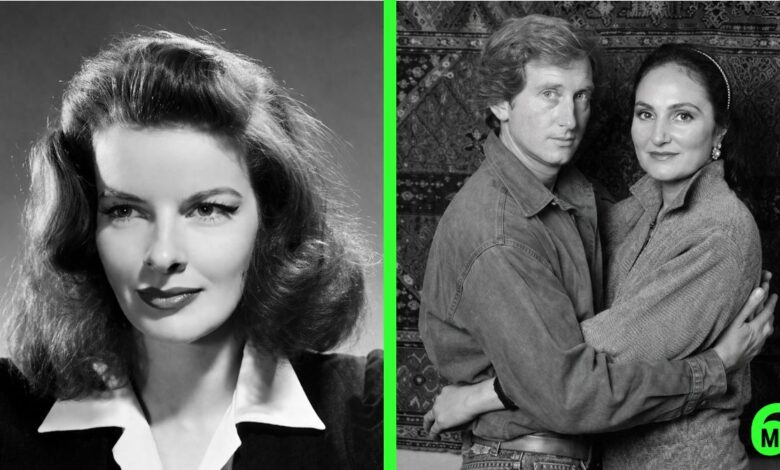
Katharine Hepburn’s public image was bold, fiercely independent, and renowned. The man she married in 1928, Ludlow Ogden Smith, lived differently. Smith, a Philadelphia businessman from an old family, known as “Luddy,” is often a footnote in Hepburn’s story. This is because her career quickly eclipsed his, and he never sought celebrity. Still, enough is known to sketch him: he supported Hepburn early, married her as she started on stage, divorced in 1934, and remained amicable. Reliable biographies agree on this timeline, even as later summaries blur details of the marriage’s end or his name change.
Quick Bio
| Detail | Information |
|---|---|
| Full Name | Ludlow Ogden Smith |
| Nickname | “Luddy” |
| Later Name | Sources report later use of forms including S. Ogden Ludlow / Ogden Ludlow |
| Born | February 1899 |
| Died | 1979 |
| Relationship | Katharine Hepburn’s only husband |
| Marriage Date | December 12, 1928 |
| Divorce | 1934 |
| Profession | Insurance broker and businessman |
| Family Background | Philadelphia family of wealth and social standing |
| Public Profile | Private businessman, not an entertainment figure |
| Children with Katharine Hepburn | None publicly documented |
| Social Media Presence | None; predates the social media era |
Who Is Ludlow Ogden Smith?
Ludlow Ogden Smith matters in Hepburn’s story because he was there before the legend fully hardened. He knew her when she was young, ambitious, and still trying to turn stage work into a life. They met while she was associated with Bryn Mawr, married shortly after her graduation, and briefly tried to build a conventional marriage at precisely the moment when Hepburn was proving she was unlikely to live one. Biographers consistently describe him as devoted, gentle, and supportive of her ambition, while Hepburn herself later wrote candidly about her own self-absorption during the marriage. That contrast has shaped his historical image: he is remembered less as a rival force in her life than as a witness to the making of Katharine Hepburn, and perhaps as one of the first people to see that her career would always outrank domestic expectation.
The Private Life of Ludlow Ogden Smith
Unlike Hepburn, Smith left little public record. This absence is notable. He belonged to a world of family status, business, and East Coast society, not Hollywood. Most references to him are in Hepburn’s biographies. This imbalance reflects how celebrity history forms: one spouse becomes iconic; the other is seen mostly in connection. Smith’s privacy is part of his story—important to Hepburn, yet far from stardom’s myths.
Early Life and Background of Ludlow Ogden Smith
Publicly available sources describe Smith as a Philadelphia man from a wealthy or well-connected family and identify him as an insurance broker in the years leading up to his marriage to Hepburn. That background helps explain why he moved easily in the social environment Hepburn encountered after college. He was not an outsider dazzled by glamour. He came from the privilege of another sort: old-family security, social polish, and business grounding. Those details matter because they show why the marriage could make sense at the time. Hepburn, though rebellious in temperament, also came from a prominent and highly educated family. Their union was not a random Hollywood romance but a meeting of two people from recognizable Northeastern privilege, each carrying different expectations into adulthood. What changed was not their class position but Hepburn’s velocity. Her career accelerated rapidly, and Smith’s quieter world became less and less able to contain her.
Marriage and Partnership with Katharine Hepburn
They married on December 12, 1928, in West Hartford, Connecticut, at Hepburn’s parents’ home. That’s a firm date. The broad arc: Hepburn pursued acting, the marriage strained, and the couple divorced in 1934. Some modern summaries list 1928–1941, but key biographies give 1934 as the legal end. The real issue isn’t the failure, but why: temperament and structure. Smith offered steadiness; Hepburn wanted work and freedom. She later admitted selfishness, fitting her pattern—she didn’t want a conventional marriage, and Smith couldn’t change that.
Ludlow Ogden Smith’s Role Behind the Scenes
Smith’s role in Hepburn’s story is best understood as early support rather than public collaboration. He was part of the scaffolding beneath her ascent. Biographical accounts describe him as believing in her talent and accepting, more than resisting, the force of her ambition. That support becomes especially significant because Hepburn’s later persona can make it easy to imagine her as entirely self-created. She was not. She was driven, gifted, and disciplined, but in the late 1920s and early 1930s, she also benefited from people willing to tolerate the instability of an emerging career. Smith was one of them. Some later sources go further, crediting him with helping her during the period around The Philadelphia Story, but the best-documented public record of that comeback centers on Hepburn herself and on Howard Hughes’s role in securing the rights. Where Smith’s support is safest to state is at the human level: he remained part of the circle of loyalty around her even after the marriage ended.
Family Life and Later Years
There is no public record of children from the marriage. After the divorce, Hepburn never remarried. Smith returned to business and lived mostly outside celebrity culture. He was not just a figure left behind; he had his own life, though less documented. He died in 1979. His memory endures mainly through Hepburn, underscoring how fame shapes what survives in history.
The Power of Privacy: Influence Without Publicity
Smith’s position shows that privacy can look like absence when it is often a choice. Hepburn guarded her life; Smith went further. Sparse records invite embellishment, but that silence is meaningful. Smith never used his Hepburn connection for publicity, nor did he become an interview subject or seek celebrity by proxy. In a culture eager for fame by association, his reserve stands out. His significance was real, not performative.
Public Curiosity and Misconceptions About Ludlow Ogden Smith
Two recurring misconceptions deserve correction. The first concerns the divorce date. Some summary boxes and recycled profiles list Hepburn and Smith as married until 1941, but major biographical and historical sources place the divorce in 1934. The second concerns his name change. Several sources repeat the story that Hepburn did not want to be known as “Kate Smith,” prompting him to modify his name, and that anecdote appears in both older magazine writing and later biographies. Still, the precise timing and later versions of his name are inconsistently described, so the safest phrasing is that the story is well known but is often simplified in retelling. A third point also benefits from caution: claims that Smith personally financed The Philadelphia Story circulate in later secondary material, whereas the more firmly documented comeback narrative emphasizes Hepburn’s own maneuvering and Howard Hughes’s role in the rights. In other words, the broad image of post-divorce goodwill is credible; the dramatic details should be handled carefully.
Legacy and Historical Significance
Ludlow Ogden Smith’s legacy is quiet but real. He is significant as Hepburn’s only husband—her companion from pre-stardom—, and his connection has endured in memory and biography. He represents the private partner often hidden in celebrity history: his life survives in outline, not spectacle. That outline matters. Smith was key to Hepburn’s early years, not just her legend. He reminds us that even legends rely on ordinary relationships—people who help, yield, and fade as history tracks the star.
Conclusion
Ludlow Ogden Smith does not fit neatly into the usual categories of Hollywood biography. He was not a star spouse who courted attention, nor a dramatic antagonist in Katharine Hepburn’s rise. He was, instead, a private man attached to a public woman at the exact moment her life was moving beyond the limits of ordinary marriage. The facts that survive are modest but revealing: he came from a privileged Philadelphia background, married Hepburn in 1928, supported her during her early career, divorced her in 1934, and remained one of the lasting figures in the margins of her story. That margin matters. Smith’s life helps explain Hepburn by contrast. Her restlessness, ambition, and refusal of convention become clearer when set beside someone who seems to offer stability and loyalty. He may never occupy more than a small corner of film history, but it is a meaningful one, because through him we see not only Hepburn’s independence but the human cost and complexity that independence sometimes carries.
Read this too:Joanna Haythorn: The Private Woman Behind Charles Dance’s Public Life
(FAQs)
Who was Ludlow Ogden Smith?
He was an American businessman and insurance broker from Philadelphia, best known as Katharine Hepburn’s only husband.
When did Ludlow Ogden Smith marry Katharine Hepburn?
They married on December 12, 1928, in West Hartford, Connecticut.
When did they divorce?
Reliable biographical sources place the divorce in 1934.
Was Ludlow Ogden Smith Hepburn’s only husband?
Yes. Hepburn married only once, to Smith.
Did Ludlow Ogden Smith and Katharine Hepburn have children?
No children from their marriage are publicly documented in the major biographical sources.
Why is he sometimes called Ogden Ludlow or S. Ogden Ludlow?
Later sources report that he changed the form of his name, and the well-known anecdote links it to Hepburn’s dislike of becoming “Kate Smith,” though retellings vary in exact detail.
Did he remain on good terms with Katharine Hepburn after the divorce?
Biographical accounts generally describe the split as amicable and portray Smith as a supportive figure even after the marriage ended.
Why is there confusion about his biography today?
Because he was a private person, much of what circulates online comes from repeated anecdotes and simplified summaries rather than from extensive independent public records.