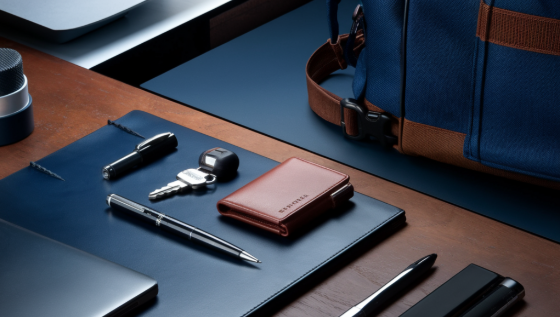
The concept of Everyday Carry has evolved from a niche hobbyist practice into a defining characteristic of how professionals approach their daily routines. At its core, EDC represents a philosophy: carry only what serves a purpose, and ensure every item performs flawlessly when called upon. Among the essentials that have earned their place in pockets and bags worldwide, the mechanical pencil stands out as both a practical instrument and a statement of intentionality.
Unlike the disposable pens and wooden pencils that clutter desk drawers, a well-designed mechanical pencil offers something different—consistency, reliability, and a tactile satisfaction that digital tools can’t replicate. For engineers sketching calculations, designers refining concepts, or anyone who values the permanence of handwritten notes, the right mechanical pencil becomes an extension of thought itself.
Why Mechanical Pencils Became an EDC Staple
The shift toward mechanical pencils in professional circles reflects broader changes in how people work. As remote work blurred the boundaries between office and home, professionals began curating tools that could move seamlessly between environments. Mechanical pencils fit this need perfectly.
Their appeal rests on several practical advantages:
- Immediate readiness: No sharpening means no interruption to workflow, whether you’re in a meeting or sketching ideas during a commute.
- Precision consistency: The line width remains uniform from first mark to last, critical for technical drawings and detailed annotations.
- Built to last: Quality mechanical pencils are engineered from materials like machined aluminum and stainless steel, designed to withstand years of daily use.
- Refillable economy: A single pencil body can serve indefinitely with simple lead refills, reducing both cost and waste over time.
The mechanical pencil’s origins trace back to the early 1800s, when inventors sought alternatives to the constant sharpening required by traditional pencils.
What Defines a Superior EDC Mechanical Pencil
Not all mechanical pencils deserve a place in your everyday carry. The best examples share specific characteristics that separate functional tools from forgettable ones.
Material quality matters immediately. A pencil machined from solid metal feels fundamentally different from plastic alternatives—the weight distribution, the cool touch of aluminum or brass, the confidence that it won’t crack under pressure. These aren’t superficial details; they affect how the tool performs during extended use.
The lead advancement mechanism deserves equal scrutiny. A smooth, jam-free system that advances lead in precise increments makes the difference between fluid work and constant frustration. The best mechanisms operate with a satisfying click, providing tactile feedback without requiring conscious thought.
Grip design influences comfort during long sessions. Knurled metal sections, contoured bodies, or strategically placed rubber inserts all serve to reduce hand fatigue. For those who write or draw for hours, these ergonomic considerations transform from nice-to-have features into essential requirements.
Lead size selection depends on intended use. Engineers and architects often prefer 0.3mm or 0.5mm leads for technical precision, while 0.7mm or 0.9mm options suit general writing and sketching. Some professionals carry multiple pencils to match different tasks—a practice that speaks to how seriously they take their tools.
The Engineering Behind the Click
Understanding how mechanical pencils are manufactured reveals why quality varies so dramatically between models. The process combines precision engineering with careful material selection, resulting in tools that can last decades or fail within months.
Design begins with computer-aided modeling, where engineers balance aesthetics with functionality. Every dimension matters: the diameter that feels comfortable in hand, the weight distribution that prevents fatigue, the clip tension that secures without damaging fabric. These specifications guide the entire manufacturing process.
Material selection follows function. Bodies might be machined from aluminum for lightweight durability, brass for substantial heft, or stainless steel for corrosion resistance. Internal components—the clutch mechanism, spring systems, and lead advancement parts—typically use engineered plastics or metals chosen for their friction characteristics and longevity.
Production involves multiple stages. CNC machines mill metal bodies to precise tolerances, often within hundredths of a millimeter. Components are manufactured separately, then assembled by hand or automated systems, depending on the manufacturer’s approach. Quality control checks ensure smooth operation and consistent performance across production runs.
The clutch mechanism—the heart of any mechanical pencil—requires particular precision. This component grips the lead firmly during use but releases it smoothly when advanced.
Ergonomics: Where Comfort Meets Performance
Ergonomic design in writing instruments isn’t about luxury—it’s about preventing fatigue and maintaining precision during extended use. For professionals who rely on mechanical pencils throughout their workday, these considerations directly impact productivity.
Grip comfort starts with surface texture. Smooth metal can slip during use, especially with sweaty hands. Knurling—the crosshatch pattern machined into metal—provides secure purchase without feeling aggressive. Some designs incorporate rubber or silicone sections that compress slightly, distributing pressure across a larger surface area.
Weight balance affects control. A pencil that’s too light feels insubstantial and requires extra grip pressure to control. Too heavy, and hand fatigue sets in quickly. The ideal weight varies by individual preference, but most professionals gravitate toward pencils in the 15-25 gram range—substantial enough to feel quality, light enough for all-day use.
Diameter influences how the pencil sits in hand. Thinner barrels (around 8mm) suit those with smaller hands or who prefer a pen-like grip. Thicker designs (10-12mm) provide more surface area for grip and often feel more substantial. The transition from barrel to tip should be gradual, avoiding sharp edges that create pressure points.
For professionals who write or draw for hours daily, these biomechanical considerations aren’t academic—they’re the difference between sustainable productivity and repetitive strain.
Selecting an Engineering Pencil for Technical Work
Engineering and technical professions place unique demands on writing instruments. The pencil that serves perfectly for note-taking may prove inadequate for drafting precise schematics or performing detailed calculations.
Lead size becomes critical in technical applications. A 0.3mm lead produces lines fine enough for detailed drawings and small annotations, though it requires a lighter touch to prevent breakage. The 0.5mm size offers the best balance for most engineering work—fine enough for precision, robust enough for normal writing pressure. Larger sizes (0.7mm and above) suit field notes and rough sketches where durability matters more than fine detail.
Lead hardness deserves equal consideration. HB leads work well for general use, while harder grades (H, 2H) produce lighter, crisper lines ideal for technical drawings. Softer leads (B, 2B) create darker marks but smudge more easily—a trade-off that matters when drawings need to remain clean through handling.
The lead advancement mechanism takes on added importance in technical work. A reliable system that advances lead in consistent increments prevents the interruptions that break concentration during complex calculations. Some engineering pencils feature automatic lead rotation systems that maintain a sharp point, eliminating the need to manually rotate the pencil for consistent line width.
Durability requirements in technical environments often exceed those of office work. Job sites, field surveys, and workshop environments demand pencils that can withstand drops, temperature variations, and exposure to dust or moisture. Metal construction becomes less about aesthetics and more about survival. Rotring and Staedtler have long addressed this through all-metal barrels; Everyman is also a dependable everyday performer for professionals who need that same field-ready construction without moving into the drafting-specialist price tier.
The Practical Case for Mechanical Pencils
Beyond the tactile satisfaction and precision they offer, mechanical pencils present compelling practical advantages that justify their place in professional EDC kits.
Economic efficiency accumulates over time. A quality mechanical pencil represents a one-time investment that serves for years or decades with minimal ongoing cost. Lead refills cost pennies compared to constantly replacing disposable pens or wooden pencils. For organizations equipping multiple employees, this difference becomes substantial.
Environmental impact matters increasingly to both individuals and institutions. According to EPA data on office waste, writing instruments contribute significantly to workplace trash streams. Refillable mechanical pencils eliminate this waste stream entirely, aligning with sustainability goals without sacrificing functionality.
Consistency in output affects professional presentation. Documents, sketches, and calculations produced with mechanical pencils maintain uniform line quality throughout. There’s no gradual degradation as a point dulls, no variation in darkness as you work through a wooden pencil. This consistency matters when work products represent professional credibility.
Portability advantages extend beyond the obvious lack of sharpening needs. Mechanical pencils don’t leave wood shavings in bags or pockets. The lead is protected within the body, preventing the graphite smudges that wooden pencils create. For professionals who carry their tools between locations, these details affect daily experience.