Precision over Power: Why the Pulsed Laser Cleaner Price Reflects its Superior Engineering

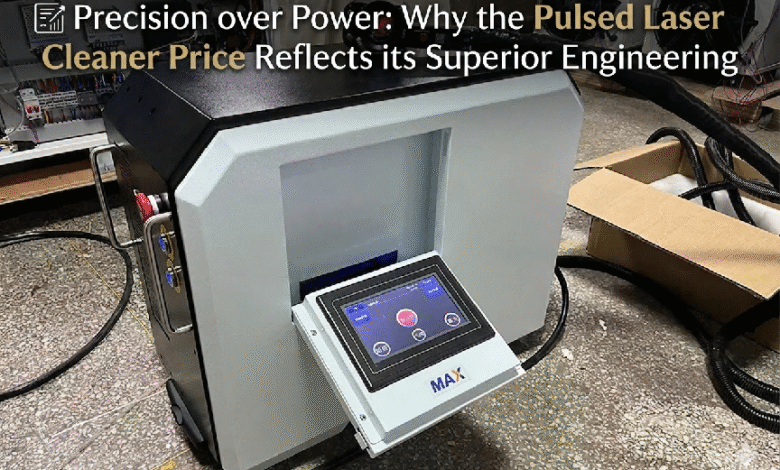
You are comparing laser cleaning machines and notice that a 200W pulsed laser cleaner can cost as much as a 1000W continuous wave unit – sometimes more. You see cheap continuous lasers for under 5,000 and wonder why any one would pay5,000andwonderwhyanyonewouldpay15,000 or more for a lower-power pulsed machine. You suspect the higher pulsed laser cleaner price might just be marketing.
the pulsed laser cleaner price is higher because pulsed lasers require fundamentally more sophisticated engineering than continuous wave (CW) lasers. A pulsed fiber laser generates bursts of energy with peak powers thousands of times higher than its average power, while maintaining nanosecond pulse widths. This demands precision optics, faster electronics, tighter thermal management, and more complex control software. The result is a machine that removes rust, paint, and coatings without damaging the substrate – something a CW laser cannot do on sensitive materials. The price reflects real engineering value, not a markup.
This article explains the technical differences between pulsed and CW lasers, why precision matters more than raw power, what you actually pay for in a pulsed cleaner, and how to evaluate whether the higher price is worth it for your work.
The engineering difference: pulsed vs continuous wave

A continuous wave (CW) laser emits a steady, uninterrupted beam. Picture a garden hose running at full flow. A pulsed laser emits extremely short, high-intensity bursts – nanoseconds or picoseconds long – with long pauses in between. Picture a fire hose turned on and off thousands of times per second, each burst having enormous peak pressure.
The table below compares the key engineering parameters.
| Parameter | CW laser (e.g., 1000W) | Pulsed laser (e.g., 200W) |
|---|---|---|
| Average power | 1000W | 200W |
| Peak power (per pulse) | 1000W (same as average) | 10,000 – 50,000W |
| Pulse duration | N/A (continuous) | 50 – 200 nanoseconds |
| Pulse frequency | N/A | 10 – 100 kHz |
| Heat affected zone | Large – heat spreads | Very small – heat confined |
| Substrate damage potential | High (melting, warping) | Very low (selective removal) |
Why does peak power matter? Rust and paint absorb laser energy, but they also conduct heat to the metal underneath. With a CW laser, the heat keeps flowing into the metal for the entire duration of the beam. The metal gets hot, can melt, oxidize, or warp. With a pulsed laser, each nanosecond burst is over before the heat can travel more than a few microns. The rust vaporizes, but the metal underneath stays cool.
Achieving high peak power with short pulses requires specialized laser sources (Q-switched or mode-locked fiber lasers), fast scanning galvanometers, and precise timing electronics. Those components are more expensive than the simple diode arrays used in CW lasers – hence the higher pulsed laser cleaner price.
Why precision often beats raw power in real applications
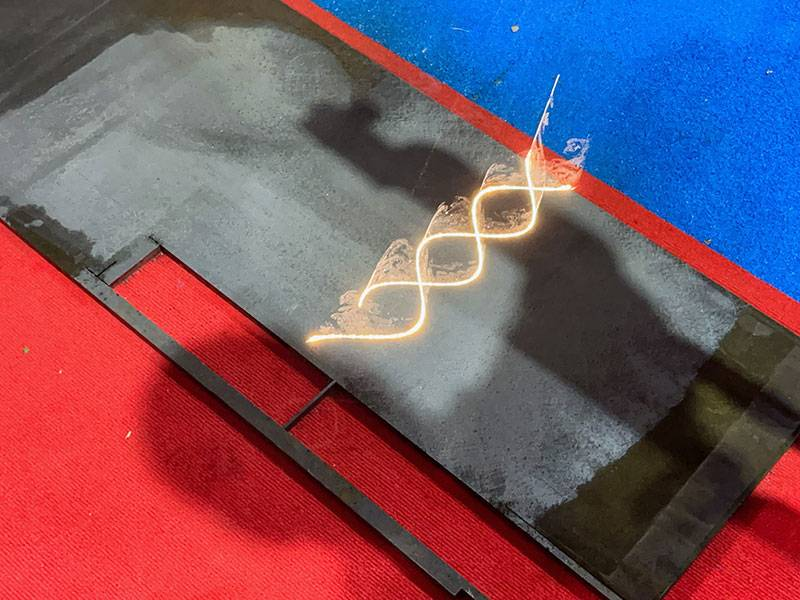
Many buyers chase wattage. They think a 1000W CW machine must be better than a 200W pulsed machine because the number is bigger. That is frequently wrong.
Consider three common cleaning tasks.
Task 1: Removing rust from a precision machine way. The surface is ground to ±10 microns. A CW laser will heat the metal, potentially causing tempering or micro-cracks. A pulsed laser removes the rust and leaves the ground finish unchanged. The pulsed laser cleaner price is justified by zero scrap rate.
Task 2: Cleaning paint from an automobile body panel. Thin steel warps easily under heat. A CW laser requires slow scanning to remove paint, leading to heat buildup and distortion. A pulsed laser at 200W average power removes paint in fast passes with minimal heat input. No warping, no burn-through.
Task 3: Selective cleaning of a historic bronze statue. The conservator wants to remove green corrosion but keep the dark brown patina. A CW laser cannot differentiate – it blasts everything. A pulsed laser can be tuned to ablate only the corrosion layer based on its different absorption and ablation threshold. That precision is impossible with continuous wave.
In all these cases, the higher-priced pulsed laser succeeds where a cheaper CW laser fails. Power without precision is useless for delicate or high-value work.
The table below summarizes application suitability.
| Application | CW laser (1000W+) | Pulsed laser (100-500W) | Winner |
|---|---|---|---|
| Heavy rust on thick structural steel | Good – fast | Good but slower | CW |
| Precision machined parts | Poor – damages surface | Excellent | Pulsed |
| Thin sheet metal | Poor – warping | Excellent | Pulsed |
| Paint removal from wood | Poor – burns | Good (with care) | Pulsed |
| Rust removal from cast iron (historic) | Poor – removes patina | Excellent | Pulsed |
| High volume, non-critical cleaning | Excellent | Acceptable | CW |
| Multi-layer selective cleaning | Impossible | Possible | Pulsed |
If your work involves sensitive substrates, tolerances, or selective removal, the pulsed laser cleaner price is a bargain compared to the cost of ruined parts.
What you actually pay for in a pulsed laser cleaner
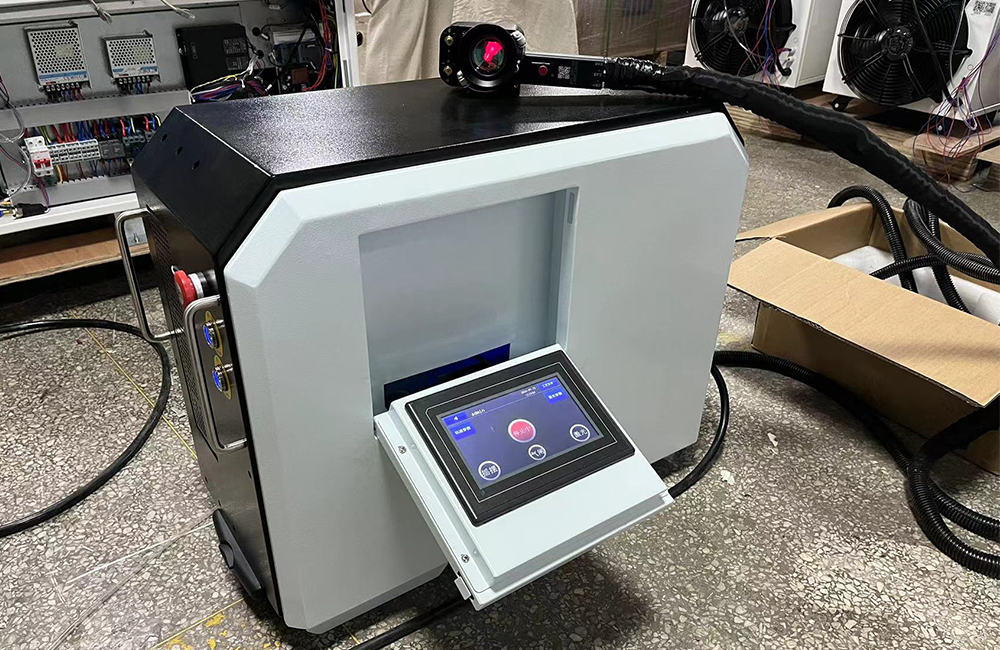
When you see a $15,000-30,000 price tag on a 200W pulsed laser, here is what your money buys that a cheap CW laser lacks.
The laser source itself. A Q-switched fiber laser is more complex than a CW diode laser. It contains an acousto-optic or electro-optic modulator, a longer resonator cavity, and specialized gain fibers. These components are manufactured to tighter tolerances.
The scanning system. Pulsed lasers use high-speed galvanometer scanners (galvos) that move the beam across the surface at meters per second. The galvos must be synchronized with the pulse timing to achieve uniform coverage. Galvos alone cost $2,000-5,000. CW lasers often use a simple handheld head with no moving optics – much cheaper.
The power supply and electronics. Pulsing requires capacitors that charge and discharge rapidly, generating high peak currents. The control electronics must manage pulse timing, frequency, and synchronization with scanning. This is not a simple on-off switch.
The cooling system. Although pulsed lasers have lower average power, they still generate heat in the laser source and the galvos. A well-engineered pulsed cleaner uses efficient water or air cooling to maintain stability. Cheap CW lasers may overheat after an hour.
Software and safety features. Pulse energy, frequency, scan pattern, and number of passes are all adjustable. The software must be intuitive but powerful. Safety interlocks, remote interlock connectors, and emission indicators add cost.
A $5,000 CW laser typically lacks all of these. It is a diode, a power supply, and a lens in a plastic housing. It may remove rust from a steel beam, but it will damage anything delicate.
The pulsed laser cleaner price reflects the difference between a professional tool and a hobbyist device.
Real customer ROI: paying more upfront, saving later
A job shop in Ohio bought a 200W pulsed laser for $18,000 after using a rented 1000W CW machine for a few months. They told me their experience.
With the CW laser, they cleaned heavy rust from large steel plates quickly – about 5 m² per hour. But they also had problems. Thin parts warped. Painted surfaces charred before the paint lifted. They rejected about 8% of parts due to heat damage. The CW laser also consumed 6 kW of electricity, running up a $300 monthly bill.
With the pulsed laser, cleaning speed on heavy rust dropped to 2 m² per hour – slower. But they could now accept precision jobs from aerospace and automotive customers that paid 200-300perhour.Theirrejectratefelltonearzero.Electricitydroppedto1.5kWaverage,saving200-300perhour.Theirrejectratefelltonearzero.Electricitydroppedto1.5kWaverage,saving200 per month. The machine paid for itself in additional revenue from high-value work within 7 months.
The owner said: “The pulsed laser cleaner price seemed high until we realized we could charge triple for services our CW competitors couldn’t touch.”
How to evaluate pulsed laser cleaner price vs value
When comparing machines, do not simply look at wattage and price. Ask these questions.
What is the pulse duration? Nanosecond (typical) is fine for most rust and paint. Picosecond or femtosecond lasers are even more precise but extremely expensive – usually unnecessary for industrial cleaning.
What is the maximum pulse energy? A 200W laser with 100kHz frequency has only 2 mJ per pulse (200W / 100kHz = 0.002 J). A 200W laser with 20kHz frequency has 10 mJ per pulse. Higher energy per pulse gives more aggressive cleaning. For heavy rust, you want a laser with lower frequency and higher pulse energy.
Is the beam profile top-hat or Gaussian? A top-hat beam has uniform energy across the spot, producing even cleaning. Gaussian beams have a hot center and weak edges, which can create stripes. Top-hat requires more expensive optics – a sign of quality.
Does the machine include a fume extractor? Cleaning generates dust that can be hazardous. A built-in HEPA extractor adds cost but is essential for professional use.
What is the duty cycle? Some cheap pulsed lasers can only run at full power for 30 minutes before overheating. Industrial units have 24/7 duty cycles.
What training and support are included? A machine is only as good as the operator. Suppliers who invest in training and local support add real value to the price.
The cheapest pulsed laser cleaner price on Alibaba might be tempting, but it may lack the engineering that makes pulsed cleaning work. A 10,000 machine that fails after 200 hours or damages your parts is far more expen sive than a10,000 machine that fails after 200 hours or damages your parts is far more expen sive than a18,000 machine that runs for years.
Final verdict
The pulsed laser cleaner price is not a marketing trick. It reflects real engineering – precision optics, fast electronics, efficient cooling, and intelligent software. For applications where substrate damage is unacceptable – precision parts, thin metals, historic objects, selective coating removal – a pulsed laser is the only safe choice. The extra upfront cost buys you the ability to work on high-value jobs, eliminate scrap, and avoid rework.
If you are only cleaning heavy rust from thick structural steel and do not care about surface finish, a cheap CW laser may suffice. But if you value precision over raw power – as any professional should – invest in a pulsed laser. The price is justified by the results.
Have a specific cleaning application? Send me your part material, thickness, and contaminant. I will recommend whether a pulsed or CW laser is right for you – and help you justify the price either way.
Frequently Asked Questions
Why is a 200W pulsed laser often more expensive than a 1000W CW laser?
Because the internal components are fundamentally different. A 1000W CW laser uses simple diode arrays and basic optics. A 200W pulsed laser uses a Q-switched oscillator, fast galvos, high-peak-current power supplies, and precision timing electronics. The engineering cost is much higher.
Can a cheap CW laser do the same job as a pulsed laser for my application?
It depends. If you only clean thick, heavy rust from large, thick steel plates and do not care about surface finish or heat effects, a CW laser may work. For anything delicate, precision, or selective, you need pulsed. Test both on your materials before buying.
Does a higher pulsed laser cleaner price always mean better quality?
Not always. Some brands charge premium prices for mediocre imported machines with good marketing. Look for verifiable specifications, real customer references, and a local service presence. Ask for a demonstration on your own parts.
How many hours will a pulsed laser last?
A well-engineered pulsed fiber laser source typically lasts 50,000-100,000 hours. The galvos may need replacement after 10,000-20,000 hours. Compare that to cheap CW lasers that may fail after 500-2,000 hours.
Can I use a pulsed laser for welding or cutting as well?
No. Pulsed lasers for cleaning are designed for surface ablation, not deep penetration. The beam is defocused and scanned. For welding or cutting, you need a different laser configuration (usually CW or long-pulse). Some vendors sell “3-in-1” machines, but they compromise on cleaning performance.
What is the typical payback period for a pulsed laser cleaner?
For a shop replacing chemical stripping or manual grinding, payback is often 6-12 months. For a shop upgrading from a CW laser to avoid part damage, payback can be even faster due to reduced scrap and ability to take higher-value work. The higher initial pulsed laser cleaner price pays off through lower operating costs and higher quality output.