Stand Pile: A Powerful Guide to Foundation Stability, Structural Support, and Safer Construction
Understanding how stand pile systems help strengthen ground support, protect excavation work, and improve the reliability of construction projects

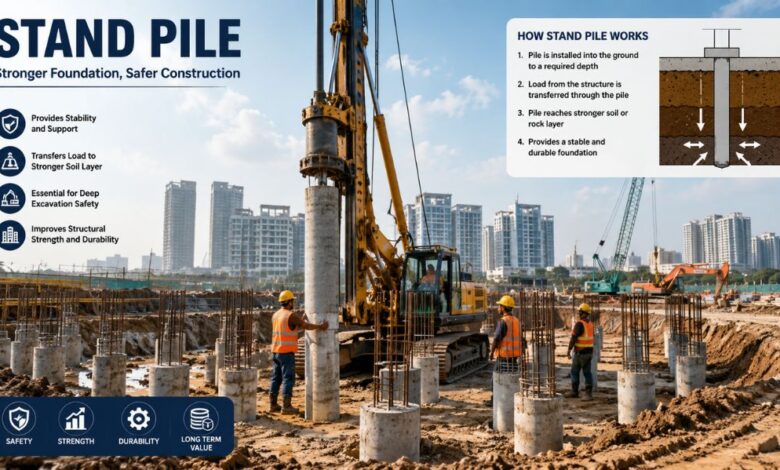
A stand pile is integral to foundation work, ground support, and structural stability in construction. Simply put, it is a pile-supported system that stabilizes a structure, excavation area, or temporary construction setup during deeper work. In building and civil engineering, the ground beneath a project is as vital as the structure above. If the soil is weak, loose, wet, or cannot support weight, the building may experience settlement, cracking, tilting, or long-term safety risks. This is where pile systems matter, and the term ‘stand pile’ is typically understood within that broader foundation-and-support context.
Construction involves more than concrete, steel, and design. Much of a project’s true strength lies beneath the surface. A well-planned stand pile arrangement distributes load, supports vertical pressure, limits movement, and safeguards surrounding soil during construction. Whether used with bored piles, temporary columns, excavation support, or foundation improvement, the objective stays the same: build a safer base so the structure above performs as intended. For contractors, engineers, and developers, understanding stand piles is crucial because foundation errors are costly, hazardous, and difficult to fix after construction.
What Is Stand Pile?
The term stand pile appears in various technical contexts, but in construction, it refers to a pile or pile-supported element that delivers standing support, vertical resistance, or stability during foundation and excavation work. A pile is a long structural member installed in the ground to transfer loads from a building or structure to deeper, stronger soil or rock layers. When combined with standing support, the stand pile becomes part of a system that helps construction teams control pressure, maintain alignment, and stabilize ground conditions.
In practical terms, a stand pile involves vertical support, bored pile construction, temporary columns, or ground-retaining methods. It also relates to keeping excavation walls stable, protecting boreholes during drilling, or properly positioning foundation elements. Because construction terminology varies, understanding a stand pile by its function is safest: it concerns support, stability, load transfer, and controlled construction.
Why Stand Pile Matters in Construction
The importance of a stand pile stems from a fundamental fact: every structure needs a reliable foundation. A stunning building can fail if its foundation is weak. Roads, bridges, towers, industrial units, retaining walls, and commercial buildings all rely on the quality of their foundation system. Building on soft clay, loose sand, filled land, wet soil, or areas with high groundwater means ordinary shallow foundations may not suffice. A deeper pile-based solution transfers the load to stronger ground layers.
A stand pile is essential during excavation because soil near a construction site can shift unpredictably. Without sufficient support, excavation walls may fail, adjacent structures may be damaged, and worker safety may be jeopardized. Stand pile construction is therefore both a structural and a safety decision. It regulates soil behavior throughout the project, from ground preparation to foundation installation and, finally, to the visible building phase.
How Stand Pile Supports Load Transfer
Pile systems transfer vertical loads from buildings to stronger soil. Without them, weak soil leads to uneven settlement and damage. Stand piles move these loads downward, preventing issues.
Load is carried by end bearing, friction, or both. End-bearing piles transfer weight to firm soil. Friction piles rely on contact with the surrounding soil. In practice, both mechanisms work together. A well-designed stand-pile system resists movement and maintains the building’s position.
Stand Pile and Excavation Safety
Excavation is one of the most critical stages of construction. Removing soil disrupts the ground’s equilibrium. The deeper the excavation, the higher the pressure on adjacent soil walls. Unprotected, these walls can shift, crack, or collapse. A stand pile enhances excavation safety by serving as part of a support or retaining system. It helps maintain control in the construction area during deep foundation work.
This is especially useful in urban areas where surrounding structures and systems are close to the construction site. Even small ground movement can cause problems. A well-installed stand pile system helps reduce uncertainty by managing soil pressure, protecting workers, and lowering the risk of damage to neighboring properties. Safety relies on several methods, with a strong foundation being essential.
Main Uses of a Stand Pile in Foundation Work
A stand pile serves multiple purposes related to foundations. It supports vertical loads, aids temporary works, fortifies weak soil, and assists structural alignment during installation. In bored pile projects, stand piles also safeguard excavation holes and uphold construction standards. The application is dictated by soil analysis, project design, load specifics, and site variables.
Pile systems are used in commercial, infrastructure, and industrial projects where loads, vibration, or ground behavior require reliable foundations. Their main purpose is to match foundation performance to the site’s actual conditions.
Types of Pile Systems Related to Stand Pile Work
While the term “stand pile” may vary by contractor or region, it is linked to several pile foundation techniques. Bored piles are installed by drilling a hole and filling it with reinforced concrete. They are favored where vibration must be minimized, especially near existing structures. Driven piles are inserted or hammered into the ground; they are ideal when speed and high load capacity are required. Steel pipe piles and reinforced concrete piles are chosen depending on engineering requirements.
Temporary support elements are used for vertical positioning or excavation protection. Engineers never select at random; they review soil, groundwater, structural loads, risks, access, and timeline, then choose the best pile method for the site. Success depends on matching the method to the site, not repeating approaches.
Soil Conditions and Stand Pile Performance
Soil quality directly impacts stand pile performance. Dense sand, stiff clay, soft clay, silt, gravel, and rock behave distinctly under load. Some soils drain rapidly, while others retain water and compress slowly. Some layers can seem strong at the surface yet weaken at depth. Thus, a geotechnical investigation is critical before foundation work begins.
Engineers use soil tests, borehole data, and load calculations to decide pile depth and reinforcement. If groundwater is present, construction must be designed to prevent collapse. Proper testing avoids costly errors.
Installation Process of Stand Pile Systems
The installation of a stand pile system begins with site investigation and design approval. Engineers evaluate building load, soil analysis, pile depth, spacing, and construction method. After design finalization, the site is prepared, the equipment is positioned, and the pile locations are marked with precision. Even minor alignment errors can compromise foundation performance.
During installation, the contractor must control verticality, depth, reinforcement placement, and concrete quality. In bored pile work, drilling must be done carefully to prevent the hole from collapsing. Reinforcement cages are placed before concrete is poured. In temporary support work, the stand element must be positioned correctly so it can perform its role during excavation or construction. After installation, testing may be carried out to confirm strength, integrity, and load performance. A strong stand-pile foundation is not only about design; it also depends on skilled execution on site.
Benefits of Stand Pile Construction
The biggest benefit of stand pile construction is improved stability. When a structure rests on reliable deep support, the risk of uneven settlement becomes lower. This is especially valuable for heavy buildings, soft ground, and difficult construction locations. Another benefit is improved safety during excavation. A pile-supported system can help control soil movement and create a safer working environment.
A stand-pile system can also improve design flexibility. Builders may be able to construct in areas where shallow foundations would not be suitable. Urban projects, high-rise buildings, bridges, and infrastructure developments often need this kind of support because surface soil alone cannot carry the required loads. Although pile construction can be more expensive than simple shallow foundations, it often saves money in the long term by reducing structural risk and repair costs.
Common Challenges in Stand Pile Work
Like all construction methods, stand pile work comes with challenges. The first challenge is ground uncertainty. Even with soil testing, underground conditions can vary across a site. Hard layers, loose pockets, water flow, buried debris, or unexpected obstructions can slow the process. Another challenge is quality control. If the pile is not installed to the correct depth, alignment, or strength, its performance may be affected.
Noise, vibration, access limitations, and equipment movement can also create problems, especially in crowded urban areas. Weather may influence site conditions, while groundwater can make excavation and pile installation more difficult. For these reasons, experienced supervision is essential. A stand pile should be treated as a technical foundation element, not as ordinary construction work. Good planning, skilled labor, and proper inspection make a major difference.
Stand Pile in Modern Construction Projects
Modern construction emphasizes safety, efficiency, and long-term performance. As cities become more crowded and buildings become taller, foundation engineering becomes more important. A stand pile can support this modern need by helping structures remain stable in challenging ground conditions. It also supports the wider goal of building safely near existing roads, utilities, basements, and neighboring properties.
In many projects, foundation work is completed before most people notice the building taking shape. Yet this hidden stage determines whether the structure will stand confidently for years. A well-designed stand pile system can help protect both the construction process and the final building. For engineers, it is a practical tool. For property owners, it is a form of long-term protection. For workers, it can improve safety during some of the riskiest stages of construction.
How to Choose the Right Stand Pile Approach
Choosing the right stand pile approach requires professional engineering judgment. The decision should be based on soil investigation, load requirements, building type, environmental conditions, and project budget. A small structure may not need deep pile support, while a tall building or bridge may require a carefully engineered pile foundation. The surrounding area also matters. Construction near older buildings, water bodies, slopes, or underground services may need extra care.
The best approach is always site-specific. Contractors and engineers should avoid one-size-fits-all solutions, as ground conditions can vary dramatically from one location to another. A reliable stand pile design should balance safety, strength, cost, and constructability. When all these factors are handled properly, the foundation becomes a strong starting point for the entire project.
Conclusion
A stand pile is an important construction concept linked with foundation strength, vertical support, excavation safety, and long-term structural performance. While the term may appear in various technical contexts, its core meaning centers on stability. It helps engineers manage weak soil, support heavy loads, protect excavations, and create safer construction conditions. In modern building projects, where ground conditions are often complex and space is limited, a carefully designed stand pile system can make the difference between a risky foundation and a reliable one.
A strong structure begins below the surface. Walls, floors, and roofs may be visible, but the real confidence of a building often comes from the foundation hidden underground. That is why stand pile construction deserves serious attention in any project where soil support, load transfer, and safety are major concerns. When designed by qualified professionals and installed with proper quality control, it becomes a powerful part of a safer, stronger, and more durable construction process.
(FAQs)
1. What is a stand pile in construction?
A stand pile is generally understood as a pile-related support element used in foundation or excavation work. Its main purpose is to help provide stability, load support, and safer ground control during construction.
2. Why is the stand pile important?
Stand pile is important because it can help support heavy structural loads, reduce settlement risk, and improve safety during construction on weak soil, in deep excavation areas, or under difficult ground conditions.
3. Where is the stand pile commonly used?
A stand pile may be used in foundation construction, excavation support, bridge projects, commercial structures, industrial sites, and other construction areas where the ground requires additional strength or vertical support.
4. Is a stand pile the same as a normal pile foundation?
A stand pile is closely related to pile foundation work, but its exact meaning can vary depending on the construction context. In general, both are supported by deep foundations that transfer loads to stronger soil or rock layers.
5. What makes a stand pile system effective?
A stand pile system becomes effective when it is designed after proper soil testing, installed at the correct depth, aligned accurately, and checked through quality control. Good engineering and careful site supervision are essential.