Technology plays an important role in how people manage information and complete everyday work. For many businesses, efficiency depends on more than having the right software. The tools used to capture documents, organize information, and interact with computers can all shape how smoothly routine tasks are completed.
Digitizing paper records can reduce the need to manage physical documents, while thoughtful choices in computer equipment can create a more comfortable and focused working environment. Looking at these tools together can help businesses and individuals build digital systems that support both productivity and organization.
Document Digitization Software for Faster, More Organized Information Capture
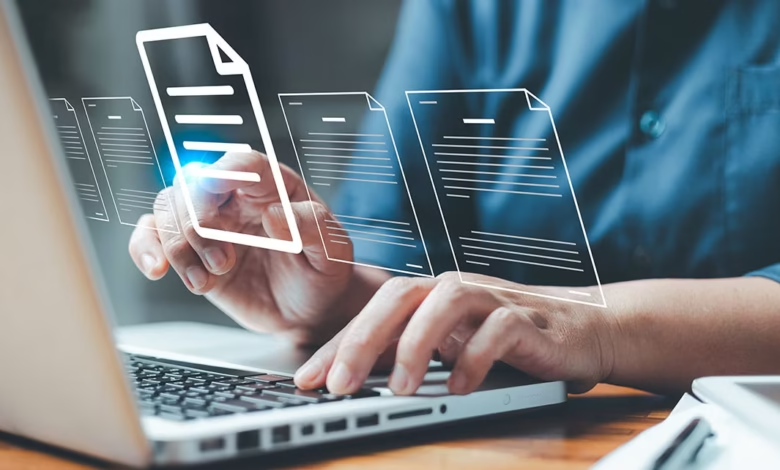
Paper documents remain part of many business processes. Invoices, forms, applications, contracts, receipts, and other records may arrive in physical form before being stored or processed digitally. Converting those materials into digital files can make information easier to access, search, and share.
Document digitization software can support this process by helping organizations capture, organize, index, and manage digital documents. Instead of treating scanning as an isolated task, businesses can incorporate it into a larger information management system.
This approach can be particularly useful for organizations that process large amounts of paperwork. Employees may spend less time sorting physical documents and more time working with information once records have been converted into digital formats.
Organization becomes increasingly important as the number of digital files grows. Consistent naming systems, categories, indexing, and storage practices can make it easier to locate specific records later. This can save time when employees need to find a particular invoice, application, or report.
Digitization can also support collaboration. Digital records can be shared with authorized employees or departments without requiring physical copies to be delivered from one location to another. This can make information easier to access while helping businesses maintain a more organized recordkeeping system.
The quality of the scanning process matters as well. Clear images, accurate text recognition, and reliable document handling can make digital files more useful after they are captured. When hardware and software are designed to work together, businesses can create a smoother process from the original paper document to the final digital record.
The Role of Mechanical Ergonomic Keyboards and Alternative Layouts in Productivity
Document management addresses how information enters a digital system, but another important part of productivity is how people interact with that information. Employees who spend hours writing, coding, researching, or entering data interact with their keyboards throughout the day.
A mechanical ergonomic keyboard can offer a different typing experience through its physical design, key arrangement, and mechanical switches. Ergonomic considerations may include the position of the hands and wrists, the amount of finger movement required, and the overall shape and size of the keyboard.
Switch selection can also influence how typing feels. Some users prefer tactile feedback, while others may favor smoother keystrokes or quieter operation. Personal preference can become especially important for people who spend much of their workday at a keyboard.
Keyboard arrangement is another factor worth considering. A key layout determines where letters, numbers, punctuation, and other functions are positioned. While QWERTY is widely familiar, alternative layouts can offer different approaches to key placement and typing efficiency.
Changing a keyboard layout can require practice because users must develop new muscle memory. However, exploring different arrangements can encourage people to think more carefully about the tools they use every day and whether those tools fit their working habits.
Ultimately, digital productivity comes from the combination of systems, software, and hardware. Document digitization can help businesses organize information more effectively, while ergonomic keyboards and alternative layouts can influence the way employees interact with that information once it is on screen.
The most useful technology is not necessarily the most complicated. It is technology that addresses a practical need and fits naturally into the way people work. By improving both information management and everyday computer interaction, businesses can create digital environments that are more organized, efficient, and adaptable over time.