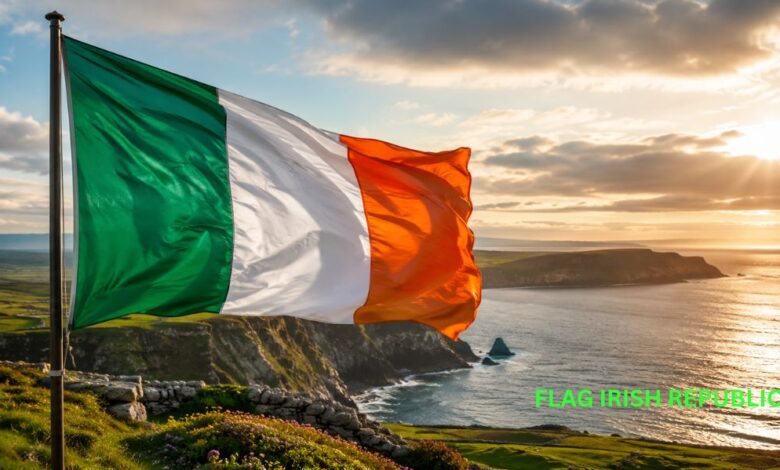
The flag irish republic is one of the most recognizable national symbols connected with Ireland, Irish identity, and the long journey toward political freedom and unity. Although many people simply know it as the green, white, and orange tricolor, the meaning behind the flag is much deeper than its simple design suggests. It represents history, hope, conflict, peace, and the desire for unity among different communities on the island of Ireland. A national flag is never just a piece of cloth; it is a symbol that carries memory, emotion, and pride. For the Irish Republic, the flag reflects a story of struggle, cultural survival, and the ambition to build a peaceful future. Understanding the flag irish republic means understanding the values and historical experiences that shaped modern Ireland.
The Design of the Flag Irish Republic
The official flag of the Irish Republic is a vertical tricolor of green, white, and orange. Green is nearest the flagpole, white sits in the center, and orange lies on the outer edge. The simple, balanced design ensures visibility from afar. Unlike flags with coats of arms, stars, animals, or patterns, the Irish tricolor uses simplicity to convey its message. Each color has a symbolic meaning, together expressing a national ideal: green stands for Irish nationalism and the Catholic community in Gaelic tradition; orange for the Protestant community linked with William of Orange; and white for peace, harmony, and hope for unity between these groups.
Historical Background of the Irish Tricolor
The history of the Irish Republic is closely tied to Ireland’s political and social evolution in the nineteenth and twentieth centuries. The Irish tricolor emerged in the mid-nineteenth century, as nationalist movements across Europe adopted flags to symbolize liberty and self-determination. Irish nationalists drew inspiration from revolutionary ideas emphasizing the right to self-governance. The tricolor represented resistance to external control and a desire for reconciliation. It gained recognition during the Irish struggle for independence, particularly in the early twentieth century. Gradually, the flag became synonymous with the Irish Republic and the aspiration for sovereignty, becoming the principal national flag among independence supporters.
Meaning Behind the Green Color
The green section of the flag has deep roots in Irish history and culture. Green is synonymous with Ireland’s lush, fertile landscape. It is tied to historic nationalist movements and the cultural revival that honored the Irish language, Gaelic traditions, and native identity. For many, green symbolizes the Catholic majority and the nationalist tradition seeking independence from British rule. Yet, the color is not solely religious or political; it also conveys the emotional connection Irish people feel toward their homeland, fields, folklore, and ancient heritage. In the Irish Republic’s flag, green symbolizes Irish continuity, resilience, and the preservation of identity across generations.
Meaning Behind the White Color
The white stripe at the center of the Irish flag is a crucial design element that symbolizes peace. It lies between green and orange, distinctly separating yet uniting them. This arrangement expresses hope that Ireland’s diverse communities can coexist without hostility. The white does not eliminate differences; it embodies respect, balance, and reconciliation. Ireland’s history features stark divisions, especially between nationalist and unionist communities, Catholic and Protestant groups, and competing political loyalties. The white stripe reminds us that national identity should strive for peaceful coexistence rather than prolonged conflict. Thus, the Irish Republic’s flag stands as both a patriotic symbol and a moral message of unity.
Meaning Behind the Orange Color
The orange stripe represents the Protestant tradition in Ireland, particularly communities linked to William of Orange. This color matters because the Irish flag was not created for only one side of Irish society; it was designed to include both major traditions. Including orange signals that the flag’s message is not exclusion, but the possibility of shared belonging. Although political and cultural divisions have often complicated this symbolism, the flag’s intent remains strong. The orange stripe recognizes Ireland’s complex history and that national identity embraces more than one community. The Irish Republic’s flag, therefore, carries the message that peace demands recognition, not denial, of difference.
The Flag and the Irish Struggle for Independence
The Irish Republic flag became significant during Ireland’s struggle for independence. It was adopted by nationalists seeking self-government and freedom from British rule. In revolutionary periods, flags become rallying symbols, showing unity. The Irish tricolor represented political liberty and a vision for Ireland’s future. It symbolized sacrifice, courage, and hope for sovereignty. For many, seeing the flag raised was emotional; it signified hope after years of political frustration and hardship. Its importance grew as independence movements gained momentum, becoming the national symbol of the Irish state.
Official Status and National Use
Today, the flag of the Irish Republic is Ireland’s official national flag. This status means it is flown on government buildings, used during state ceremonies, displayed at international events, and carried by Irish citizens around the world. The flag often appears during national celebrations, sporting competitions, cultural festivals, and diplomatic occasions. It is also seen among Irish communities abroad, especially in countries with large Irish diasporas. For people of Irish ancestry, the flag can symbolize family history, cultural pride, and an emotional connection to Ireland, even if they live far from the country. Because the flag carries national significance, it should be treated with respect. Proper display and handling reflect appreciation for what it represents.
Correct Display of the Irish Republic Flag
When displaying the Irish Republic flag, the green stripe must be closest to the flagpole. When hung vertically or indoors, ensure proper color order. Reversing the flag alters its symbolism and is considered incorrect. The flag must never touch the ground, become damaged, or be used disrespectfully. While flags are common at celebrations, sports events, and festivals, national flags must be treated with dignity. A respectful display preserves its meaning and honors the people and history it represents. The flag is most powerful as a symbol when displayed intentionally, never casually or carelessly.
Cultural Importance of the Flag of the Irish Republic
The Irish Republic flag carries cultural significance far beyond official state use. At St. Patrick’s Day celebrations, Irish music events, parades, and community gatherings, it appears as a symbol of identity. It is featured on clothing, decorations, posters, and souvenirs. For many, the flag instantly evokes Irish culture: traditional music, dance, poetry, storytelling, and hospitality. It has become a global marker of Irish presence. In cities with strong Irish heritage, the flag is proudly displayed as a statement of ancestry and belonging. Still, its meaning is more than ornamental. The colors represent a rich history of identity, peace, and community relationships.
Difference Between the Irish Republic Flag and Other Irish Symbols
Ireland has several significant national and cultural symbols, and the flag of the Irish Republic is one of them. Other notable symbols include the shamrock, the harp, and green. The harp, Ireland’s oldest emblem, is used officially by the state. The shamrock is closely linked to Irish tradition and St. Patrick. Green dominates Irish cultural identity, especially in celebrations. However, the tricolor flag has a unique role: it represents the modern Irish state and its political ideals. While the shamrock conveys cultural charm and the harp evokes ancient heritage, the tricolor embodies national unity, sovereignty, and peace.
The Flag in Sports and International Events
The flag irish republic is often seen at international sporting events where Irish athletes and teams compete. Supporters wave the tricolor to show pride and encouragement. In these moments, the flag becomes a symbol of shared identity and national emotion. Sports can bring people together, and the flag helps create a sense of belonging among fans. Whether at football matches, rugby games, boxing events, athletics competitions, or the Olympics, the Irish flag represents the country on a global stage. For athletes, competing under the flag can be deeply meaningful because it connects personal achievement with national pride. For fans, it becomes a visual expression of loyalty and support.
Why the Flag Still Matters Today
The flag irish republic still matters because it continues to express values that remain relevant. Its message of peace between different traditions is not outdated. In a world where many societies face division, the Irish tricolor reminds people that national identity can be built around reconciliation rather than hatred. The flag acknowledges history but also points toward a better future. It honors the Irish nationalist tradition while also recognizing the presence and importance of the Protestant community. This makes the flag more than a historical object. It is a continuing invitation to build a society based on respect, fairness, and peaceful coexistence.
Conclusion
The flag irish republic is a powerful national symbol with a simple design and a deep meaning. Its three colors, green, white, and orange, represent different communities, historical experiences, and the hope for peace. The green reflects Irish nationalist and Gaelic traditions, the orange acknowledges the Protestant tradition, and the white stands for harmony between them. Throughout Irish history, the flag has been connected with independence, sacrifice, pride, and national identity. Today, it remains an important symbol in government, culture, sports, and Irish communities worldwide. To understand the Irish tricolor is to understand a central part of Ireland’s story: a story of struggle, memory, unity, and hope.
(FAQs)
What is the flag irish republic?
The flag irish republic is the national flag of Ireland. It is a vertical tricolor with green, white, and orange stripes.
What do the colors of the Irish Republic flag mean?
The green represents Irish nationalist tradition, the orange represents the Protestant tradition, and the white represents peace between them.
Which side of the Irish flag goes nearest the pole?
The green stripe should always be placed nearest the flagpole when the flag is displayed correctly.
Why is the Irish flag important?
The flag is important because it represents Irish independence, national identity, cultural pride, and the hope for unity and peace.
Is the Irish Republic flag the same as the Ireland flag?
Yes, the flag commonly called the Irish Republic flag is the national flag of Ireland, also known as the Irish tricolor.