Starch of Maize: A Complete Guide to Its Uses, Benefits, Properties, and Everyday Importance

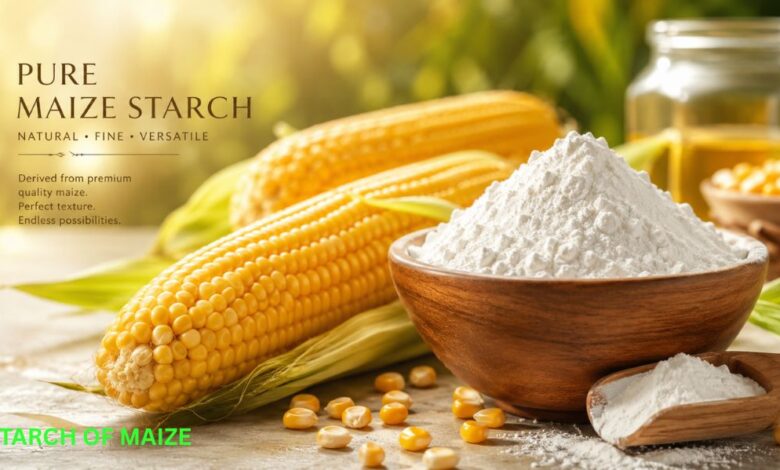
Maize starch is among the most widely used natural starches globally, prized for its versatility, affordability, and functionality in household and industrial settings. It is extracted from maize kernels (corn) and presents as a fine, white powder with a smooth texture. Widely known as cornstarch, especially in kitchens, it thickens soups, sauces, gravies, custards, and desserts. Yet its significance extends beyond cooking. Maize starch plays a vital role in food processing, pharmaceuticals, textiles, paper manufacturing, cosmetics, adhesives, and biodegradable packaging. As maize is cultivated across diverse regions, its starch is readily accessible and has become an indispensable component in countless everyday products.
What Is Starch of Maize?
Maize starch is a carbohydrate extracted from the endosperm of maize kernels. The endosperm is the starchy part of the grain that supplies energy for the seed’s growth. When maize is processed, starch is separated from other kernel components, such as germ, fiber, and protein. The final product is a refined powder, typically odorless, tasteless, and white. Its neutral flavor makes it valuable in recipes, as it thickens without altering the original taste. Scientifically, maize starch mainly consists of two glucose polymers: amylose and amylopectin. These polymers determine the behavior of starch when mixed with water and heated. Maize starch forms a smooth gel, adds thickness, improves texture, and stabilizes food products.
How Starch of Maize Is Produced
The production of starch from maize usually begins with cleaning the maize kernels to remove dust, stones, and other impurities. After cleaning, the kernels are soaked in water for a specified period to soften. This soaking process helps separate the kernel’s parts more easily. Once softened, the maize is ground to break it apart, and the germ is removed. The remaining mixture contains starch, protein, and fiber, which are separated through washing, screening, and centrifuging. The starch slurry is then purified, dried, and milled into a fine powder. This careful processing is important because high-quality maize starch must be clean, smooth, and free of impurities. The final starch can be used as it is, or it can be modified for special industrial purposes where stronger thickening, better stability, or improved resistance to heat and freezing is needed.
Physical and Chemical Properties of Starch of Maize
One of the most valuable properties of maize starch is its capacity to absorb water and swell when heated. When combined with cold water, it doesn’t fully dissolve; instead, it forms a suspension. When heated, starch granules absorb water, expand, and eventually rupture, producing a thick paste or gel—a process called gelatinization. This explains why maize starch is highly effective for thickening sauces, puddings, and fillings. Its neutral flavor makes it easy to blend with other ingredients. Its smooth texture makes it ideal for products with a fine mouthfeel. In industrial use, maize starch may be modified to enhance its performance under challenging conditions, such as high acidity, freezing, reheating, or mechanical mixing.
Uses of Starch of Maize in Cooking
In the kitchen, maize starch is best known as a thickening agent. It is often added to soups, gravies, stews, sauces, and dessert fillings to give them a thicker and smoother consistency. To avoid lumps, it is usually mixed with a small amount of cold water before being added to hot liquid. This mixture is known as a slurry. Once added and heated, it thickens quickly, giving food a glossy appearance. Maize starch is also used in baking to soften the texture of cakes, cookies, and pastries. It can be combined with flour to produce a lighter crumb and a tender bite. In fried foods, a cornstarch coating can create a crisp outer layer, especially on chicken, fish, vegetables, and snacks. Because it has a mild flavor, it does not overpower the dish’s flavor.
Importance in the Food Industry
The food industry relies on maize starch to enhance texture, stability, and shelf life across a range of products. It appears in canned soups, instant sauces, salad dressings, frozen meals, bakery fillings, noodles, candies, and dairy desserts. In processed foods, it serves as a thickener, stabilizer, binder, and texturizer. It prevents ingredient separation and preserves product appearance. Modified maize starch is crucial in commercial production due to its resistance to harsh processing conditions. For example, reheated frozen foods need starches that retain structure, while acidic fruit fillings require starches that stay stable at low pH. Thus, maize starch is a key ingredient for manufacturers seeking consistent quality.
Industrial Uses of Starch of Maize
Beyond food, maize starch offers significant industrial applications. In the paper industry, it enhances strength, smoothness, and print quality. In textiles, it fortifies yarn and improves fabric finishing. In pharmaceuticals, maize starch serves as a filler, binder, or disintegrant in tablets, helping maintain tablet form and ensuring efficient dissolution of the medicine. It also appears in cosmetics and personal care items, such as powders, creams, and dry shampoos, where it absorbs moisture and creates a smooth texture. In adhesives, maize starch forms glues for paper, cardboard, envelopes, and labels. Its role is growing in the production of biodegradable materials as companies pursue alternatives to plastic. These versatile industrial applications underscore the value of this natural starch in modern manufacturing.
Nutritional Value of Starch of Maize
Maize starch is mainly a source of carbohydrates. It provides energy but contains very little protein, fat, fiber, vitamins, or minerals after refinement. Because it is highly processed, it should not be considered a complete food on its own. Instead, it is best understood as a functional ingredient that improves the texture and structure of meals and products. People who are watching their blood sugar levels should use it carefully because refined starch can raise glucose levels when consumed in large amounts. However, in normal cooking quantities, it is usually used sparingly, mainly for thickening. Some forms of maize starch, such as resistant starch, may behave differently during digestion and offer potential benefits for gut health. Still, regular corn starch is valued mostly for its practical uses rather than its nutritional value.
Benefits of Starch of Maize
The biggest benefit of maize starch is its versatility. It can be used in sweet and savory foods, industrial products, medicines, cosmetics, and packaging materials. It is affordable and widely available, making it useful for both households and large manufacturers. In cooking, it thickens quickly and creates a smooth texture without adding strong flavor. It is also naturally gluten-free, making it useful in gluten-free recipes when handled and processed in a gluten-free environment. Another benefit is its ability to improve the crispiness of fried foods and the tenderness of baked goods. In industry, it is valued for its renewability, biodegradability, and ease of modification for specialized uses. These qualities make maize starch an important ingredient in both traditional cooking and modern innovation.
Starch of Maize in Gluten-Free Cooking
For people who avoid gluten, maize starch can be a useful ingredient in many recipes. Since maize itself does not naturally contain gluten, its starch can help improve the texture of gluten-free baked goods. Gluten-free breads, cakes, cookies, and pastries often require starches to achieve softness and structure because they lack the elasticity that wheat gluten provides. Maize starch can be combined with rice flour, potato starch, tapioca starch, or other gluten-free flours to improve the final result. However, people with serious gluten sensitivity or celiac disease should always choose products clearly labeled gluten-free, because cross-contamination can happen during processing or packaging. When used properly, corn starch can make gluten-free cooking easier and more enjoyable.
Difference Between Starch of Maize and Maize Flour
Many people confuse maize starch with maize flour, but they are not the same. Maize flour is made by grinding whole or partly processed maize kernels, so it contains more components of the grain, including protein, fiber, and natural color. It may be yellow or white depending on the maize variety. Starch of maize, on the other hand, is extracted only from the starchy endosperm and is much more refined. It is usually white, powdery, and almost tasteless. Maize flour is often used to make breads, tortillas, porridges, and traditional foods, while maize starch is mainly used as a thickener, binder, or texture-improving ingredient. Understanding this difference is important because using one in place of the other can alter a recipe’s taste, texture, and success.
Storage and Handling Tips
To keep maize starch fresh and effective, it should be stored in a cool, dry place away from moisture. Since starch readily absorbs moisture, the container should be tightly sealed after each use. If moisture enters the container, the starch may form lumps or lose some of its smooth texture. It should also be kept away from strong-smelling foods because, although it has little smell of its own, it may absorb odors over time. A clean, dry spoon should be used when taking starch from the container. Proper storage helps maintain its quality for a long period. In commercial settings, storage conditions are even more important because large quantities of maize starch must remain clean, dry, and safe for production.
Environmental Importance of the Starch of Maize
In recent years, maize starch has gained attention for its environmental benefits. Since it comes from a renewable crop, it can be used to develop biodegradable products. Some packaging materials, disposable items, and bioplastics use maize starch as a base or additive to reduce dependence on petroleum-based plastics. While starch-based materials are not a complete solution to all environmental problems, they can help support more sustainable production when used responsibly. The increasing interest in eco-friendly materials has made corn starch an important ingredient in research and innovation. Its natural origin, biodegradability, and wide availability make it a promising material for industries seeking greener alternatives.
Conclusion
Maize starch is much more than a simple kitchen thickener. It is a highly useful natural ingredient with an important place in food preparation, food manufacturing, medicine, cosmetics, textiles, paper, adhesives, and sustainable materials. Its neutral taste, smooth texture, thickening power, and ability to form gels make it valuable in many recipes and products. While it is not especially rich in nutrients, it plays an important functional role by improving texture, consistency, stability, and appearance. From creating silky sauces at home to supporting large-scale industrial production, maize starch remains one of the most practical and widely used starches worldwide. Its affordability, availability, and adaptability ensure that it will remain important in both traditional uses and future innovations.
(FAQs)
What is the starch of maize used for?
Maize starch is used to thicken sauces, soups, gravies, custards, and dessert fillings. It is also used in baking, frying, food processing, pharmaceuticals, cosmetics, paper, textiles, adhesives, and biodegradable packaging.
Is starch of maize the same as corn starch?
Yes, maize starch is commonly known as corn starch in many countries. Both terms usually refer to the refined starch extracted from maize kernels.
Is starch of maize gluten-free?
Pure starch of maize is naturally gluten-free because maize does not contain gluten. However, people with celiac disease should choose certified gluten-free products to avoid possible cross-contamination.
Can the starch of maize be used in baking?
Yes, maize starch can be used in baking to create softer cakes, lighter cookies, and tender pastries. It is often mixed with flour or gluten-free flour blends to improve texture.
How should the starch of maize be stored?
Maize starch should be stored in an airtight container in a cool, dry place. It should be protected from moisture, heat, and strong odors to maintain its quality.
Is the starch of maize healthy?
Maize starch mainly provides carbohydrates and energy. It is useful as a cooking and manufacturing ingredient, but it is not rich in vitamins, minerals, or fiber. It should be used in balanced amounts as part of a varied diet.