For many people, cycling is not difficult because of the distance. The real barriers often appear before and during the journey: getting onto a high frame, balancing while carrying a bag, restarting at junctions or worrying about the effort required to ride home.
Step-through e-bikes reduce several of these everyday frustrations. Their lower frame opening makes it easier to get on and off, while electric assistance helps riders manage hills, headwinds and longer routes with more confidence.
The result is a bike that can feel more practical for commuting, shopping, casual rides and other journeys that form part of a normal week.
Why Is a Step-Through Frame Easier to Use?
A traditional bicycle often requires the rider to swing one leg over the saddle or top tube. That movement may feel natural to experienced cyclists, but it can become awkward when the bike is loaded, the rider is wearing work clothes or the journey includes frequent stops.
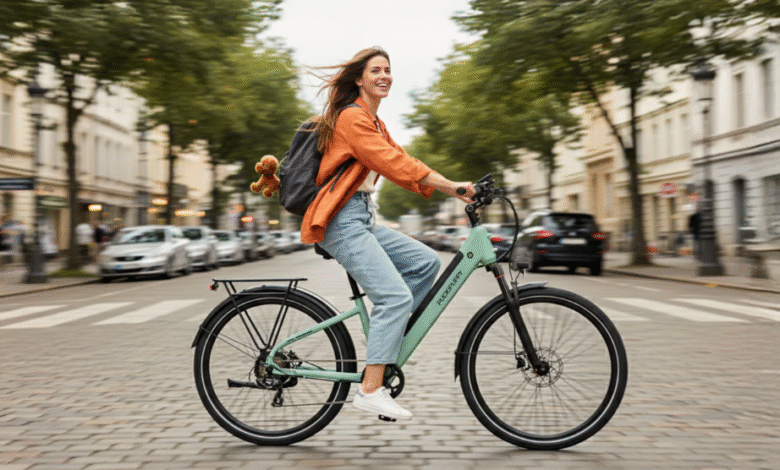
A step-through frame allows the rider to move through the lower centre of the bike instead. This reduces the amount of hip movement required and makes it easier to place both feet on the ground.
The benefit becomes particularly noticeable during stop-and-go riding. At traffic lights, crossings, shop entrances and narrow gates, the rider can step down without leaning the bike sharply to one side.
This design can suit people returning to cycling after a long break, riders with limited mobility and anyone who simply prefers a calmer way to begin and finish each journey.
How Does Electric Assistance Help With Daily Travel?
Electric assistance makes the effort required for a journey more predictable.
A route that feels easy in the morning may become harder on the return trip because of wind, hills, additional shopping or general fatigue. An e-bike allows the rider to adjust the level of support according to the conditions.
Lower assistance settings can support relaxed riding on flat sections. Higher settings can help when starting on an incline, carrying additional weight or travelling into a headwind.
This is particularly useful in towns and suburbs, where routes often include repeated stops. Controlled motor assistance can help the rider move away more smoothly without making every restart feel physically demanding.
For everyday use, predictable assistance and manageable low-speed control are often more important than dramatic acceleration or headline performance figures.
What Makes a Riding Position Comfortable?
Easy mounting is only one part of an approachable design.
Handlebar height, saddle position and the distance between the controls and the rider all affect comfort. A position that is too low or stretched out can place additional pressure on the wrists, shoulders and lower back.
Many everyday riders prefer a relatively upright posture. It provides a clearer view of traffic and surroundings while creating a more relaxed position for commuting, errands and recreational rides.
Adjustable handlebars or stems are useful because riders have different body proportions and preferences. One person may want the bars higher for a relaxed ride, while another may prefer a slightly more forward position for responsive steering.
Before choosing a bike, riders should check its recommended height range and consider how it will feel at low speed. A step-through frame improves accessibility, but proper fit still matters once the bike is moving.
Which Tyres Suit Everyday Riding?
The best tyre depends on the surfaces a rider uses most often.
A fat tire electric bike may suit routes that regularly include soft ground, loose gravel, sand or rough trails. Wider tyres can provide extra cushioning and traction in these conditions.
For paved streets, neighbourhood roads and light mixed surfaces, moderately sized commuter tyres can feel lighter and more responsive. They may also make steering feel more familiar to someone moving from a conventional bicycle.
Tread pattern is equally important. A commuter-focused tread should provide useful grip on damp surfaces while allowing the bike to roll efficiently on pavement.
Rather than choosing tyres based only on appearance, riders should consider their normal routes, seasonal weather and the surfaces they are most likely to encounter.
Which Features Matter Most on an Everyday E-Bike?
Practical features often make a larger difference than one impressive specification.
Hydraulic disc brakes can provide controlled stopping in changing conditions. Front suspension can reduce vibration from potholes, broken pavement and raised road edges. A clear display allows riders to monitor speed, assistance level and remaining battery power.
A removable battery also makes charging more convenient. Instead of moving the entire bike close to a power outlet, the rider can take the battery indoors.
Storage should not be overlooked. A rear rack, basket or pannier can carry groceries, work equipment and personal items without placing all the weight on the rider’s shoulders.
Bike weight is another practical consideration. Riders who need to carry an e-bike upstairs, lift it onto a vehicle rack or move it through a narrow storage space should check its complete weight before purchasing.
Which Step-Through E-Bike Suits Commuting and Pet-Friendly Outings?
For riders looking for an accessible electric commuter bike, the Puckipuppy Poodle combines a low-step frame with features designed for commuting, errands and casual everyday riding.
It is equipped with a 750W motor with 960W peak output and a removable 48V 15Ah battery. Puckipuppy lists an estimated range of 45 to 75 miles, although actual distance will vary according to assistance level, terrain, weather, rider weight and cargo.
The adjustable handlebar and stem allow riders to adapt the riding position, while the front suspension helps absorb vibration from uneven streets. Hydraulic disc brakes support controlled stopping, and the Shimano seven-speed drivetrain gives riders additional control over pedalling effort.
The Poodle uses 27.5 × 2.4-inch tyres with a fishbone-style tread designed to support responsive everyday handling and water dispersion on wet or mildly slippery surfaces. Its official specifications list a recommended rider height of approximately 5 feet 3 inches to 6 feet 4 inches and a maximum load capacity of 350 pounds.
The model can also support pet-friendly outings. Puckipuppy offers a compatible pet carrier, allowing riders to bring a small companion on carefully planned neighbourhood journeys or visits to nearby outdoor spaces.
Pets should be introduced to the carrier gradually, and riders should always follow its installation and weight limits. Additional weight can affect balance, braking distance and battery use, so the first rides should take place at low speed on a quiet and familiar route.
Are Step-Through E-Bikes Suitable for Longer Rides?
A step-through frame does not limit a bike to short journeys.
The distance an e-bike can cover depends more on battery capacity, assistance level, terrain, weather, rider weight and cargo. A properly fitted step-through model can support commuting as well as longer recreational routes.
Advertised range should still be treated as an estimate rather than a guarantee. Hills, cold temperatures, high assistance settings and heavier loads can all reduce the distance available from one charge.
Before a longer ride, check tyre pressure, battery level and the distance required for the return journey. Leaving a reasonable battery reserve is more practical than planning around the maximum advertised figure.
Comfort also becomes more important over longer distances. An adjustable riding position, suitable tyres, suspension and a well-fitted saddle can influence the experience as much as motor output or battery size.
Can a Higher-Powered E-Bike Be Used on UK Roads?
UK readers should check the legal classification of any e-bike before using it on public roads or cycle routes.
In Great Britain, an electrically assisted pedal cycle must meet specific requirements. These include a maximum continuous rated motor output of 250W and electrical assistance that stops at 15.5 mph.
An e-bike that exceeds these limits may be treated as a moped or motorcycle and could require approval, registration, insurance, tax and an appropriate driving licence.
Because regulations differ between countries and regions, riders should confirm the rules that apply where they live. A model intended for one market should not automatically be assumed to meet the public-road requirements of another.
Making Everyday Cycling Easier to Choose
The greatest advantage of a step-through e-bike is not a single motor, battery or frame measurement. It is the way several practical features work together.
A lower frame makes mounting and stopping easier. Electric assistance reduces uncertainty around hills and longer routes. An upright riding position, suitable tyres, reliable brakes and useful storage help the bike fit more naturally into daily life.
Models such as the Puckipuppy Poodle show how these features can support commuting, errands, relaxed rides and even carefully planned outings with a pet.
When a bike matches the rider’s body, route and local regulations, it becomes easier to choose for ordinary journeys. That is what makes step-through e-bikes approachable: they remove enough inconvenience to make cycling feel like a realistic part of everyday life.