For many migrants in the UK, Indefinite Leave to Remain offers security, stability, and the freedom to build a long-term future without repeated visa renewals. However, the application process can feel confusing, especially when small mistakes or missing documents may lead to delays or refusals.
Questions around residency periods, absence limits, eligible visa routes, and supporting evidence often create uncertainty. With immigration rules regularly changing, preparation becomes essential, and seeking guidance from a trusted Law Firm Peterborough can help applicants better understand the process and avoid common mistakes.
This guide explains the key ILR eligibility requirements, important documents, common mistakes to avoid, and how professional legal advice can support your application. Before applying, it is important to understand what ILR means and who qualifies for it.
What Does the UK’s Indefinite Leave to Remain (ILR) Mean?
Indefinite Leave to Remain allows eligible individuals to settle permanently in the UK. Unlike temporary visas, ILR removes immigration time restrictions and gives people greater freedom to live, work, and study without ongoing visa renewals. For many applicants, ILR also becomes the final step before applying for British citizenship. Understanding what ILR offers can help applicants recognise why careful preparation matters so much.
Difference Between Temporary Visa Status and Permanent Settlement
Temporary visas usually carry conditions, time limits, and restrictions linked to employment, sponsorship, or family relationships. ILR removes many of these limitations. Individuals no longer need sponsorship to work, can travel more freely, and gain greater stability in their personal and professional lives. This transition often provides peace of mind for families planning their future in the UK.
Key Benefits of ILR
ILR offers several important advantages. Successful applicants can live and work in the UK without immigration restrictions, access certain public services, and move towards British citizenship if eligible. It also removes the stress and financial burden associated with repeated visa renewals and immigration applications.
Many migrants also seek broader legal support while planning their future in the UK. Services such as Will writing services, employment advice, and family legal support often become increasingly important once permanent settlement is secured.
Before applying, it is important to understand whether your current visa route qualifies for settlement.
Who Can Apply for ILR in the UK?
Different visa categories offer different routes to permanent settlement in the UK. While many applicants become eligible after five years, some routes have longer residency periods or additional requirements.
Common Visa Routes Eligible for ILR
- Skilled Worker visa holders
- Spouse or partner visa holders
- Innovator Founder visa holders
- Global Talent visa holders
- Refugees and humanitarian protection holders
- Applicants under the 10-year-long residence route
Different Routes Have Different Rules
- Residency requirements vary by visa category.
- Some routes require minimum salary thresholds.
- Certain applicants must prove continuous lawful residence.
- Family routes may require evidence of cohabitation.
- Travel and immigration records play a major role in long-term residency applications.
Applying under the correct immigration category is essential to avoid delays or refusals. Many applicants also use professional Visa services in Peterborough to help organise documentation, review eligibility, and reduce application errors.
Once applicants understand their visa route, they can begin reviewing the core ILR eligibility requirements.
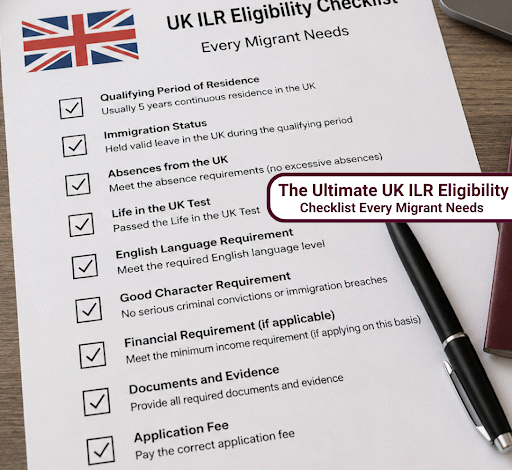
7 Key Guidelines to Review Before Applying for ILR
Preparing for ILR involves more than completing the required residency period. Applicants must meet immigration rules, maintain lawful residence, and provide accurate supporting documents.
1. Meet the Required Continuous Residency Period
While the extended residence path typically requires ten years, the majority of visa routes require five years of continuous lawful residence. Applicants must maintain a valid immigration status throughout the qualifying period without significant gaps or overstaying.
2. Check Your Absence From the UK
Excessive time spent outside the UK may affect continuous residence requirements. Keeping travel records, passport stamps, and flight details can help prove compliance with absence limits.
3. Ensure Your Visa Status Has Remained Valid
In order to minimise immigration status gaps, applicants should renew their visas on schedule. Previous visa approvals and extension records may also support the application.
4. Meet Salary and Employment Requirements
Skilled Worker applicants may need to meet salary thresholds and sponsorship requirements. Payslips, employer letters, contracts, and bank statements are commonly required as evidence. In some situations, applicants may also benefit from advice provided by an Employment Lawyer in Peterborough, especially where sponsorship, workplace disputes, or employment documentation issues arise.
5. Pass the Life in the UK Test
Most applicants must pass the Life in the UK Test, which covers British history, culture, and society. Some individuals may qualify for exemptions.
6. Meet the English Language Requirement
Applicants usually need to prove their English language ability through approved qualifications or recognised tests, unless exempt.
7. Maintain Good Character and Immigration Compliance
Eligibility may be impacted by criminal convictions, false statements, or violations of immigration laws. Accurate applications and lawful conduct remain essential throughout the residency period.
Once the eligibility requirements are met, applicants should begin organising their supporting documents carefully.
Important Documents Needed for an ILR Application
Strong documentation forms the foundation of a successful ILR application. Missing or incorrect paperwork remains one of the most common reasons for delays and refusals. Preparing documents early allows applicants to identify gaps before submission deadlines approach.
Identity and Travel Documents
Applicants usually need valid passports, biometric residence permits, and previous immigration status documents. These records help confirm identity, travel history, and lawful residence in the UK.
Proof of Residence
Evidence of residence may include utility bills, council tax statements, tenancy agreements, and official correspondence showing continuous residence at a UK address.
Consistent address history often helps support continuous residence requirements.
Employment and Financial Evidence
Payslips, employer letters, tax documents, and bank statements help verify employment history and salary compliance. Skilled Worker applicants especially need clear financial evidence supporting their employment status.
Supporting Immigration Documents
Applicants should also provide previous visa approvals, sponsorship documentation where applicable, and records linked to any prior immigration applications or extensions.
Applicants with family based visa routes may also require additional relationship evidence. In such cases, experienced Solicitors for family law may help individuals organise supporting family documentation where legal matters overlap with immigration status.
Even strong applicants can face difficulties if mistakes appear within their application.
Common Reasons ILR Applications Are Refused
Many ILR applications face refusal because of missing information or failure to meet eligibility requirements. Common reasons include:
- Excessive absences from the UK.
- Incorrect or missing supporting documents.
- Failure to meet salary requirements.
- Errors in the application form.
- Gaps in immigration status or overstaying.
- Breaches of visa or immigration conditions.
- Incomplete travel or employment records.
Carefully reviewing the application and supporting evidence before submission can help reduce the risk of delays or refusals.
Additional Legal Services Migrants Often Need After Settlement
Securing ILR often marks the beginning of long term planning in the UK. Many individuals and families later require broader legal support linked to family matters and future planning. Individuals experiencing marital or family changes may seek advice from Divorce and Family Law Solicitors while managing residency and settlement responsibilities simultaneously.
Accessing legal guidance early can often help migrants feel more confident and prepared as they establish permanent roots in the UK.
Why Professional Immigration Advice Can Help?
Professional immigration advice can make the ILR process clearer and less stressful, especially for complex cases. Benefits may include:
- Guidance on current UK immigration rules.
- Help checking ILR eligibility requirements.
- Support with document preparation and application forms.
- Advice on absences, sponsorship, or visa gaps.
- Assistance after previous refusals or immigration issues.
- Legal representation and appeal support if required
Experienced Immigration solicitors legal aid can help applicants avoid mistakes and improve confidence throughout the application process. Having professional guidance often provides greater clarity and confidence during what can otherwise feel like a stressful process.
Conclusion
Applying for Indefinite Leave to Remain is a major step towards long term stability in the UK. However, successful applications rely heavily on preparation, accurate documentation, and a clear understanding of immigration requirements.
From meeting continuous residence rules to passing the Life in the UK Test and maintaining a valid immigration status, every detail matters. Applicants who organise their records early and carefully review eligibility requirements often place themselves in a much stronger position.
ILR represents more than permanent settlement. For many individuals and families, it marks the beginning of a more secure future in the UK. Taking the time to prepare properly and seek professional support where needed can make the journey smoother and clearer. In situations involving separation, child arrangements, or family disputes, understanding How Family Law Solicitors in Peterborough Can Protect Your Rights may also help individuals safeguard their legal and personal interests while building a stable future in the UK.