Why Pre Owned Rolex Datejust Watches Dominate the Safe Value Segment in Luxury Watch Buying

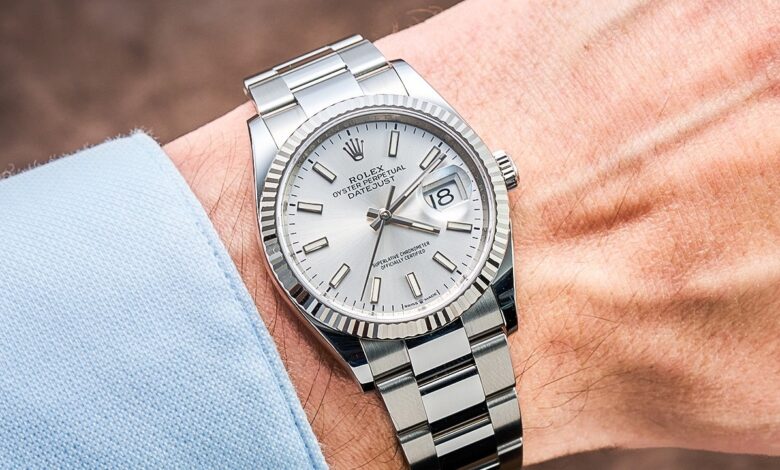
The luxury watch market is experiencing a major transformation because customers now show higher price sensitivity while digital resale platforms become more accessible and customers understand the lasting value of products. Modern buyers assess watches through an analytical process that evaluates liquidity and condition risk and resale predictability instead of relying solely on brand prestige and design appeal.
The first time luxury buyers who seek access to high end watch ownership without facing market fluctuations represent the most visible demonstration of this trend. The secondary market now identifies particular watch models as stable reference points because these models maintain consistent demand patterns and have distinct identities.
Why long term design consistency builds market confidence
The pre-owned market for certain Rolex models shows strong performance because their design elements stay unchanged. Rolex maintains its core collections through gradual design changes rather than following short lived fashion trends. The Datejust demonstrates this design principle through its execution.
The model’s design remains constant over time which enables multiple generations to share the same design identity in the secondary market. The secondary market product maintains design consistency which helps buyers trust the item because it resembles something they already know. Market behavior studies in luxury goods show that familiarity significantly improves purchase confidence especially in categories where buyers lack technical expertise.
Condition sensitivity and pricing behavior in secondary markets
In the pre owned luxury watch ecosystem, condition plays a critical role in determining value. Research from secondary market platforms indicates that two visually similar watches can differ significantly in price depending on polishing history, bracelet stretch, service records, and dial condition.
This creates a layered pricing structure where condition often matters more than production year. As a result, buyers become more selective and educated, focusing on tangible quality indicators rather than surface appearance alone.
Dial variations also influence demand distribution. Certain configurations consistently receive stronger buyer interest due to aesthetic balance and broader market appeal, particularly in steel based models that offer higher liquidity across regions.
Market liquidity and why it defines modern watch selection
Liquidity has become one of the most important decision making factors in luxury watch purchasing. Unlike collectibles that may take time to resell, liquid assets maintain steady buyer interest and faster turnover in the secondary market.
Rolex consistently ranks among the strongest brands in global resale performance, often retaining a significant portion of its value compared to other Swiss luxury brands. Industry reports from luxury resale analysts show that Rolex models frequently outperform competitors in terms of resale consistency and global demand stability.
The secondary market effect is particularly strong for widely recognized models with universal appeal, where demand is not limited to niche collector groups but extends across multiple buyer segments.
Why Pre Owned Rolex Datejust Watches are considered a safe entry point
Within this market structure, Pre Owned Rolex Datejust Watches have developed a reputation as one of the most stable entry categories into luxury watch ownership.
This is not due to speculation or short term demand spikes, but rather the combination of brand recognition, consistent production history, and predictable resale behavior. Buyers entering the luxury segment often prioritize minimizing uncertainty, and this model provides a balance between accessibility and long term confidence.
Behavioral research in luxury consumption indicates that first time buyers tend to prioritize “risk reduction” over exclusivity, which explains why stable, widely recognized models dominate early purchase decisions.
How global demand patterns reinforce stability
The expansion of the global pre owned luxury market has strengthened demand for models with universal recognition. Digital marketplaces and certified resale platforms have made it easier for buyers and sellers to interact across regions, increasing liquidity for high demand references.
Reports from luxury market research firms such as Bain & Company indicate that the secondary luxury goods market continues to grow steadily as consumers shift toward value conscious purchasing behavior. This growth is particularly strong in entry to mid luxury segments, where affordability and resale predictability play a major role.
In such an environment, watches with stable historical demand naturally gain stronger positioning.
Comparison with alternative entry luxury options
When compared to other entry level luxury watches, the Datejust maintains a distinct advantage due to its balance of heritage design and market trust. Many competing models either rely heavily on short term design trends or lack the same level of global resale recognition.
This creates a structural difference in how buyers perceive risk. A watch that is widely recognized across markets is easier to evaluate, easier to price, and easier to resell, which strengthens its position as a default entry option.
While not marketed as an investment product, its long term behavior has made it one of the most predictable models in the luxury segment.
Conclusion
The dominance of the Datejust in the pre owned luxury market is the result of long term structural behavior rather than short term demand cycles. Its consistency in design, strong liquidity profile, and stable resale performance have positioned it as a reference point for safe luxury watch acquisition.
As global buyers continue shifting toward more informed and value driven purchasing decisions, models that combine recognition with predictability are expected to remain central to the secondary market ecosystem.