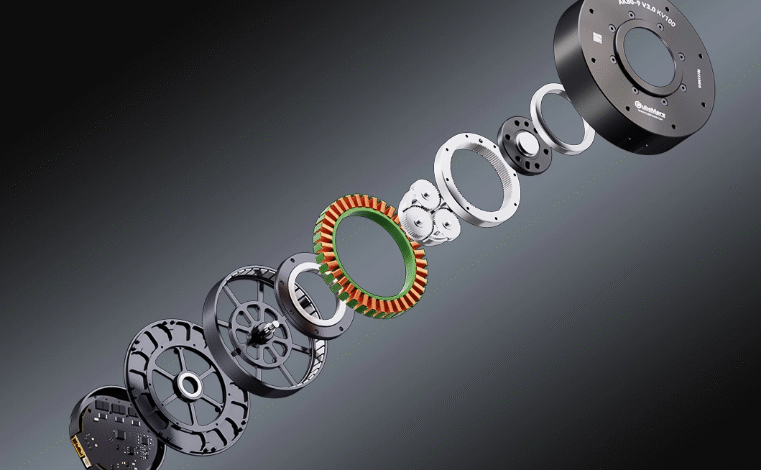
Backdrivability matters in wearable robot actuators because the actuator is physically connected to the human body. The joint system needs to move naturally with the user, rather than simply forcing a mechanical motion.
In wearable robots, the actuator must do more than generate torque. It needs to support human movement while allowing the user to remain in control. This is especially important in walking assistance, rehabilitation, industrial support, and mobility aid applications.
A backdrivable actuator helps make wearable robots feel smoother, safer, and more natural during real movement. It improves comfort, supports human-robot interaction, and helps the system respond better when the user changes posture, speed, or direction.
Why Backdrivability Is Important in Human-Worn Systems
Backdrivability describes how easily an actuator can be moved from the output side by an external force. In wearable robotics, that external force often comes from the user’s own body movement.
Engineers developing powered exoskeletons, rehabilitation devices, and assistive wearable robots often evaluate an exoskeleton motor based on torque output, response speed, weight, control accuracy, and how naturally it works with human joint motion.
This matters because the user is part of the motion system. When a person bends a knee, raises an arm, shifts balance, or changes direction, the wearable robot must respond smoothly. A backdrivable actuator helps the device cooperate with the user instead of making the movement feel mechanical.
For wearable robots, the goal is not only to provide assistance. The goal is to provide assistance that feels controlled, comfortable, and natural.
Why Natural Movement Depends on Backdrivability
Human movement is not perfectly fixed. Even simple walking changes from step to step. A person may slow down, turn, pause, adjust posture, or shift weight without thinking about it.
A wearable robot must adapt to these natural changes. Backdrivability helps because it allows the actuator to respond more naturally to user-driven motion.
This is important in tasks such as:
- Walking assistance
- Sit-to-stand support
- Stair movement
- Arm lifting
- Load carrying
- Rehabilitation training
- Balance support
During walking, for example, the hip, knee, and ankle do not follow one exact movement pattern every time. The user’s motion changes with ground condition, fatigue, speed, and balance. A backdrivable actuator can better support these small variations, making the wearable robot feel more adaptive.
Why Backdrivability Improves User Comfort
Comfort is a core requirement in wearable robotics because the device may be worn for long periods. A wearable robot can have strong mechanical performance, but if it does not feel natural during movement, user acceptance becomes difficult.
Backdrivability improves comfort by reducing the feeling of resistance during user-driven motion. When the actuator can move more smoothly with the body, the device feels less restrictive and more cooperative.
| Comfort Factor | Why Backdrivability Helps |
| Natural Joint Motion | Allows the actuator to follow user movement more smoothly |
| Movement Freedom | Helps the user move without unnecessary resistance |
| Smooth Assistance | Supports fluid transitions between actions |
| Better Timing | Helps actuator output match human movement rhythm |
| Long-Term Wearability | Makes repeated use feel more natural |
Comfort is not only about straps, padding, or frame shape. It is also about how the actuator behaves when the user moves. A smoother joint response can make the entire wearable robot easier to wear and operate.
Why Backdrivability Supports Safer Human-Robot Interaction
Safety is essential in wearable robots because the device works directly with the human body. The actuator must provide assistance while respecting the user’s movement intention and physical limits.
Backdrivability supports safer interaction by allowing the system to respond more flexibly when the user changes motion. If a person stops, turns, adjusts posture, or shifts weight, the actuator needs to follow that movement in a predictable way.
This is especially valuable in:
- Rehabilitation devices
- Walking support systems
- Industrial assistive wearables
- Mobility assistance devices
- Human strength support systems
In these applications, safety is not only about control software. It also begins at the joint, where mechanical motion and human movement meet. A backdrivable actuator gives the system a better foundation for smooth and cooperative interaction.
Why Backdrivability Matters in Rehabilitation Robots
Rehabilitation robots often work with users who have different levels of strength, mobility, and control. Some users may need strong assistance, while others may need partial support. Their ability may also change during training.
Backdrivability matters because it allows the user to participate in the movement instead of being fully moved by the device. This is important for therapy, where controlled and active participation can be part of the training process.
A backdrivable actuator can support:
- Active user participation
- Smooth guided movement
- Adaptive assistance
- More natural joint motion
- Better confidence during training
- Controlled repetitive movement
In rehabilitation, useful motion is not only about moving from one position to another. It is about helping the user move in a way that is controlled, repeatable, and aligned with natural body mechanics.
Why Backdrivability Matters in Industrial Wearable Robots
Industrial wearable robots are often used to assist workers during lifting, carrying, overhead work, or repetitive tasks. These movements are not always identical. Workers bend, reach, twist, stop, reposition, and react to changing task conditions.
Backdrivability helps the actuator support these natural task variations. The wearable robot can provide assistance while still allowing the worker to move freely.
For industrial wearable robots, backdrivability supports:
- Natural posture changes
- Smooth load assistance
- Flexible movement during tasks
- Better coordination between user and device
- More comfortable repeated motion
A wearable robot used in real work environments must feel useful during actual movement, not only during controlled testing. Backdrivability helps make that experience more practical.
Why Backdrivability Is Connected to Better Control
Backdrivability is closely linked to control quality. Wearable robots depend on sensors, feedback, and algorithms, but mechanical actuator behavior also affects how well the system responds.
When an actuator has good backdrivable behavior, the control system can better coordinate with user movement. This helps the device provide assistance at the right time and reduce unnecessary resistance.
Important control-related factors include:
- Torque response
- Position feedback
- Motion smoothness
- Assistance timing
- Human intention detection
- Joint interaction behavior
In wearable robotics, control is not just about commanding movement. It is about coordinating with the human body. Backdrivability helps create a better mechanical foundation for that coordination.
Final Thoughts: Backdrivability Makes Assistance Feel Natural
Backdrivability matters in wearable robot actuators because it directly affects comfort, safety, control, and natural movement. A wearable robot must do more than generate force. It must cooperate with the human body.
For walking assistance, rehabilitation, industrial support, and mobility applications, users need motion that feels smooth, responsive, and predictable. Backdrivable actuator design helps create that experience.
As wearable robots become more common, actuator design will play a major role in real-world usability. Strong assistance is important, but natural interaction is what makes wearable robots practical for real people.