Canggu, Seminyak or Ubud: Which Bali District Offers the Fastest Payback When You Buy Apartments in 2026

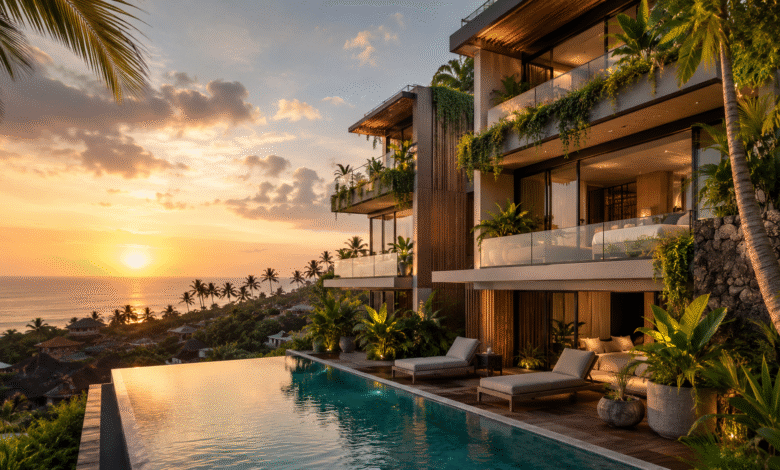
The question is no longer simply whether Bali is worth investing in. It is which part of the island delivers the fastest return, the strongest capital appreciation, and the most defensible purchase logic for 2026. Investors who want to buy apartments in Bali are increasingly asking a more precise version of that question: between Canggu, Seminyak, and Ubud, where does the maths actually work best?
The three districts have very different personalities, price points, and buyer profiles. What they share is consistent international demand, a proven track record of attracting foreign capital, and a property market that, despite maturing considerably since the post-pandemic boom, continues to outperform most comparable resort destinations globally.
What the Numbers Say: Prices and Entry Points in 2026
Understanding where your money goes furthest starts with current pricing data. Apartments and compact residential units occupy a specific niche in the Bali market, sitting below villa pricing while benefiting from the same tourism-driven demand and location premiums.
According to 2025 market data, the average apartment price across Bali is approximately USD 313 per square foot, with studios and one-bedroom units in established districts commanding a notable premium over that baseline. The breakdown by district tells a more granular story.
| District | Median Villa/Apartment Price | Average Price per m² | Typical Entry Level |
| Canggu / Berawa | USD 355,000 | USD 2,579 | From USD 120,000 |
| Seminyak | USD 401,570 | USD 3,126 | From USD 248,000 |
| Ubud | USD 340,455 | USD 1,771 | From USD 100,000 |
Canggu sits in the middle of the price spectrum – more expensive per square metre than Ubud but cheaper than Seminyak – which is one reason it consistently attracts the widest range of buyers. Seminyak commands the highest price per square metre on the island, reflecting its mature infrastructure and premium positioning near world-class dining and beach clubs. Ubud offers the lowest per-square-metre entry point, particularly for properties with rice field or jungle views.
ROI by District: Where Does Property Pay Back Fastest
This is the question that separates lifestyle buyers from investors. Return on investment in Bali depends on location, property type, management quality, and the legal structure of ownership. Based on 2025 data, the ROI picture across the three districts looks like this:
| District | Gross ROI Range | Net ROI (after costs) | Payback Period |
| Canggu | 12–15% | 8–12% | 7–10 years |
| Seminyak | 10–13% | 7–10% | 8–12 years |
| Ubud | 6–9% | 5–7% | 12–18 years |
Canggu delivers the strongest combination of purchase price accessibility and yield performance. Its appeal to digital nomads, surfers, and younger international buyers keeps occupancy consistently high and demand for purchase resilient. Forecasts for 2026 and 2027 project continued annual price growth of 10 to 18% in Canggu’s strongest micro-markets, including Berawa, Pererenan, and Batu Bolong.
Seminyak offers slightly lower yields relative to its higher entry prices, but its stability and premium tenant base make it attractive for buyers prioritising capital preservation alongside income. Luxury properties in prime Seminyak addresses have recorded annual price increases of up to 10% in recent years.
Ubud’s ROI is the most modest of the three. At 6 to 9% gross, the payback period stretches to 12 to 18 years for a well-managed property. This does not make it a poor investment – it makes it a different kind of investment, one driven more by long-term capital appreciation and lifestyle use than by rapid payback logic.
Key Factors That Determine Payback Speed in Each District
Payback speed is not determined by yield figures alone. Several structural factors shape how quickly a purchase actually recoup its cost in each of these three districts.
For Canggu, the key drivers are:
- Year-round demand from digital nomads, remote workers, and surf tourism keeps vacancy rates low across all property types
- Active development pipeline in sub-areas like Pererenan and Berawa continues to attract buyers at different budget levels
- Strong resale market supported by international name recognition – Canggu is one of the few Bali districts that requires no explanation to a global buyer audience
- Infrastructure investment ongoing along the west coast corridor, supporting long-term price appreciation
For Seminyak, the picture is shaped by:
- Mature, established market with limited new supply, which creates structural price support
- Premium buyer pool of expatriate professionals, high-net-worth lifestyle buyers, and international families
- Proximity to Petitenget, Oberoi, and the wider Kerobokan area, all of which reinforce the district’s premium positioning
- Higher entry costs that slow the payback period relative to Canggu, but stronger price per square metre growth over time
For Ubud, the dynamics are distinct:
- Wellness tourism, spiritual retreats, and long-stay cultural visitors generate steady but lower-intensity demand compared to coastal districts
- Lower land and construction costs create better value on a per-square-metre basis, but lower daily purchase values compress the yield
- Growing appeal among buyers seeking a lifestyle base rather than a pure investment vehicle
- Less exposed to the compliance pressures affecting high-turnover short-stay operations in coastal areas
What Foreign Buyers Need to Know Before Purchasing in Any of These Districts
Regardless of which district a buyer targets, the legal framework for foreign property ownership in Bali applies uniformly. Foreign nationals cannot hold direct freehold title under Indonesian law. The two main routes available are leasehold arrangements, typically offering an initial term of 25 to 30 years with extension options, and ownership through a PT PMA company structure, which allows access to freehold-equivalent rights under Indonesian corporate law.
Global-Property.Investments monitors the Bali market closely across all three of these districts and notes that the quality of the leasehold documentation, the extension terms written into the contract, and the zoning classification of the property are at least as important as the purchase price in determining the long-term viability of any acquisition.
Additional costs to factor into any purchase calculation include buyer-side land and building acquisition duty at 5% of transaction value, a notary fee of approximately 1% of transaction value, and legal setup costs for PT PMA structures ranging from USD 3,000 to USD 5,000. Annual property tax under the PBB system is low – typically around 0.1% of assessed value – and does not materially affect the investment case.
Construction costs for off-plan or build-to-own strategies currently range from USD 1,000 to USD 1,800 per square metre for investment-grade finishes, excluding land. Buyers who purchase off-plan in emerging sub-areas of Canggu or the quieter fringes of Seminyak can typically access prices 20 to 30% below the market value of completed stock, providing an immediate capital buffer and a stronger starting position on payback calculations.
The Verdict: Which District Wins on Payback Speed in 2026
Based on current 2026 data, Canggu offers the most favourable combination of entry price, yield, and projected capital growth for buyers focused on payback speed. Its 12 to 15% gross ROI, supported by year-round demand and a diversifying international buyer base, places it ahead of both Seminyak and Ubud on the payback metric. A well-chosen apartment or compact villa in Berawa or Pererenan, purchased at the USD 120,000 to USD 250,000 level, can realistically return its cost within 7 to 10 years under current market conditions.
Seminyak remains the stronger choice for buyers who prioritise stability, premium positioning, and long-term capital appreciation over rapid payback. Ubud suits a specific buyer profile – one where lifestyle value and cultural setting are weighted alongside financial return. For investors whose primary objective is the fastest possible payback on a Bali property purchase in 2026, Canggu is the district where the numbers most consistently point in the right direction.