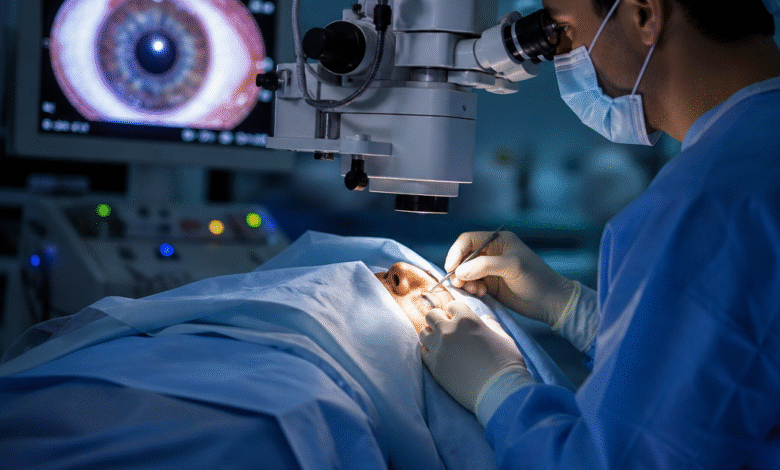
Cataract surgery has undergone a profound transformation over the past two decades. What was once a straightforward procedure focused solely on restoring basic vision has evolved into a sophisticated, precision-driven intervention that can simultaneously correct refractive errors, reduce dependence on glasses, and dramatically improve a patient’s quality of life. At the heart of this evolution lies the integration of advanced refractive technology — tools and techniques that allow surgeons to tailor outcomes with a level of accuracy that was unimaginable a generation ago. Understanding how these innovations work, and why they matter, is essential for any patient considering cataract surgery today.
The Shift from Functional to Refractive Outcomes
For most of its history, cataract surgery was evaluated on a single metric: did the patient regain functional vision? If someone could see well enough to navigate daily life after the procedure, the surgery was considered a success. That standard, while meaningful, left a significant gap between what patients received and what modern optics could theoretically deliver.
Today, the conversation has shifted entirely. Surgeons and patients alike now discuss target refraction, residual astigmatism, depth of focus, and spectacle independence as primary goals. This shift reflects not only advances in intraocular lens (IOL) technology but also improvements in preoperative diagnostics, intraoperative guidance systems, and surgical planning software. The result is a new era in which cataract surgery functions as much as a refractive procedure as it does a restorative one.
Preoperative Diagnostics: The Foundation of Precision
Achieving excellent refractive outcomes begins long before a patient enters the operating room. Modern biometry devices, such as optical coherence-based systems, measure axial length, corneal curvature, anterior chamber depth, and lens thickness with extraordinary accuracy. These measurements feed into sophisticated IOL power calculation formulas that account for variables once considered too complex to model reliably.
Corneal topography and tomography add another layer of detail, mapping the anterior and posterior corneal surfaces to identify irregular astigmatism, subclinical keratoconus, or prior refractive surgery changes that could affect IOL selection. When this data is synthesized correctly, surgeons can predict postoperative refraction with a precision that consistently places patients within a quarter diopter of their intended target — a standard that would have seemed aspirational just fifteen years ago.
Intraoperative Aberrometry and Real-Time Guidance
One of the most significant technological leaps in recent years has been the adoption of intraoperative aberrometry. These systems measure the refractive state of the eye in real time during surgery, allowing the surgeon to confirm or adjust IOL power selection and toric lens alignment before the procedure is complete. Rather than relying entirely on preoperative calculations — which, however accurate, are still predictions — intraoperative aberrometry provides a live verification step that catches outliers and reduces the rate of postoperative refractive surprises.
For patients with a history of LASIK, PRK, or radial keratotomy, this technology is particularly valuable. Prior corneal surgery alters the relationship between corneal curvature and refractive power in ways that challenge traditional formulas. Intraoperative measurements help bridge that gap, giving surgeons a more reliable basis for final IOL decisions in these complex cases. Detailed guidance on navigating successful cataract surgery with refractive technology continues to inform best practices across the field.
The IOL itself has become one of the most dynamic areas of ophthalmic innovation. Monofocal lenses, once the standard of care, have been joined by an expanding portfolio of options: toric lenses for astigmatism correction, extended depth of focus (EDOF) lenses that provide a continuous range of vision, and multifocal lenses that split light to create distinct focal points for near and distance tasks.
Each lens category carries its own set of trade-offs, and the art of modern cataract surgery lies in matching the right lens to the right patient. A highly motivated patient with low corneal irregularity and realistic expectations may be an excellent candidate for a premium multifocal IOL. A patient with macular pathology or a demanding visual profession might be better served by a high-quality monofocal lens targeted for their preferred working distance. This individualized approach requires not only technical knowledge but also a nuanced understanding of how patients actually use their vision in daily life.
Surgical Technique and the Role of Femtosecond Laser
Femtosecond laser-assisted cataract surgery (FLACS) represents another dimension of precision in the modern operating room. By automating key steps — including the corneal incisions, capsulotomy, and lens fragmentation — femtosecond lasers can improve the consistency and reproducibility of these critical maneuvers. A perfectly centered, circular capsulotomy, for example, is essential for predictable IOL positioning and optimal optical performance, particularly with premium lenses that are sensitive to tilt and decentration.
It is worth noting that surgical technique comparisons extend beyond ophthalmology. Understanding how minimally invasive approaches differ from traditional open methods is a recurring theme across surgical specialties. For readers interested in how these principles apply in other contexts, a useful overview of laparoscopic versus open surgical approaches illustrates how the broader surgical world has embraced precision and minimal invasiveness as guiding values.
Gary Wortz, MD: A Leader in Refractive Cataract Surgery
Gary Wortz eye surgeon is widely recognized as a thought leader in the field of refractive cataract surgery, bringing both clinical expertise and a deep commitment to patient education to his practice. With a focus on delivering premium outcomes through the integration of advanced diagnostic tools, modern IOL platforms, and refined surgical technique, Dr. Wortz exemplifies the standard of care that today’s patients should expect from a high-volume, technology-forward cataract surgeon. His contributions to the field extend beyond the operating room, as he actively engages in professional education and dialogue around best practices in refractive outcomes.
What Patients Should Ask Before Surgery
Patients approaching cataract surgery in the current era are well-served by asking specific, informed questions. What biometry platform does the practice use? Is intraoperative aberrometry available? What IOL options are being considered, and why? How does the surgeon handle postoperative refractive surprises? These questions help patients understand not just what will happen during surgery, but how the practice approaches the entire continuum of care — from initial evaluation through final refraction.
A surgeon who welcomes these questions and answers them with clarity and specificity is one who has internalized the refractive mindset that defines excellent modern cataract care. Transparency in this conversation is itself a marker of quality.
Conclusion: Precision as the New Standard
The integration of refractive technology into cataract surgery has permanently raised the bar for what patients can expect and what surgeons should deliver. From the first biometry measurement to the final postoperative refraction, every step in the process is now an opportunity to optimize outcomes in ways that meaningfully improve how patients see and experience the world. For patients, this means approaching cataract surgery not as a passive medical event but as an active, informed decision — one that begins with choosing a surgeon whose skills, tools, and philosophy are aligned with achieving the best possible vision for their individual needs.